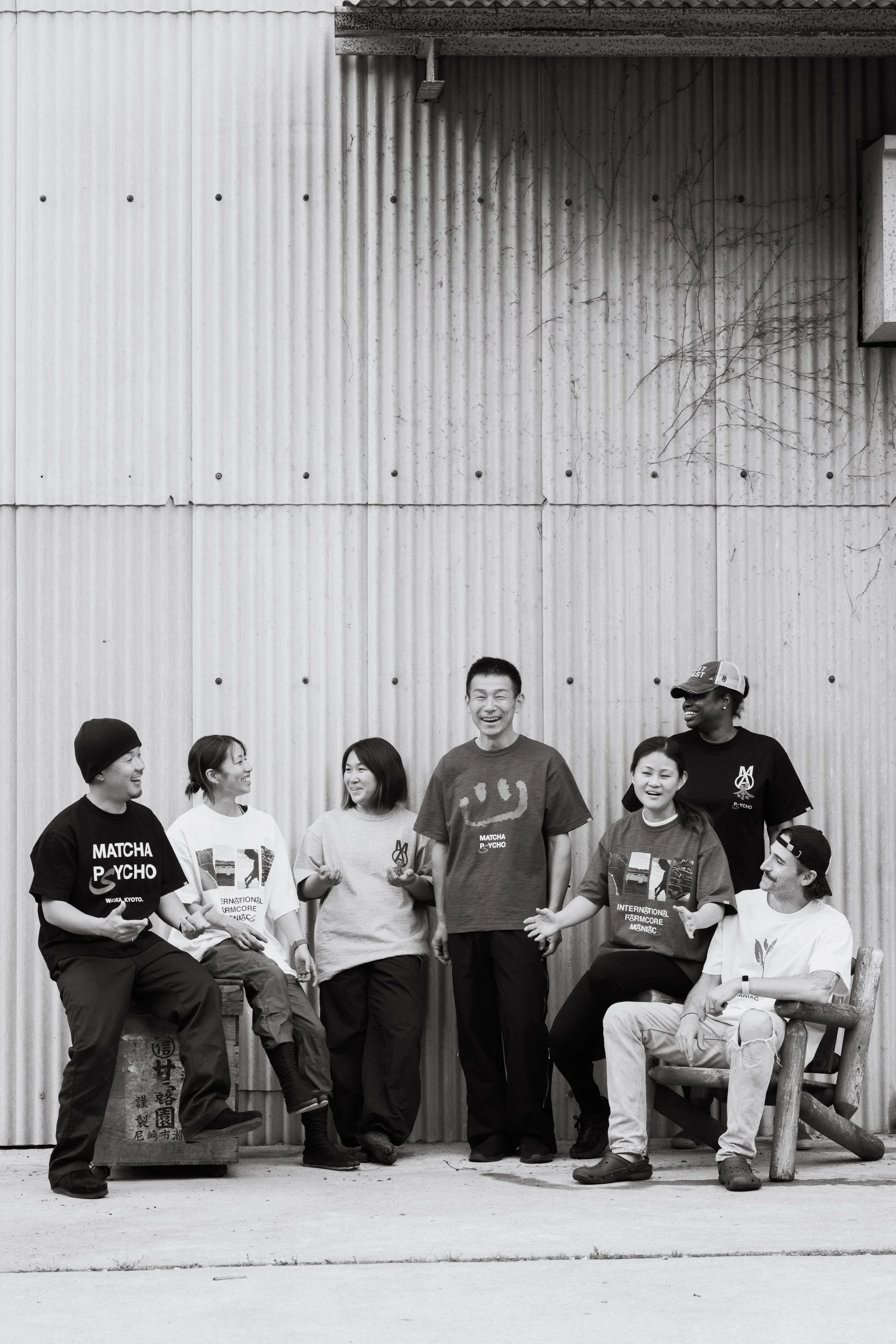
Fieldwork in fashion photography: a conversation with Takeshi Hayakawa
Recorded on June 10th/11th, 2025, from Brooklyn and Shiga.
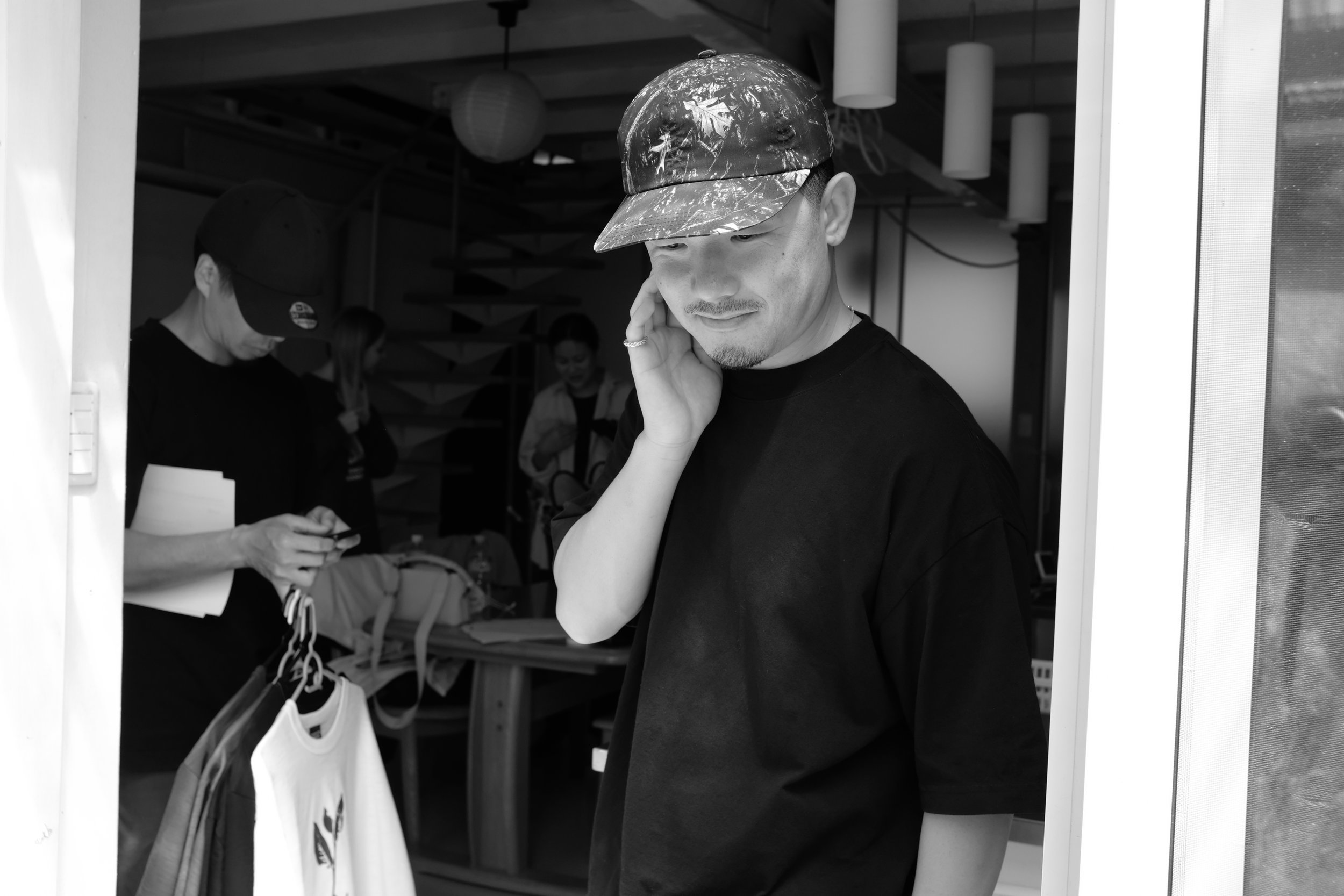
Takeshi in a moment of quiet consideration before a day of editorial shooting begins at Obubu Tea Farms in Wazuka, Kyoto: May 2025. Photograph by Gabriel Coren.
Intro: Takeshi_Hayakawa X Gentle_Artefacts in Wazuka, Kyoto
In January, 2025, commercial fashion and street photographer, Takeshi Hayakawa, joined Gentle Artefacts and Singaporean streetwear designer Mark Ong (aka Mr. Sabotage) for fieldwork in the high-mountain tea fields that surround the rural farming community of Wazuka, Kyoto. We’d traveled there to encounter and document the everyday practices and surroundings of our inaugural producing partners at Obubu Tea Farms. The experience would form the basis of a capsule collection by Mr. Sabotage X Gentle Artefacts, which incorporated Takeshi’s images from the trip. Then, in May, 2025, Gentle Artefacts returned to Wazuka with Takeshi to take an (visual) ethnographic lens to spring harvest in a Japanese tea-farming town; and while there, to shoot a fashion editorial of the collection, as modeled both by the farmers who inspired it and by a ragtag crew of young models and skaters from Kyoto City as well.
A self-taught photographer, Takeshi Hayakawa’s profile is as eclectic as his career has been prolific. Gentle Artefacts first encountered him, however, through his participation in the Tokyo, Japan-centered wing of the international street photography collective Street Dreams Magazine. Gentle Artefacts co-founders, Sabrina Li and Gabriel Coren, were intrigued at the prospect of collaborating with a Japanese photographer whose style and approach had been shaped on the streets of Shiga and Kyoto and whose aesthetic sensibility tends towards urban life, (youth) subcultures, and the rawer, unglossy end of contemporary commercial fashion photography. How would a photographer with Takeshi’s street-scape sensibility make sense of everyday life in a tea farming community in rural Japan? What might he perceive in and capture from a milieu so different from his own?
In the wake of their experiences, Gabriel sat with Takeshi for a conversation reflecting on Takeshi’s unorthodox path into professional photography and unpacking the phenomenological orientation shaping his practices as a visual artist. Digital galleries of Takeshi’s photographic outputs from the collaboration are on view here. The conversation, edited for length and clarity, unspools below.
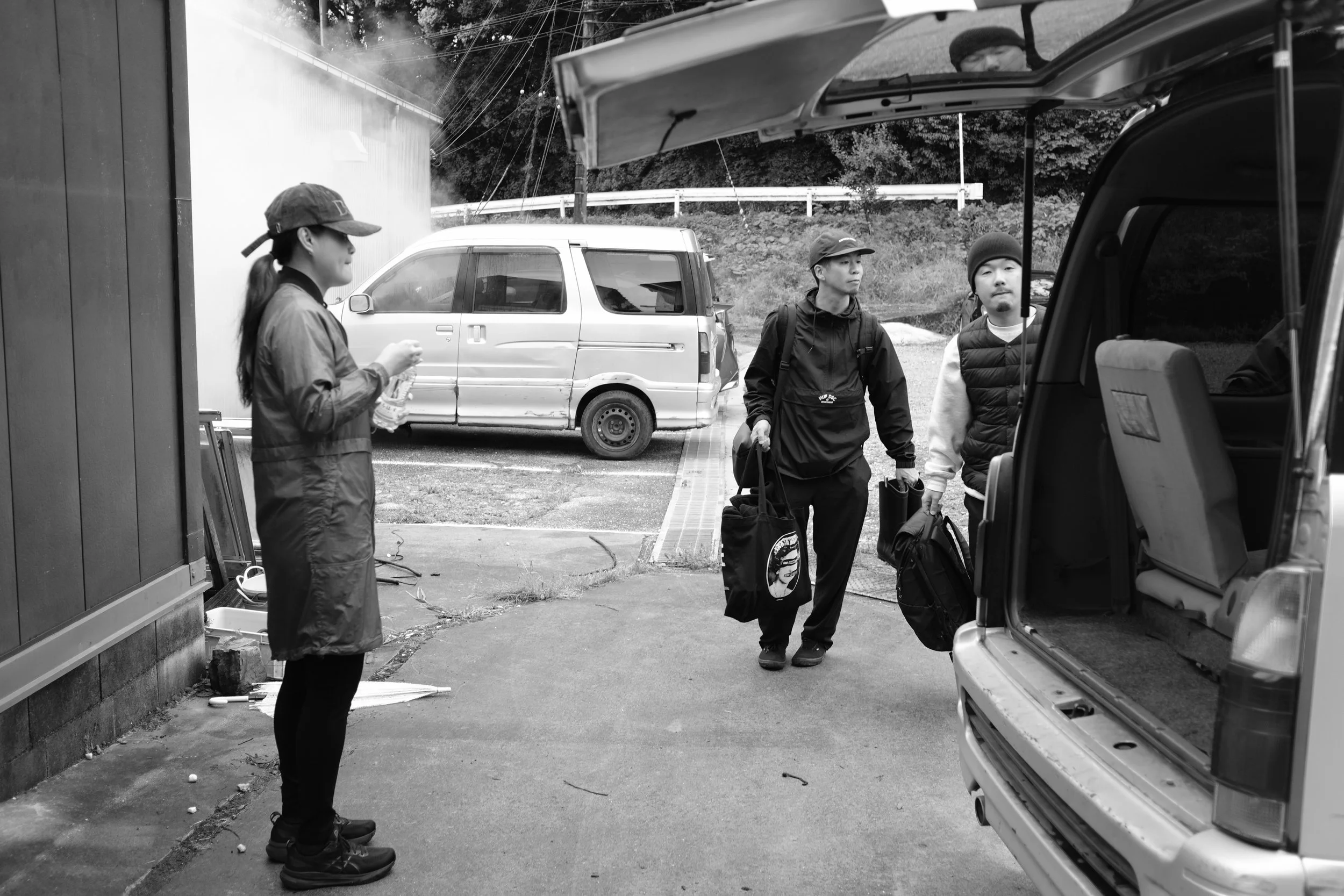
From left to right: Sabrina, Fumiya, and Takeshi prepare to ascend to the tea fields for early morning spring harvest in Wazuka: May, 2025. Photograph by Gabriel Coren.
I. Skaters on the shores of Lake Biwa: c. 1998 - 2007
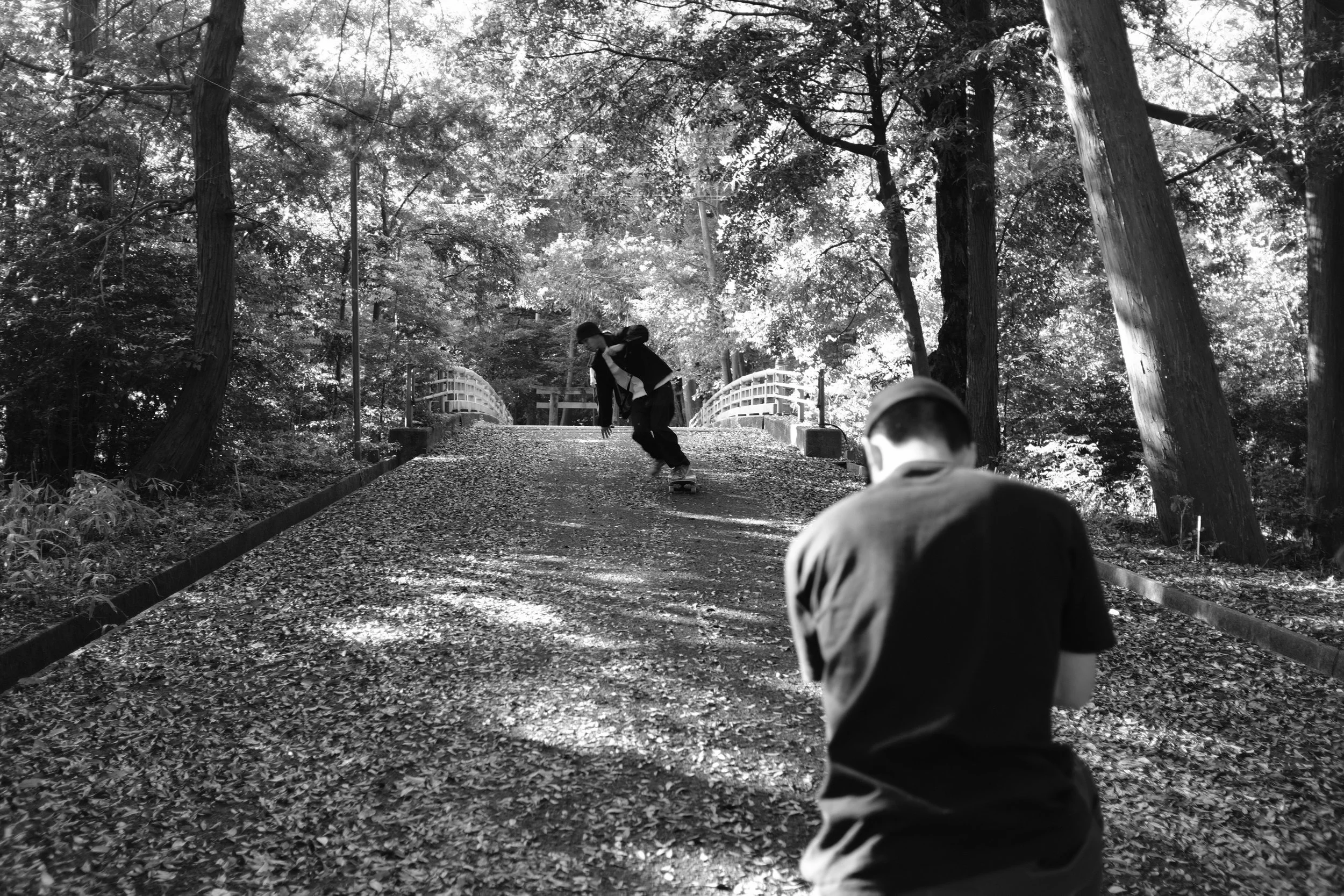
Takeshi photographing the next generation of Japanese skateboarders on location with Gentle Artefacts, near Obubu Tea Farms, in Wazuka, Kyoto: May, 2025. Photograph by Gabriel Coren.
Gabriel: Where did you grow up? Where did your generation come from?
Takeshi: I was raised in Shiga prefecture—right on the Eastern shores of Lake Biwa, in a town called Maibara, near Nagahama. Like you , I was born in 1988—I’m 37 this year—so I was a kid and teenager growing up in Shiga in the late ‘90s and early ‘00s. Kind of a millennial.
Gabriel: Coming up there and then, what were you into? What were you passionate about?
Takeshi: Punk rock and skateboarding. I was totally immersed in both. During schooldays, we’d practice with the band—I was guitar all the way—and then after school we’d all go skateboarding together. That was my life through elementary and high school.
Gabriel: I’m curious: which were the kinds of kids who chose skateboarding as the principal subculture to belong to and identify with? In the context you came up in, was skating an American culture-inflected thing? A global movement? Or was it its own uniquely Japanese teenager sort of thing for you at that time?
Takeshi: These days, skateboarding in Japan is enjoying another little boom, and it has become very popular—very fashionable—again. Really, it has become a full-on fashion trend now. But while the aesthetics of the late ‘90s skater subcultures of Japan and both U.S. coasts have seen a major resurgence of late, Japan’s skater-culture actually traces back to the late 1970s and early 1980s. And then when I was a kid in the ‘90s, skateboarding as a lifestyle—as an aspirational identity—was becoming hyped up in Japan, perhaps even moreso than it is today. And that was in part because of a convergence between skateboarding and fashion: like Supreme and Stüssy. Well, I started skateboarding because of this fashion. Or, at least, street fashion and fashion photography were my main initial entryways into skateboarding…
II. Subcultural media: fashion magazines as “visual museums”
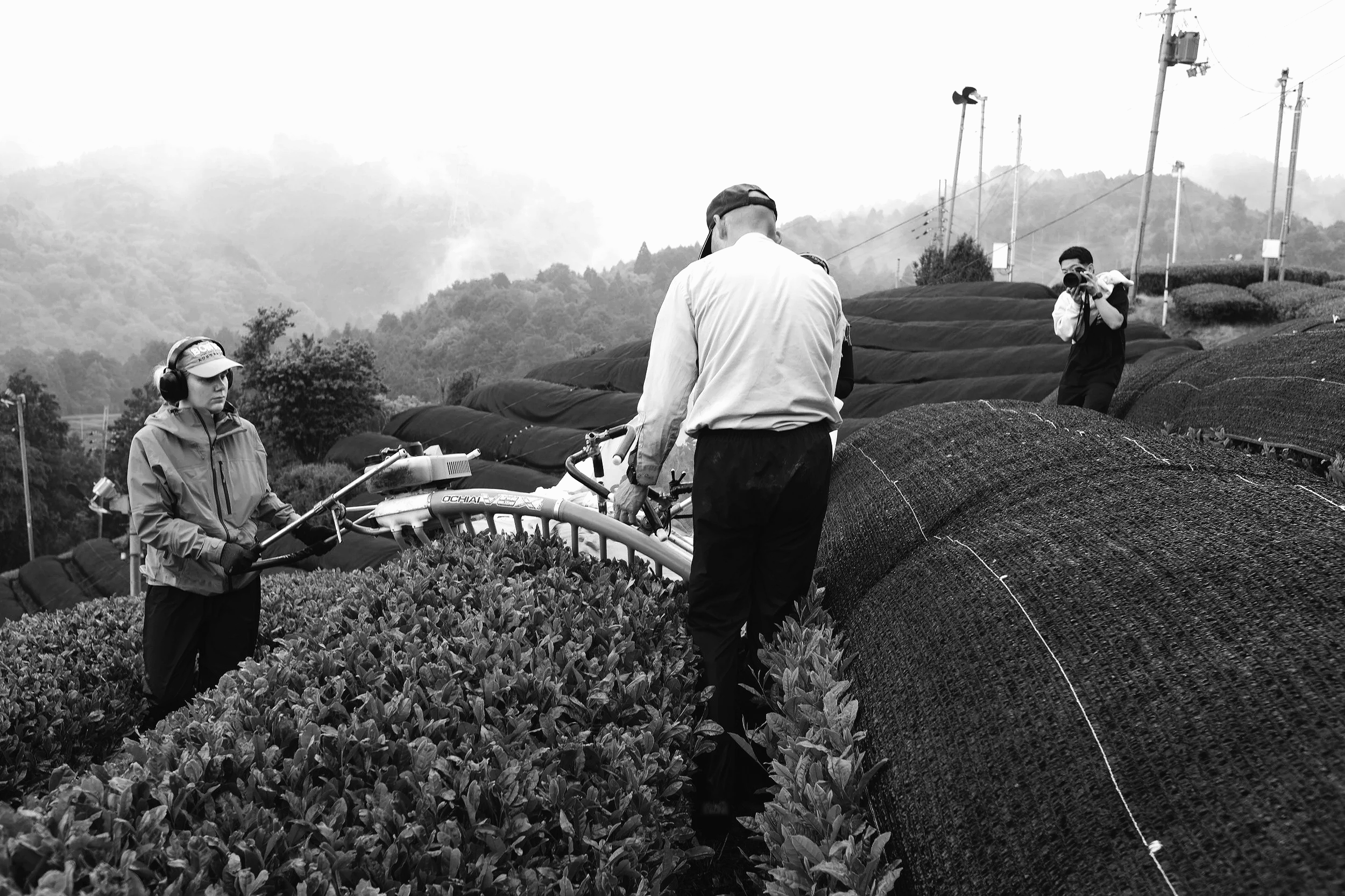
Takeshi takes his street photography approach to the high-mountain tea fields of Wazuka, Kyoto. Pictured here: Akky-san, master farmer of Obubu Tea Farms, harvesting tencha for matcha with two seasonal interns: May, 2025. Photograph by Gabriel Coren.
Gabriel: Would you say a bit more about the ways that fashion became visible for you through the subcultural spaces you were drawn to? Like, where were you encountering fashion photography and related visual media?
Takeshi: I’ve loved fashion magazines for a very long time—fashion magazines, skate magazines, and music magazines too. These were visual museums, or places that were like museums, at least for me.
Gabriel: When you say“visual museums,” do you mean it in its sense of curated collections of images and ideas that can inspire? Or like, museums as spaces of cultural self-reflection and aestheticized encounter?
Takeshi: I mean it in both senses. In school, all the other kids were into [Weekly] Shōnen Jump and stuff. But when I was a boy, I didn’t read manga at all because I was too obsessed with fashion magazines, which I kept buying and buying. Why was that? Well, I was strongly influenced by my older sister’s friends, my seniors then, and all of them were into street culture and skateboarding. But then the print media I was obsessed with—all these lifestyle magazines about skateboarding and punk music—used fashion and photography to visually reflect these cultural spaces I belonged to back to me. In this way [the imagery in] those magazines for me became both reservoirs of visual inspiration and media for identification. I was already becoming increasingly drawn towards skateboarding as an activity and a specific subcultural space, so then seeing skater lifestyles depicted through the lens of fashion [photography and streetwear style] helped push me even deeper into that world. And at the same time, being exposed to the ways that Japanese and global fashion lenses were rendering these worlds for the print publications I was obsessed with also increasingly influenced how I saw and related to the cultures and communities around me everyday.
Gabriel: Its fascinating how much reflexivity your introduction to fashion magazines—as well as the fashion photography within the skateboarding and punk rock lifestyle magazines—precipitated for you, in terms of coming to recognize yourself as part of a subculture, recognizing that that subculture was being made visible in specific ways, for particular audiences, and in certain venues and media contexts. And it is striking how recursively you experienced this all—like, seeing skate culture depicted through fashion lenses didn’t just shift the way you positioned yourself relative to skater subculture; it reshaped the way you perceived skater subculture more broadly within Japanese youth and alt cultures. And this episode would appear to presage a profound shift in how you came to participate in these subcultures, multiplying the (literal and figurative) lenses you brought onto the scene and into the frame. Eventually. From seeing your subcultural worlds through a fashion photography lens to ultimately engaging with them yourself as a photographer.
Takeshi: Eventually, yes. But of course, I didn’t know that yet. At the time I was just a skater punk from Shiga becoming obsessed with fashion magazines featuring skaters.
III. Turning (to) the lens: from participant to participant-observer
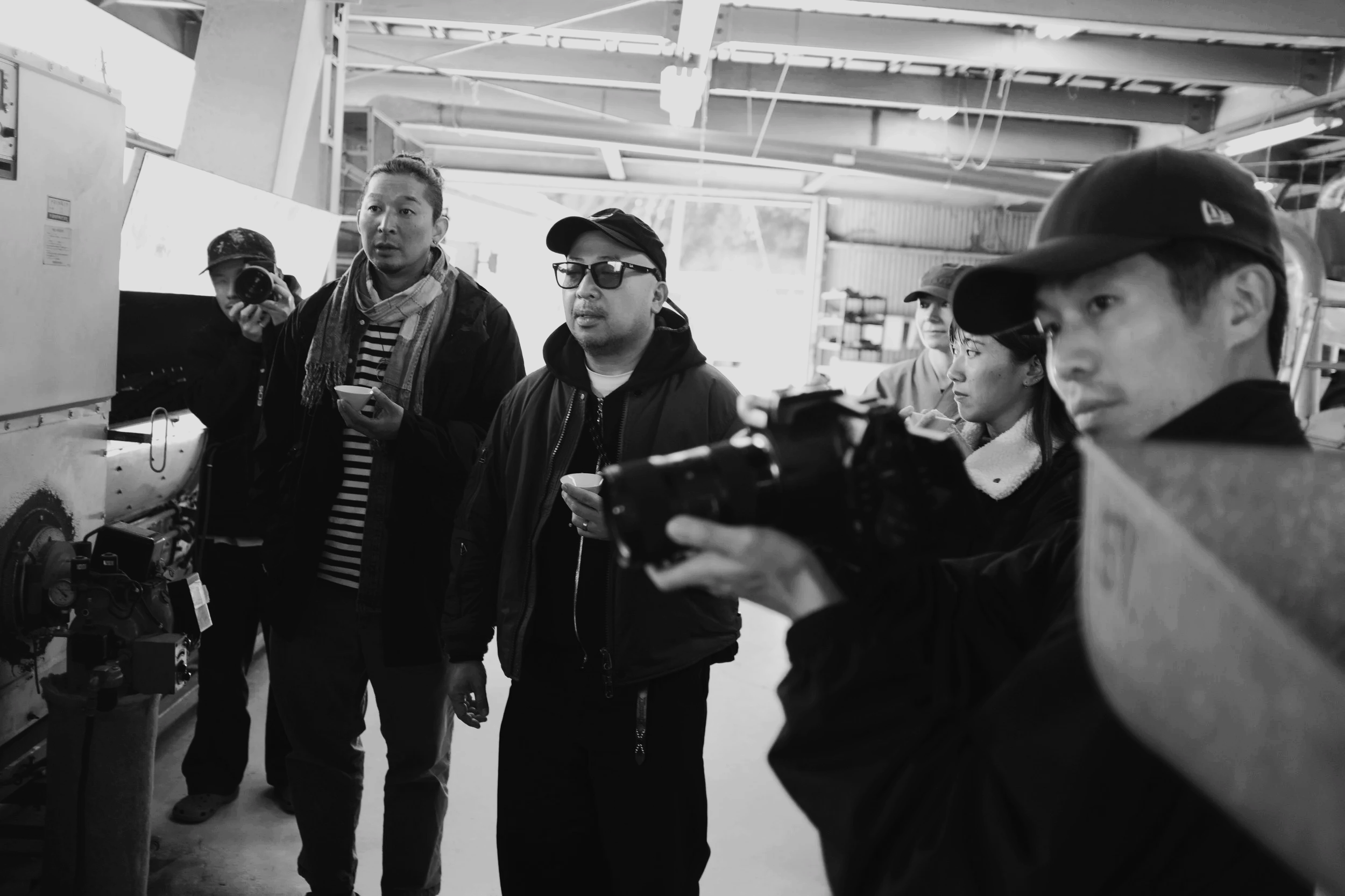
Takeshi (far left) and his assistant photographer, Fumiya (far right), document Gentle Artefacts’s tour of Obubu Tea Farm’s onsite processing facility in Wazuka Kyoto: January 2025. Photograph by Gabriel Coren.
Gabriel: When did you first pick up the camera? And when you did, what did you do with it?
Takeshi: In my teens I was certain I’d become a pro skateboarder. I kept up at it, doing it all the time, believing this was my future. I had been at it like that, focused on skating, determined to go pro, until I was 18 years old, which is when I realized that becoming a professional skater was not going to happen. Suddenly, one day, I thought that to myself. I thought: ‘that’s just not what I’m going to become, and I probably need to rethink that dream a bit.’ At that time, I really liked this magazine that blended skating with fashion, streetwear, and photography; and while I was reading an issue one day, flipping through the magazine, checking out these stories and editorials, studying the imagery, I found myself thinking about the people around me—thinking about my friends in the scene. So many of my friends were people who were skaters or people who were involved in music. And I thought that I could photograph them: that I would photograph my skater friends and my musician friends as subjects for the fashion world by documenting the scenes they were in, capturing our worlds on film…
Gabriel: As you recollect this shift in perspective that led you towards photography, I’m struck by how you appear to have harbored an ethnographic impulse to observe, document, chronicle and re-depict the particular milieux you inhabited. How the camera—in addition to being a media technology that would enable you to photograph your friends and y’all’s scene—also presents as a tool for transforming your positioning relative to that scene from that of pure participant to reflexive participant-observer. How fashion photography invites you—and them the film camera equips you—to become a visual ethnographer of your everyday surrounds. I’m curious about how you actually approached shooting your friends—these worlds—at first?
Takeshi: Well, I shot them [as if] for the magazines I loved. And as I did I realized that I wanted to make things for myself, yes, but also put them out into the world. So I began just constantly taking photos while skating and doing music with my friends. The problem back then was that I couldn’t afford to buy a camera. But my grandfather—he’s passed away now, but we were very close—was an enthusiast and collector, and he had some really great cameras, quite a few film cameras from different eras, in different formats. And I secretly stole one of them, hoping no one would find out. The day I ‘borrowed it’ was the first time I ever held a camera. That was the decision that got me started taking photographs when I as 18—taking that camera from my grandfather’s collection. It was a film camera.
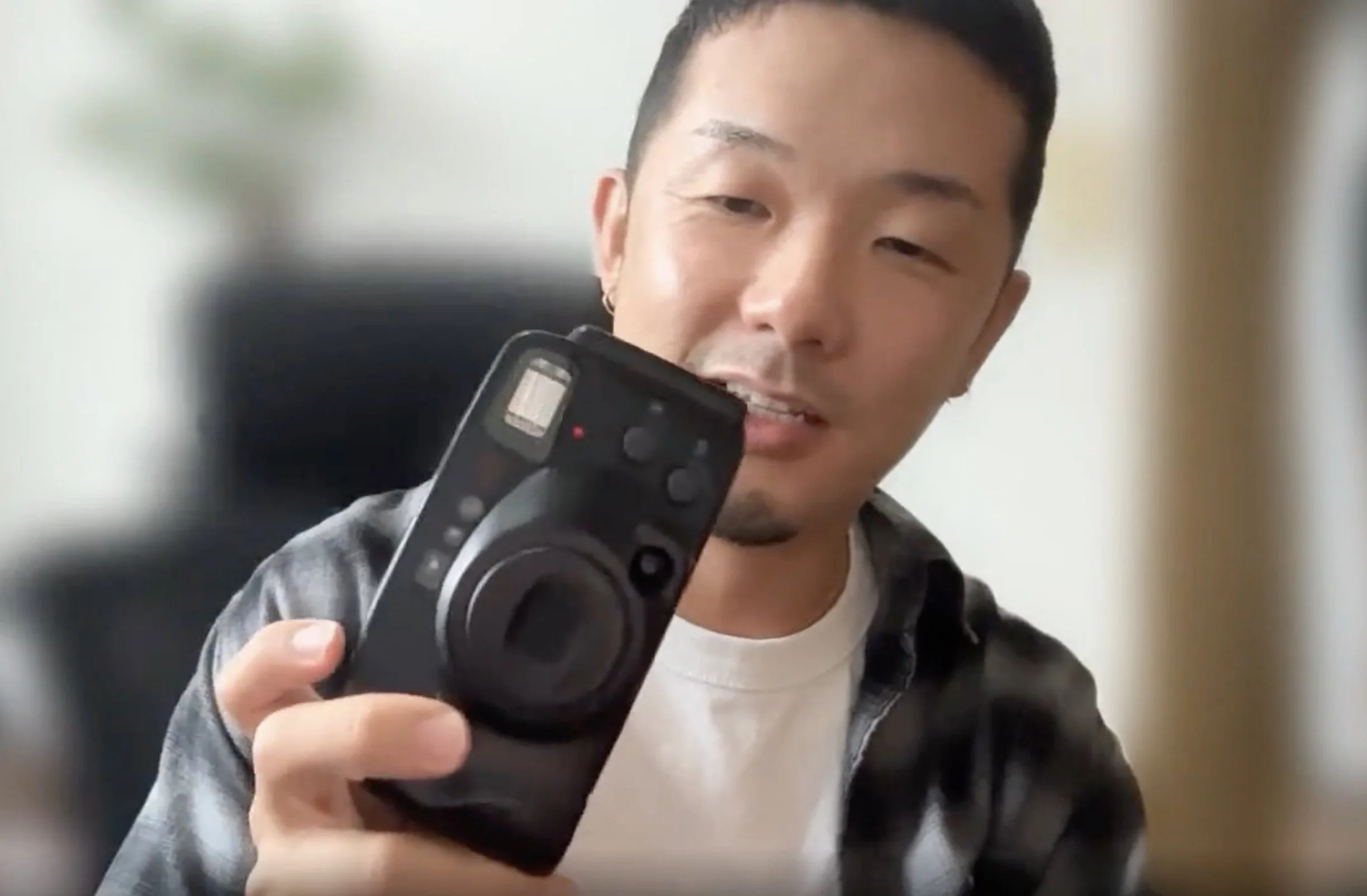
Takeshi shows off his first camera, which he surreptitiously “borrowed” from his late grandfather when he was 18. It is a 32mm Canon point-and-shoot, which all these years later he still sometimes uses on fashion shoots.
Gabriel: You experienced a profound shift in your orientation towards your passions—towards these subcultures that were anchors for your adolescent identity and had really propelled your interests up until then. A shift in your orientation to skateboarding in particular: from a participant determined to become a professional to a participant-observer, someone inside who could also train a new lens [as it were] on the worlds you were immersed in. When you picked up the camera and set out on this path, I’m imagining that you began by emulating some of the stylized street and fashion photography, the skater imagery, that you were drawn to in those magazines you loved. And that you also probably sought to capture your friends as photographic subjects in a way that would make them look badass…
Takeshi: …Yes, but at first it was really just play. My grandfather ‘gave me’ a camera, and I went out skateboarding with it. I still focused mostly on skateboarding, but at the same time I was filming videos and shooting film. I was doing both nonstop, and I just kept at it. For years and years, I never put that camera down.
Gabriel: Your dip into and early development as a photographer is appropriately DIY and also sounds pretty damned punk rock. So then, when did your relationship to photography begin to morph from an enthusiast’s practice into a professional ambition?
Takeshi: When I was 25, I started thinking I wanted to make photography my career. Of course, I was doing a different job at the time, but I felt a strong urge to try something new professionally, so I began to really give it a shot. And right around that same time, social media started spreading rapidly [with the rise of Instagram after it launched in October, 2010, but then really taking off in 2012-2014]. And that is when I started putting my work out there, which at first meant up on social media.
IV. Image communities: from print to social media (and back)
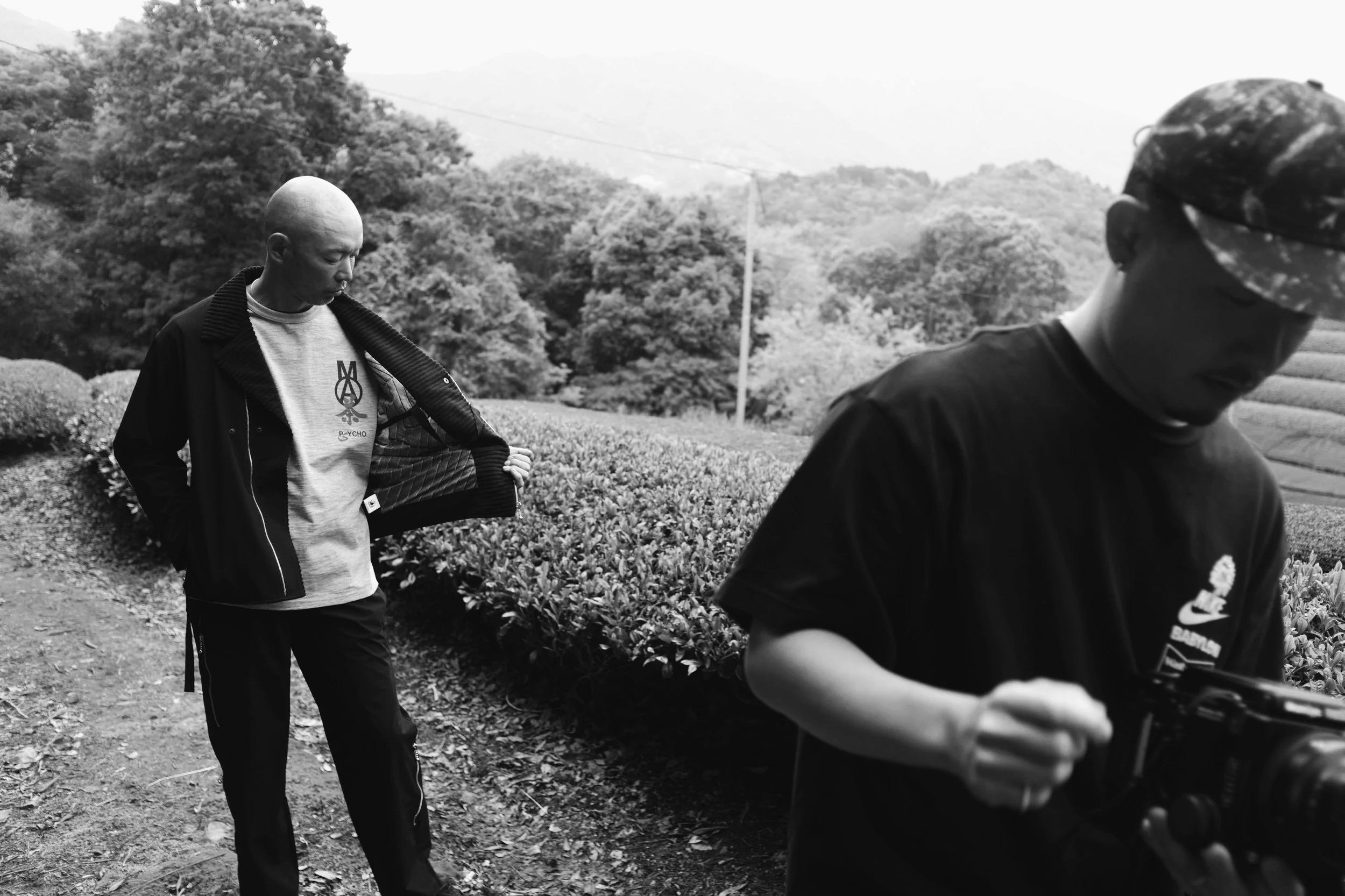
A fashion photography editorial shoot of Obubu Tea Farm’s Akky-san, modeling the ‘Matcha Psycho’ collection by streetwear designer, Mark Ong (aka Mr. Sabotage), which he inspired: May, 2025. Photograph by Gabriel Coren.
Gabriel: Publishing your photographs digitally on social media sounds like a major inflection point. How did that episode play out in terms of discovering an audience, on one hand, and in terms of becoming the photographer you’ve developed into artistically, aesthetically, in the years since on the other?
Takeshi: At first, when I was just shooting photographs for fun, the subjects were mostly skaters, and that’s also who I was showing my photography to. I had started using social media in my personal life when I was 20 years old [in 2008 when Facebook launched in Japan]. But then when I was 26, I started uploading my photographs to Instagram. At first, I just posted some of my early photographs that I’d taken over the years. But then I kept posting every day—whatever I happened to be shooting at the moment—just posting without any particular intention behind it. My photos came to exist in public simply because social media was becoming so popular at precisely the same time that I decided to publish my work online. And I just kept posting. Every day. The process of putting my work up on social media drove my desire to branch out from what I’d been doing up until then and to broaden the range of photographic subjects and styles I engaged with. So, in addition to the lifestyle photography I had been doing with skaters and musicians, I began to branch out into landscape photography as well as urban street photography: for that latter kind of documentary-style shooting, I would go to Kyoto to shoot street photography.
Gabriel: I love how through traditional print media—fashion and alt-culture magazines—you’d been such an avid consumer of fashion photography that you were inspired to become a creator of it yourself. But that even still, it was only through the advent of new digital (i.e., social) media that you discovered an initial means for publishing your creative outputs. And in the process, for publicizing yourself as a creative with an original point of view. How else did social media impact your trajectory?
Takeshi: Somehow, there were people who related to my work, and socially media put them into contact with it and me into contact with them. And then, gradually, their numbers started to increase. Through social media as well as through acquaintances of mine, people began discovering me. Social media allowed me to discover an audience for my photography and a community of people with similar interests and tastes as me, whom my work really resonated with. Soon after that I started receiving requests from fashion brands to do shoots for them. And I began receiving a lot of requests from the creative teams of fashion brands through social media too. And soon after that I started getting invitations to show my photos at galleries and exhibitions. As those kinds of opportunities increased, it raised my profile a little bit, and then magazines started to feature me. Those things happened more and more often, and my name became somewhat more well-known beyond social media.
Gabriel: What an arc! From consuming photography through print media, your detour through self-publishing on social media leads to being invited to shoot for the very kinds of commercial publications that had initially spurred your interest in fashion and photography to begin with. It is such an organic movement from putting yourself out there on the platform to becoming a well-known participant in a much wider community of creatives and like-minded visual artists.
V. Style and subject: reflecting “what’s real”
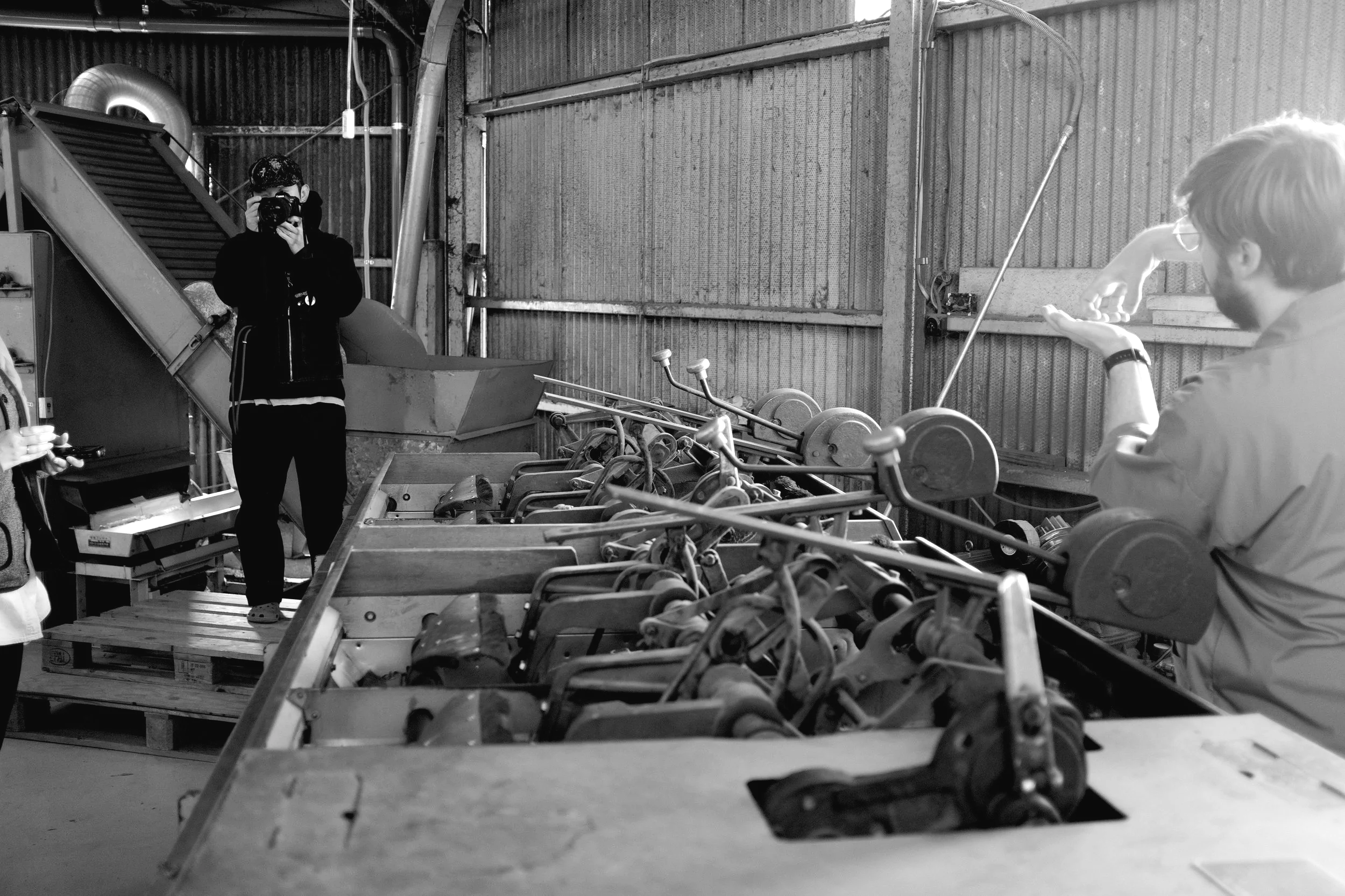
Takeshi captures Obubu Tea Farms assistant manager, Marcello, as he explains sencha processing beside a vintage rolling machine: January, 2025. Photograph by Gabriel Coren.
Gabriel: How do you understand the development of your style—style in the sense of a visual idiom or aesthetic signature? I’m curious how you understand it and where you think it comes from? From inside of you and internal conditions? From external forces and encounters, like gigs and shoots among the communities you circulate in, have drawn identity from, have discovered belonging among, or have received recognition from, etcetera? From the subject matter itself, which you’ve long-focused on?
Takeshi: I haven’t really thought about it before…
Gabriel: Word. Well, by the time you began working professionally, you’d been walking around for seven or eight years shooting everything, everyone; so, the camera by then would have become an extension of you, in a sense. But reflecting on it now: how would you describe your style? Or even, what aspects of style do you value most in photography and consciously seek to develop and express through your work?
Takeshi: Something that I value a lot is a style that is realistic. Realistic in the sense of reflecting what’s real. How should I put it? I care about being able to portray the scenes as I saw and felt them in the moment[s when I was capturing them], and I really care about being able to portray the people themselves—the subjects of my photographs—as they felt to me, appeared to me, in the context of the scenes we’d shared. I think photographs that are ‘realistic’ in that sense are very important. Also, shooting on film, with film cameras, is a part of my own practice of rendering what’s real in that sense.
Gabriel: I’m struck by the double sense in which you describe the ‘scenes’ you shoot. On one hand, there’s the scenes you capture—or re-create—in terms of a setting, a scenario, or a situation in which something is happening or not happening and towards which you wish to direct an audience’s attention. There’s scenes on film in the movies, scenic photography that frames and captures spaces and subjects, and the scenes of the theatre, which are staged and performed. But the stronger emphasis in your usage is the sense of scenes as subcultural splices of situated human practices, as coded and co-created human worlds. So by realistic, it doesn’t seem like you mean documentary in terms of genres of photography or purely representational in aesthetic terms. You mean something more impressionistic and phenomenological that’s about being there, relating with, and affectively registering: it’s about attunement. I’ve told you this before but there’s something in your approach that feels so ethnographic to me, which I relate to. Am I hearing that the scenes you emerged from, which became your initial subject-matter as a photographer, continue to influence you stylistically?
Takeshi: Yes, I’ve been influenced by photographers who have long been called legends, but I draw my creative and aesthetic inspiration from many different sources beyond photography and film too. That’s how I’ve come back to my current style, which was the influence I received when I was about sixteen years old. And I’m getting closer and closer [stylistically] to the very first feelings I had in terms of a perspective, a point of view. I’m getting closer to the style that was born from the way I was—the way I felt in the world—when I was 16 years old.
Gabriel: If I’m understanding, then what you’re getting at is that your style is a sensibility—or more accurately, is a recollection of a sensibility in its most inchoate form. And your skill and experience building as a photographer has been a gradual process of reconnecting with and rediscovering it [your style/that sensibility], and of gaining the technical facility needed to adequately inhabit it while shooting and express it visually on film.
Takeshi: I place a lot of importance on not forgetting what is important. The feelings I felt and the sights I saw, then, when I was 16, I still treasure even now. I’m really careful to preserve that for the person I am today—for the photographer I’ve become—and to express it through my photographs.
Gabriel: Do you think people recognize this in your work?
Takeshi: When I became an adult—well, at least, as I got to work in big cities like Tokyo and Osaka—I learned that there were actually a lot of people who resonated with the same things as me, from other artists and creatives to business owners and brand builders. I learned that there were many people who grew up deeply influenced by the same subcultures. And for me, encountering all these people with shared affinities in a way validated my own [aesthetic] judgement. I felt like my instincts weren’t wrong, and that I wanted to continue valuing them and to begin more fully to trust them.
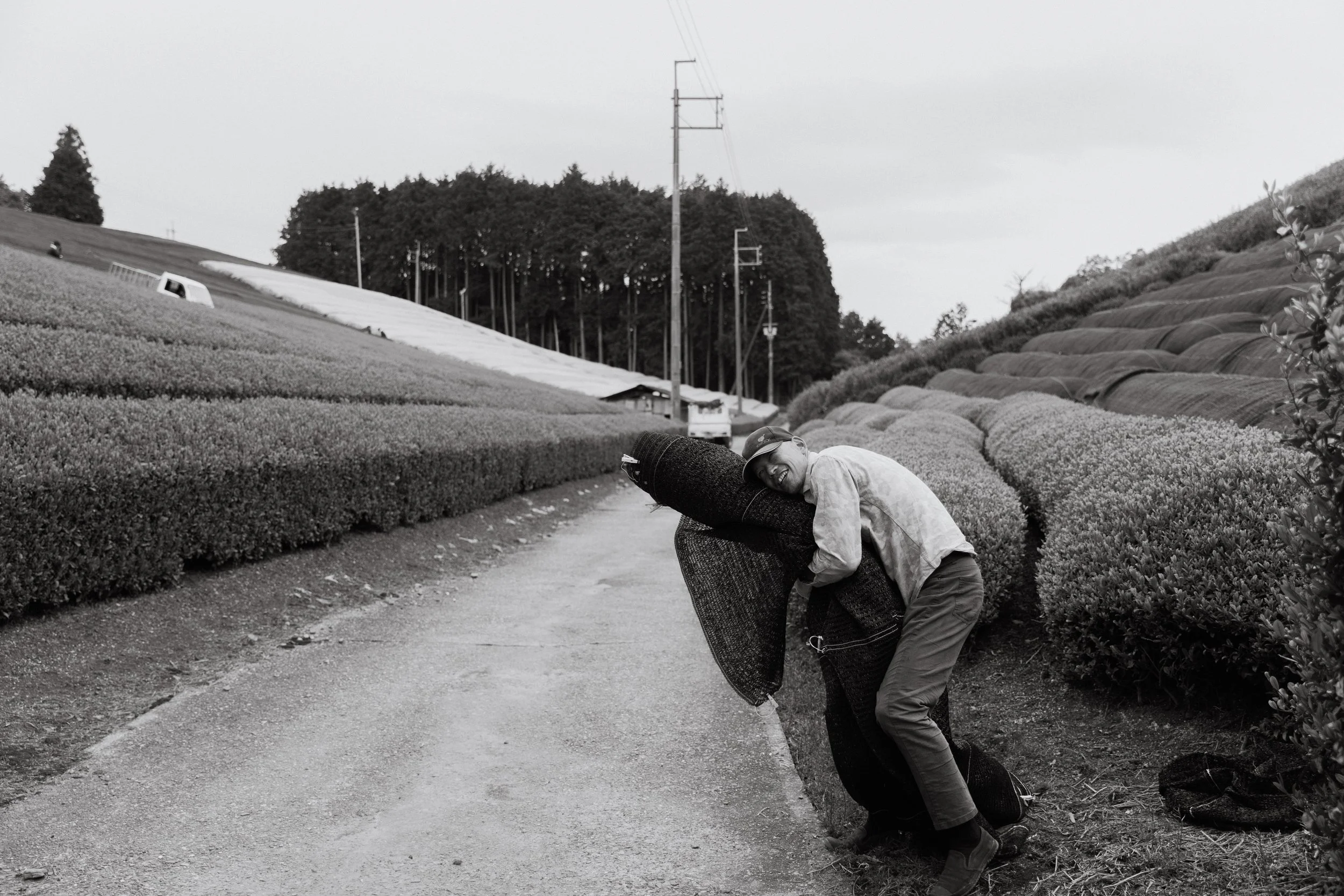
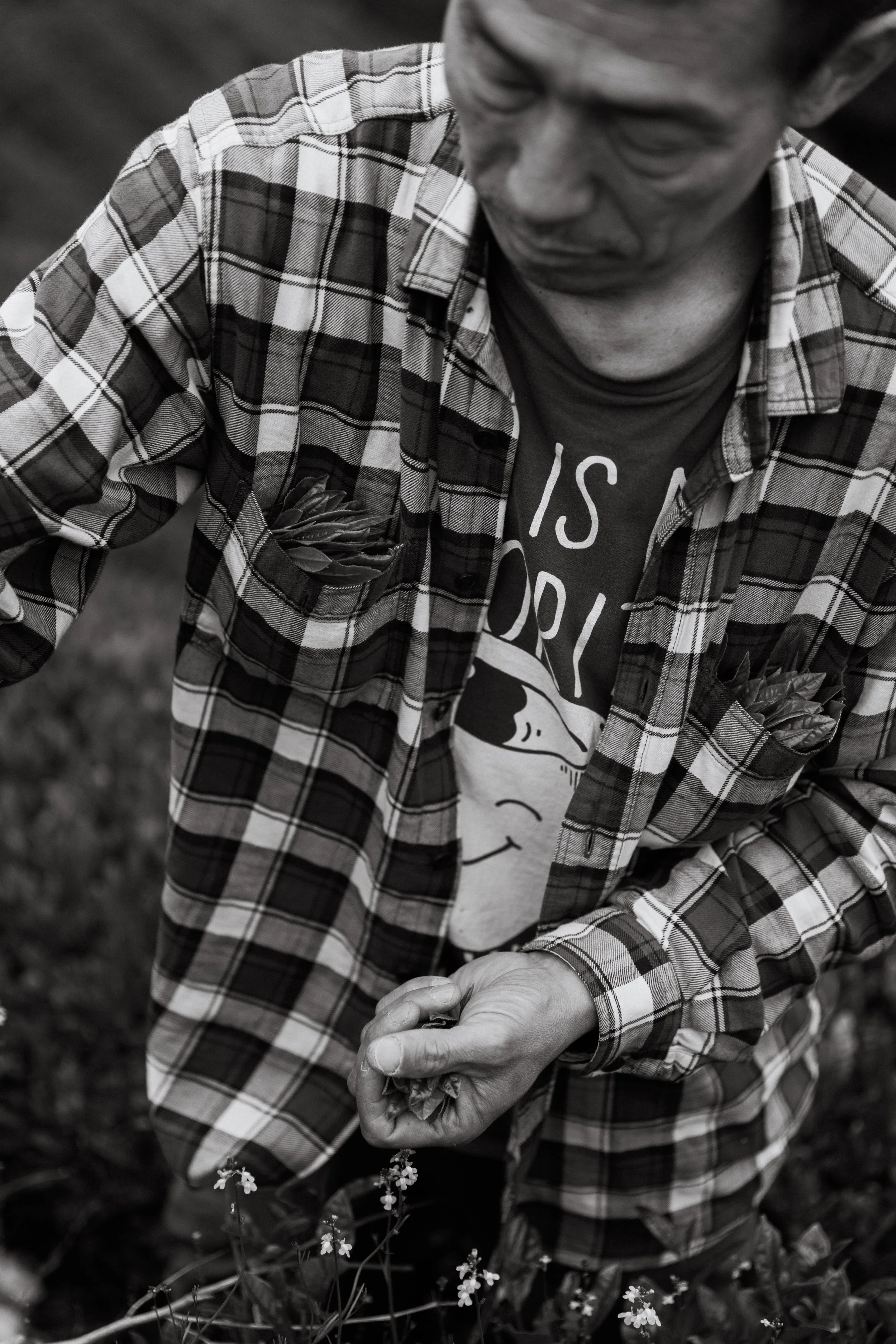
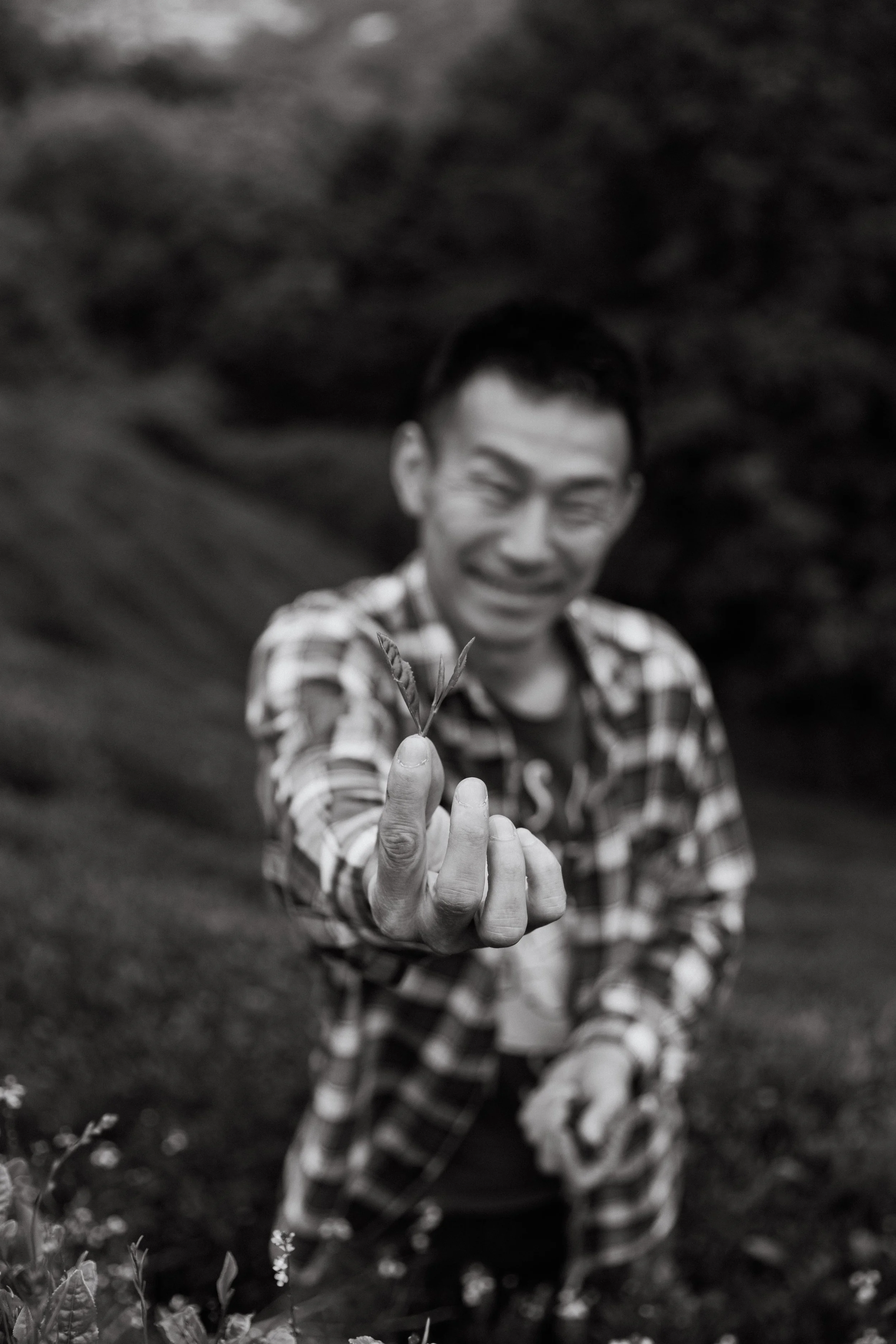
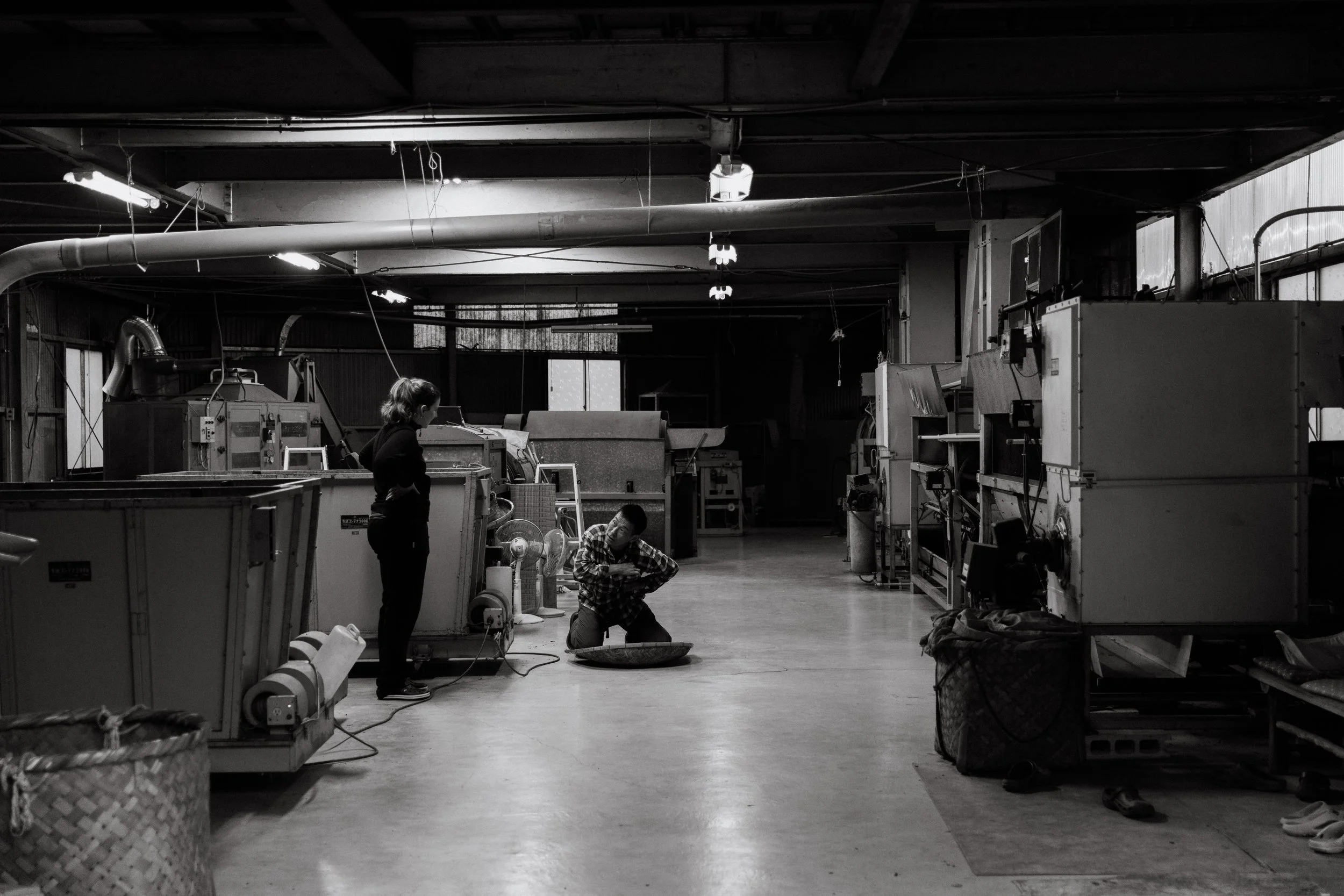
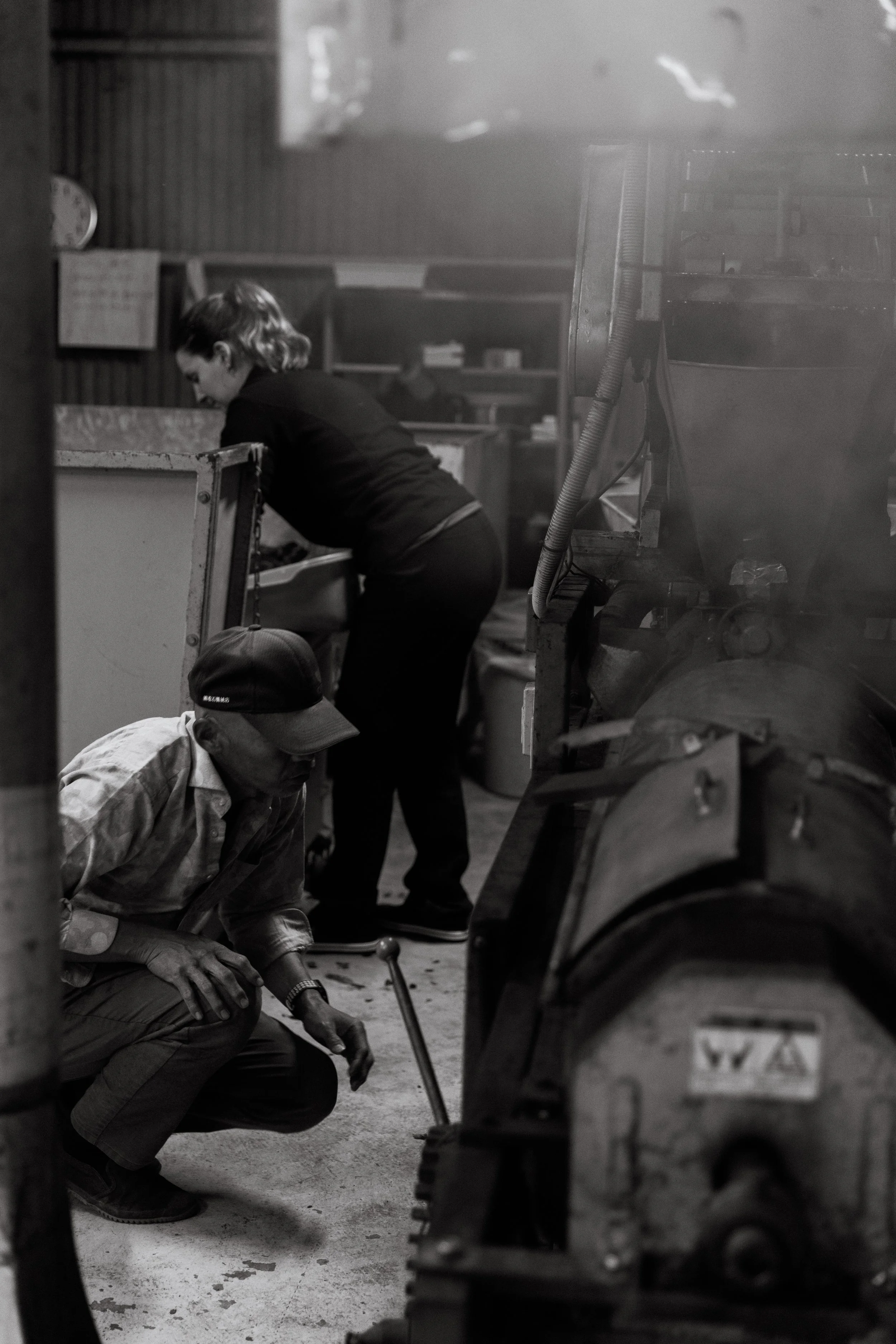
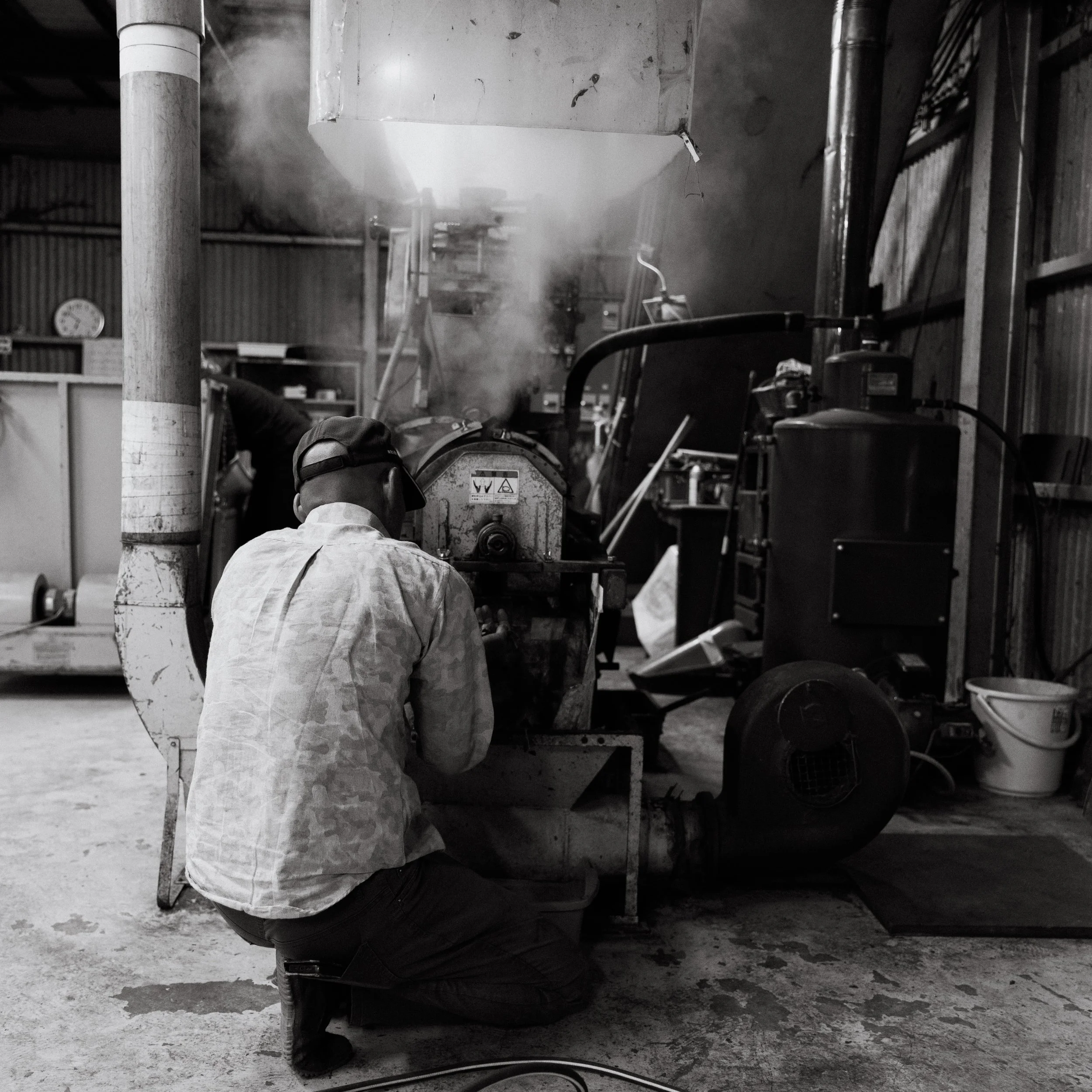
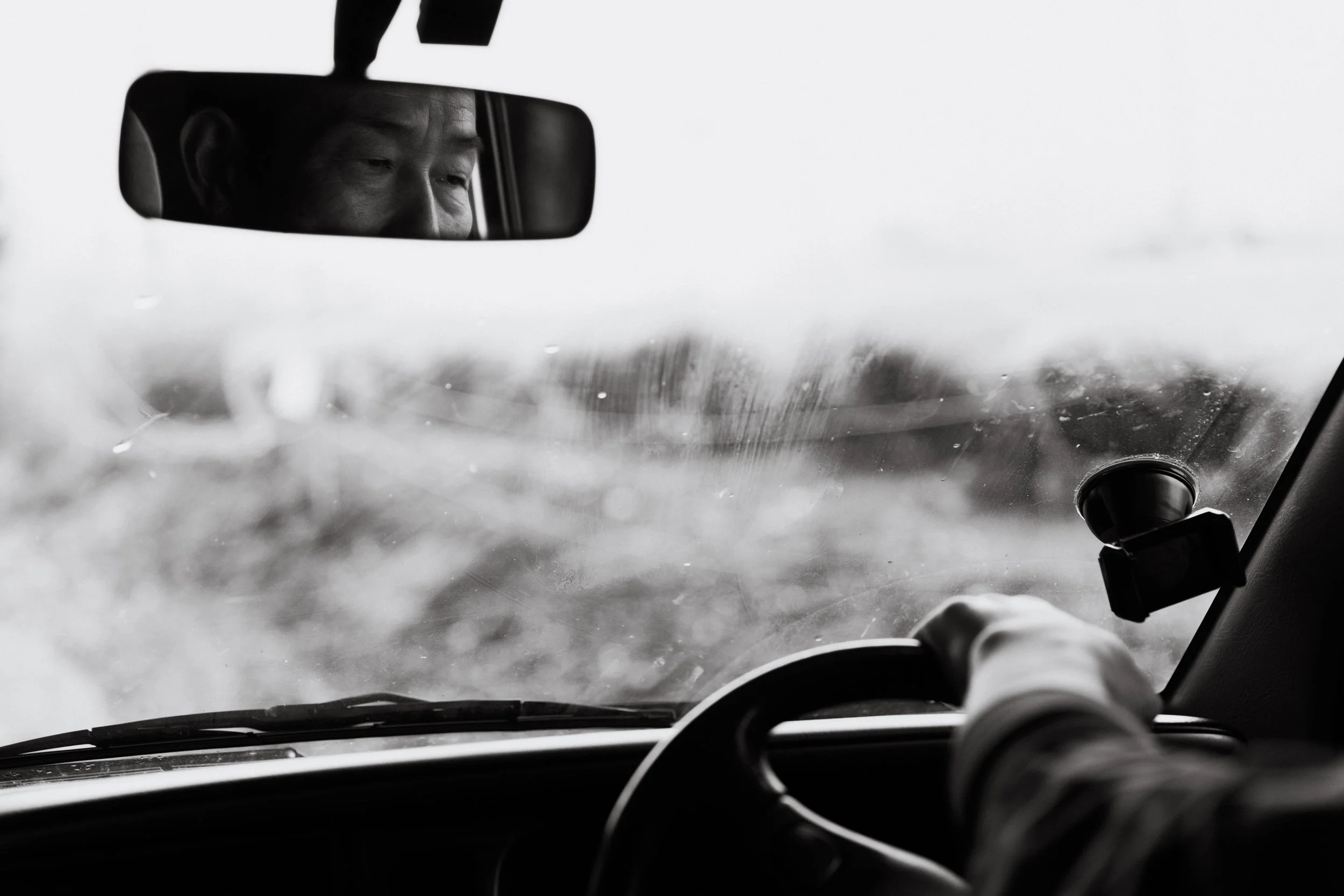
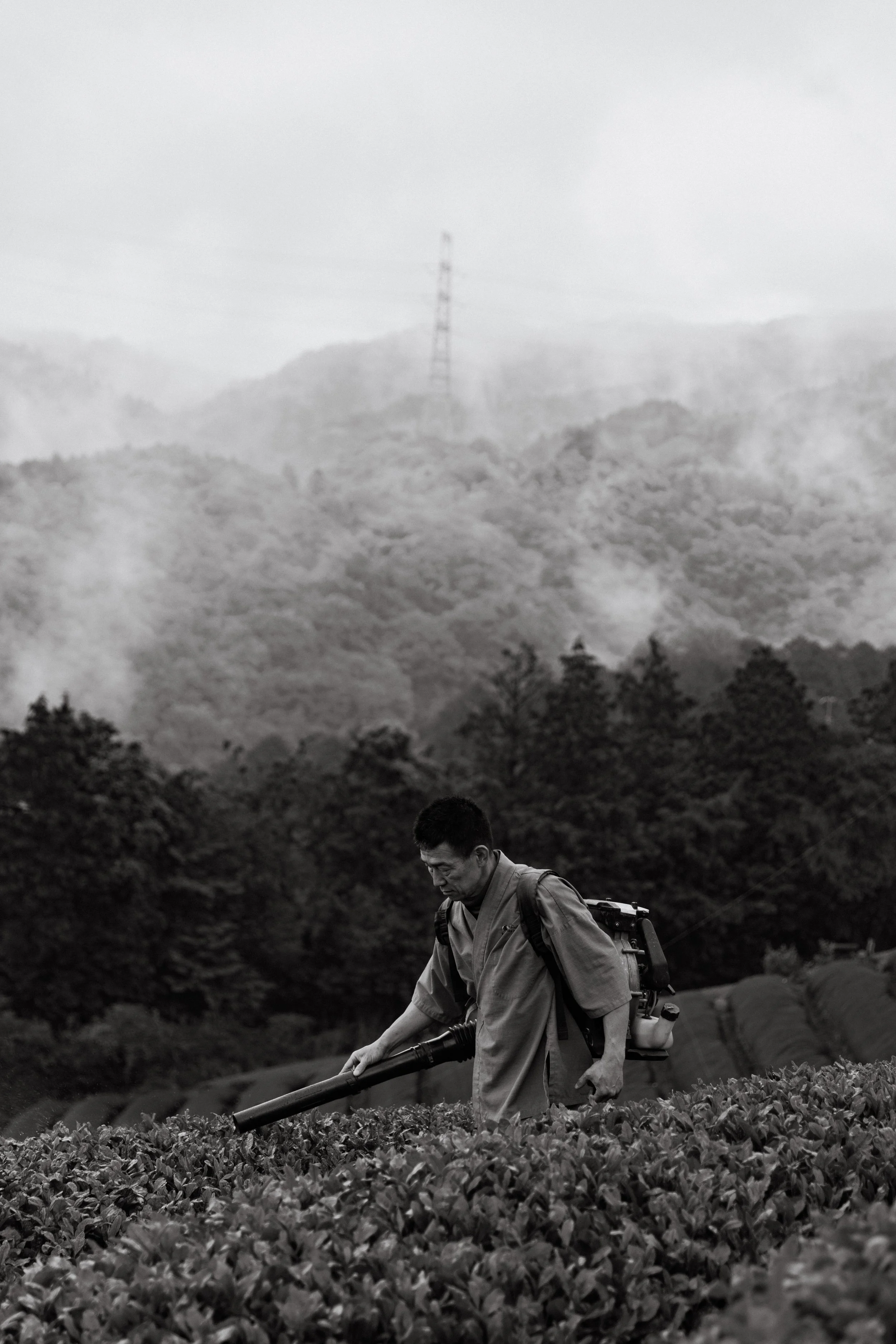
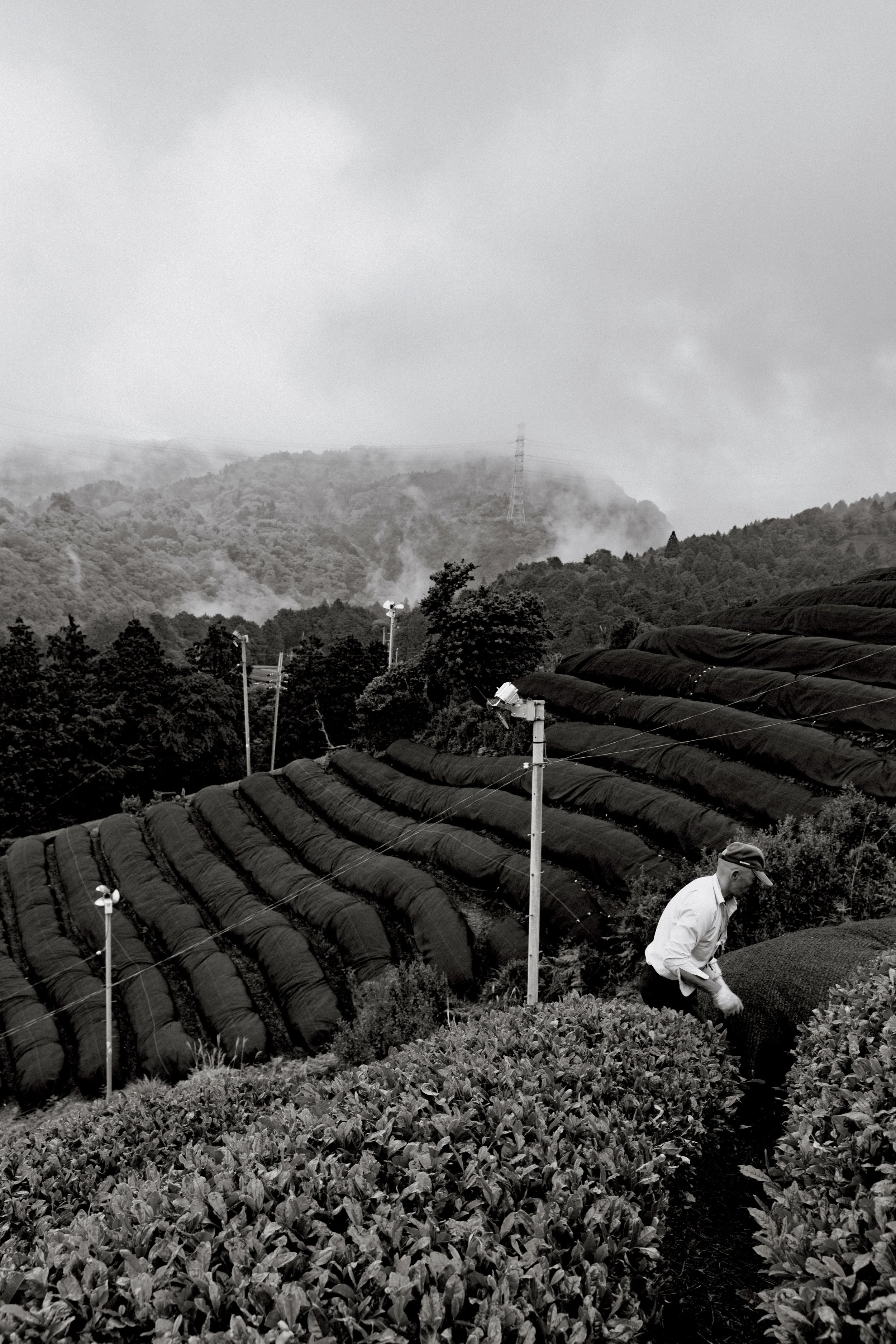
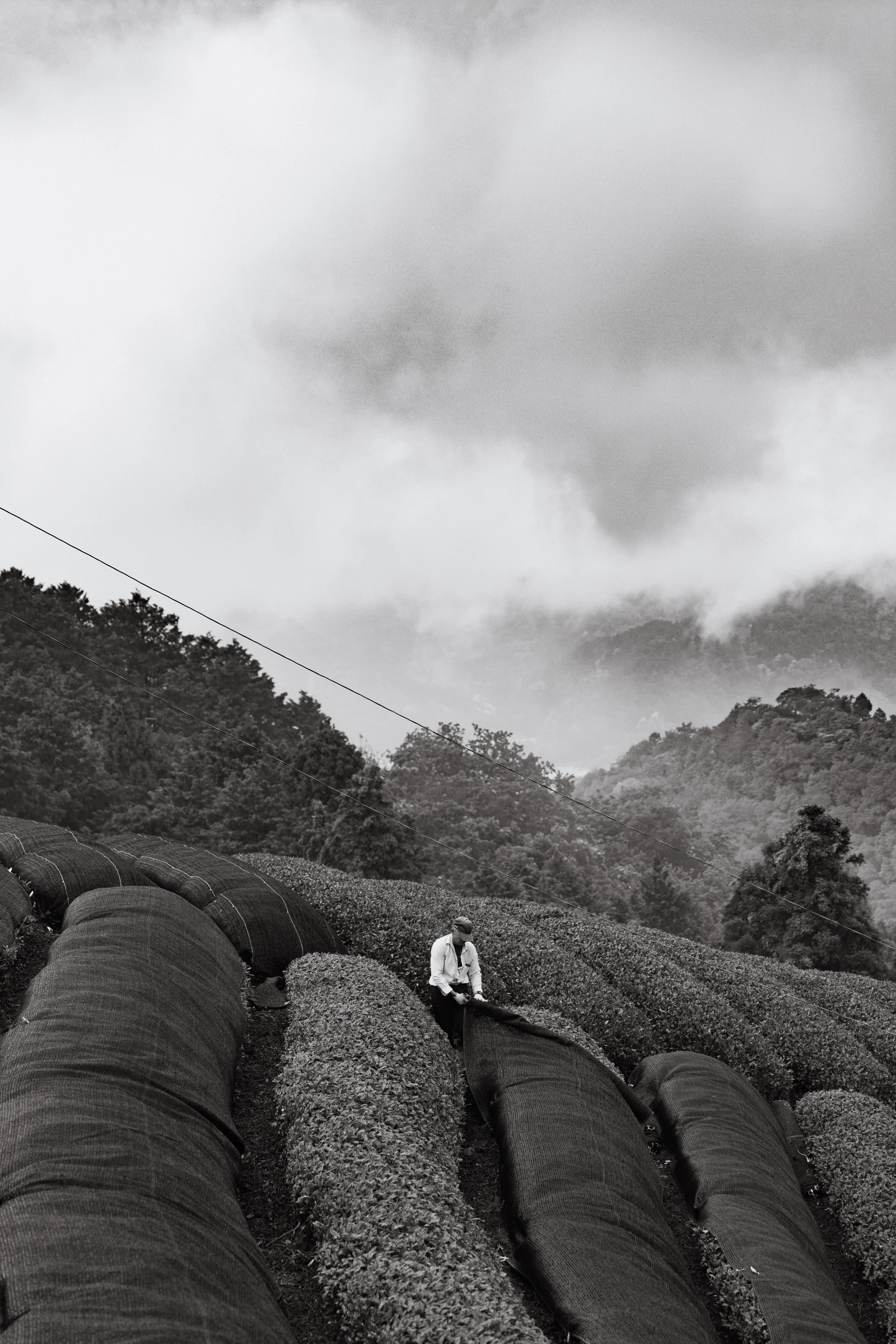
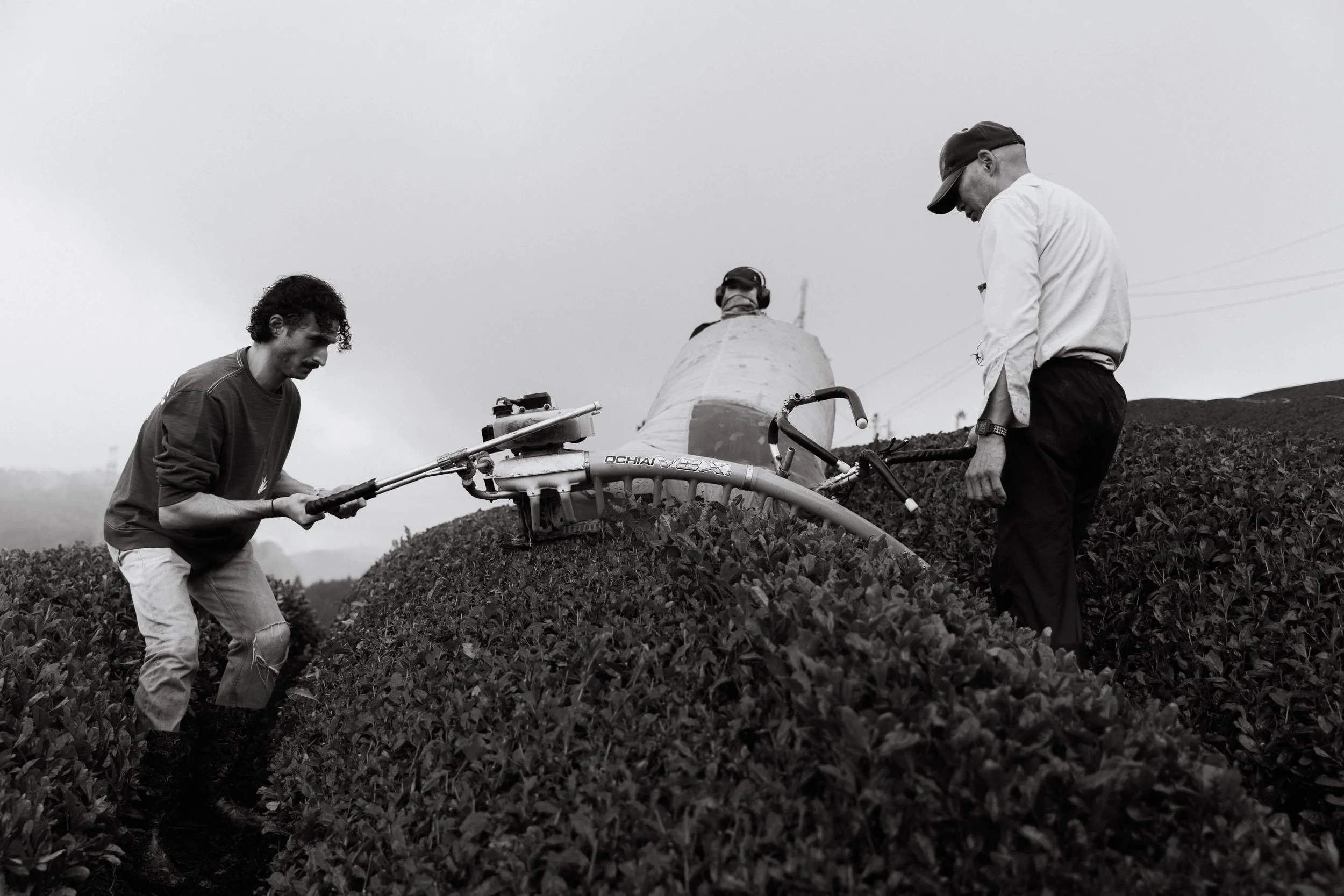
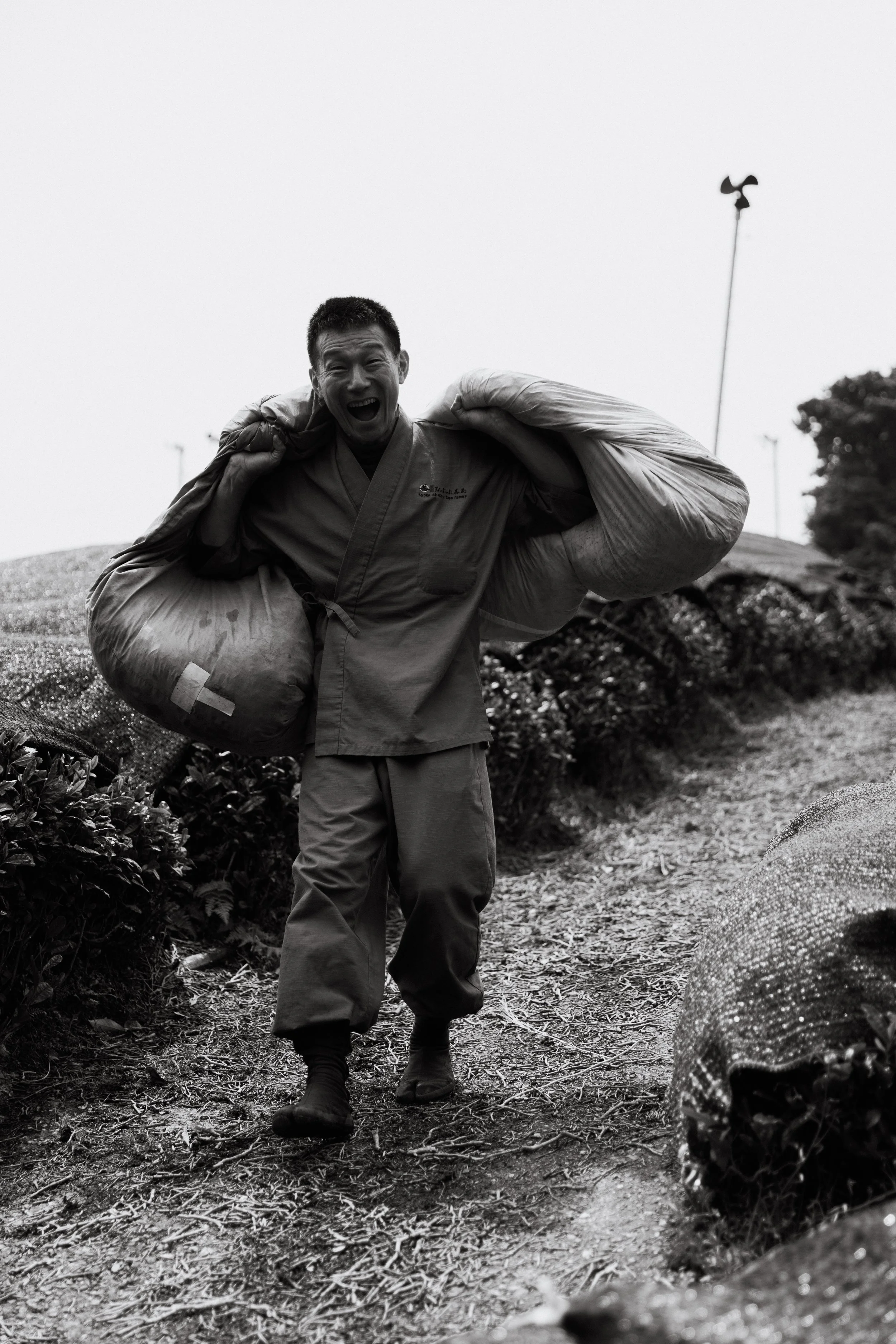
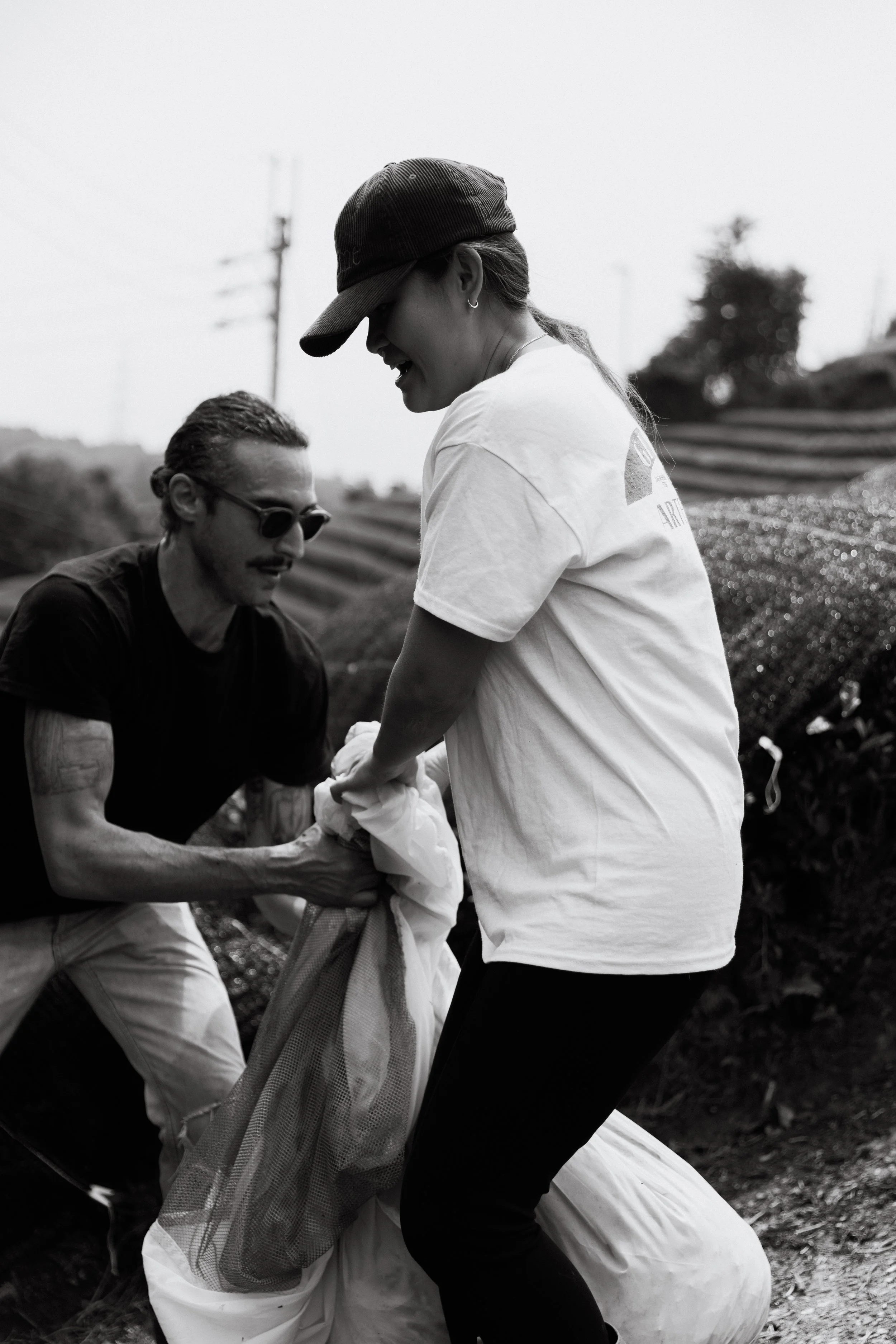
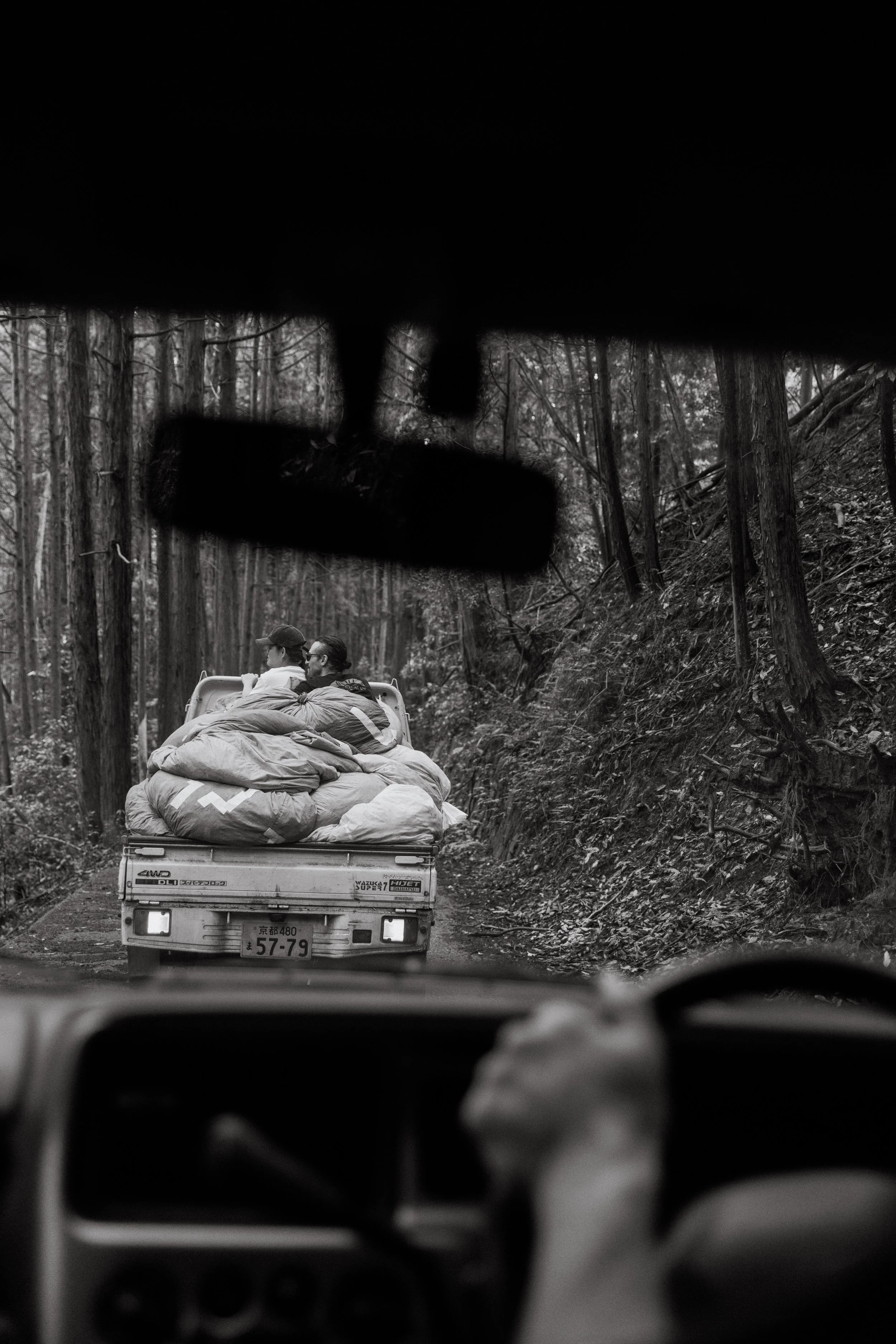
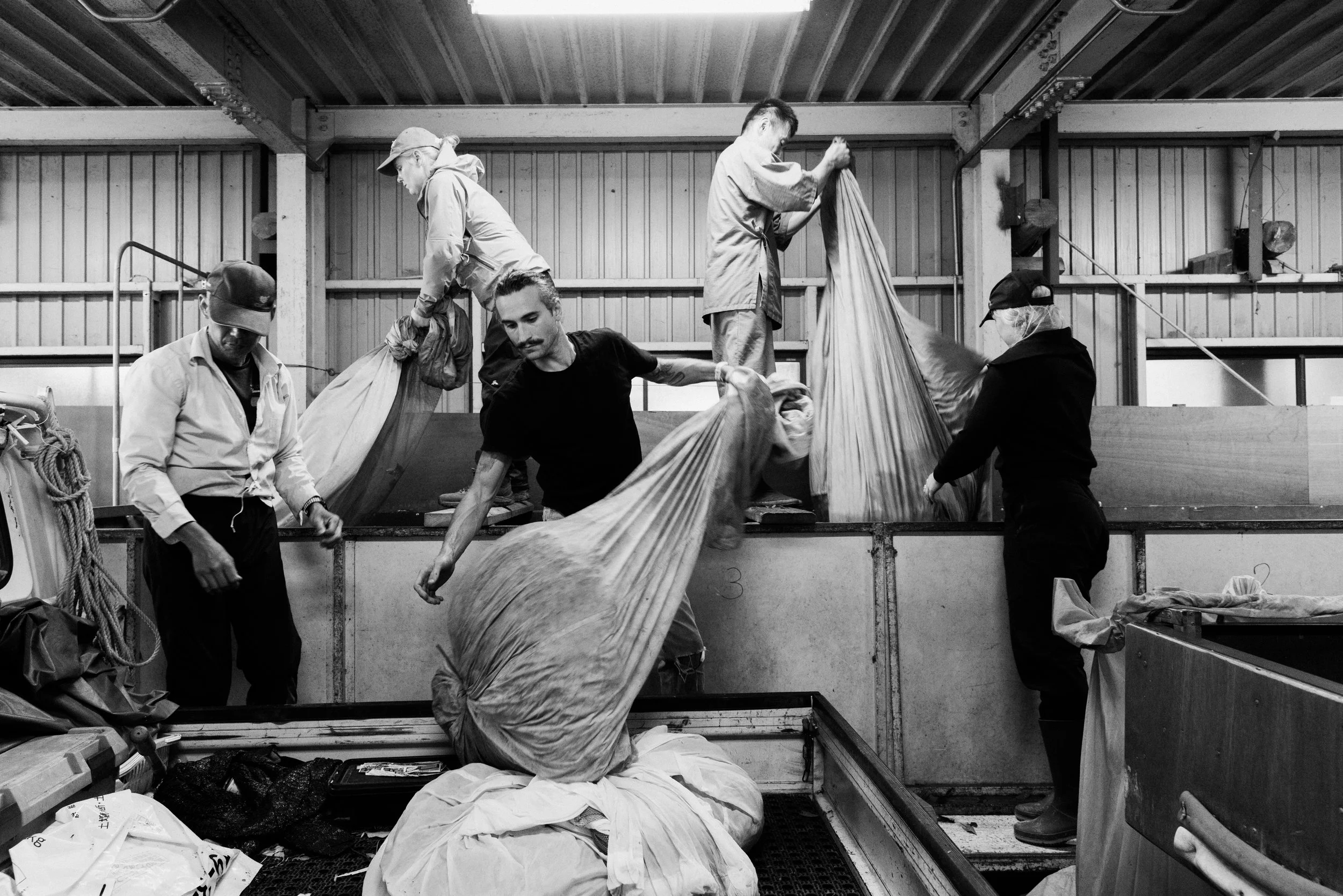
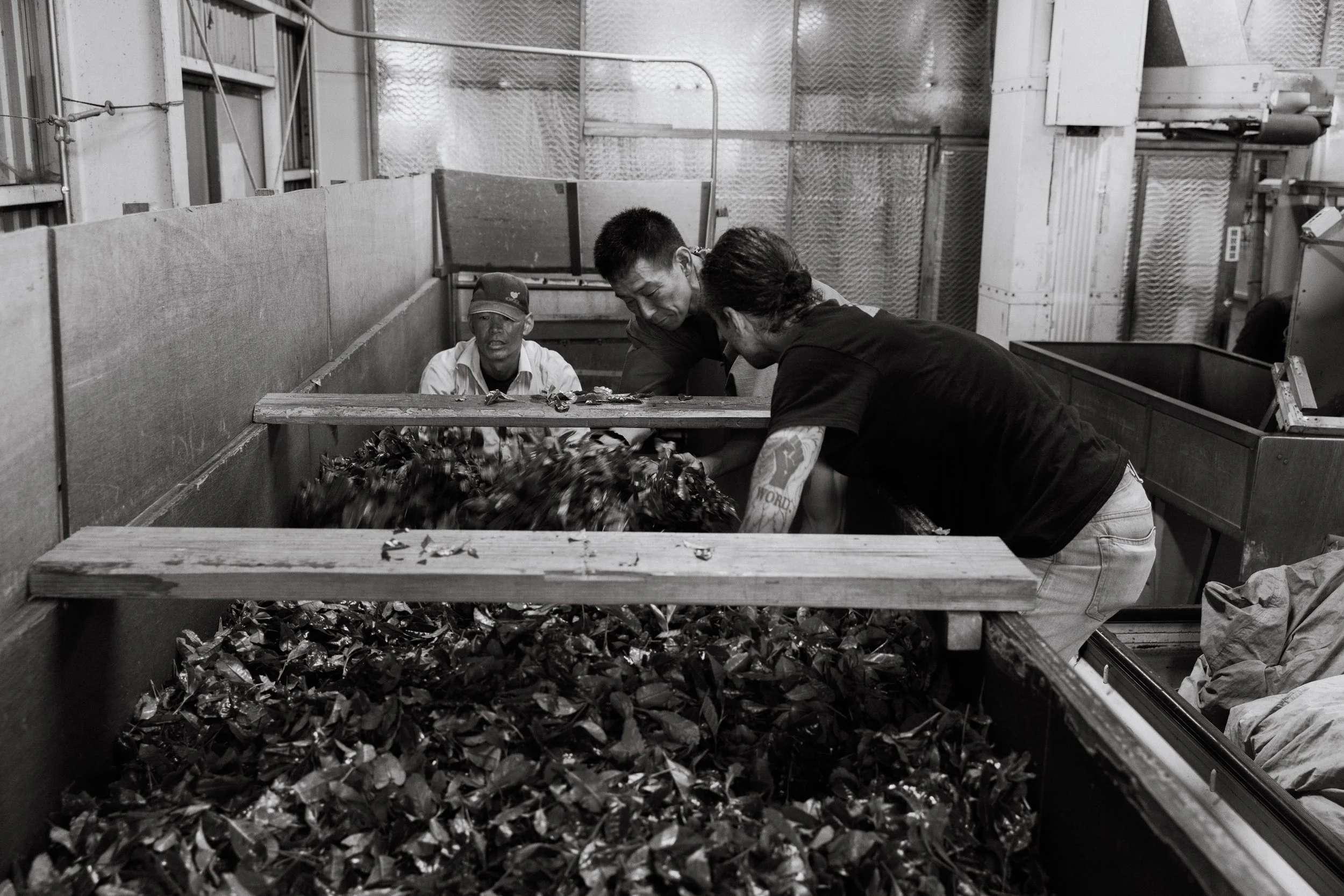
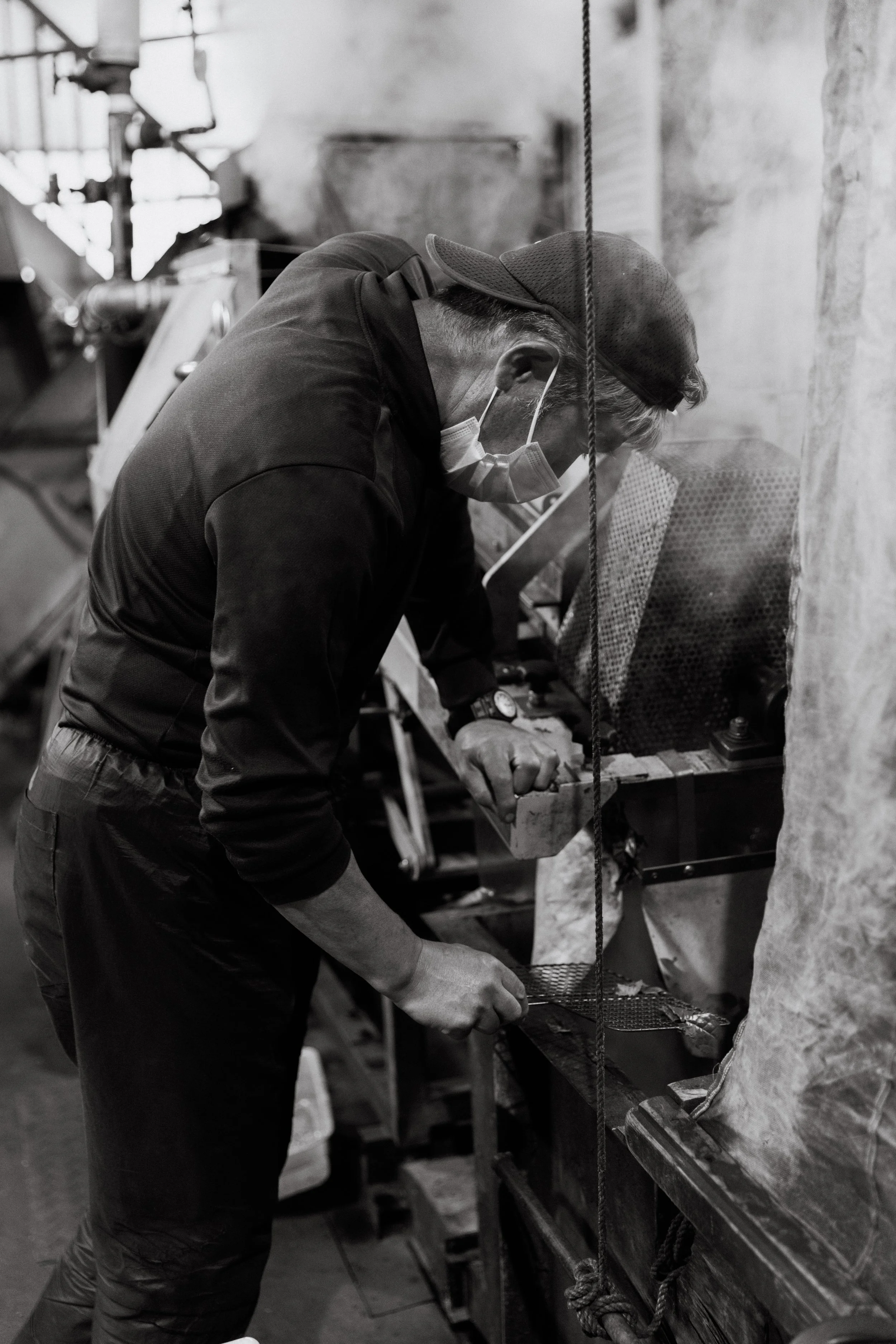
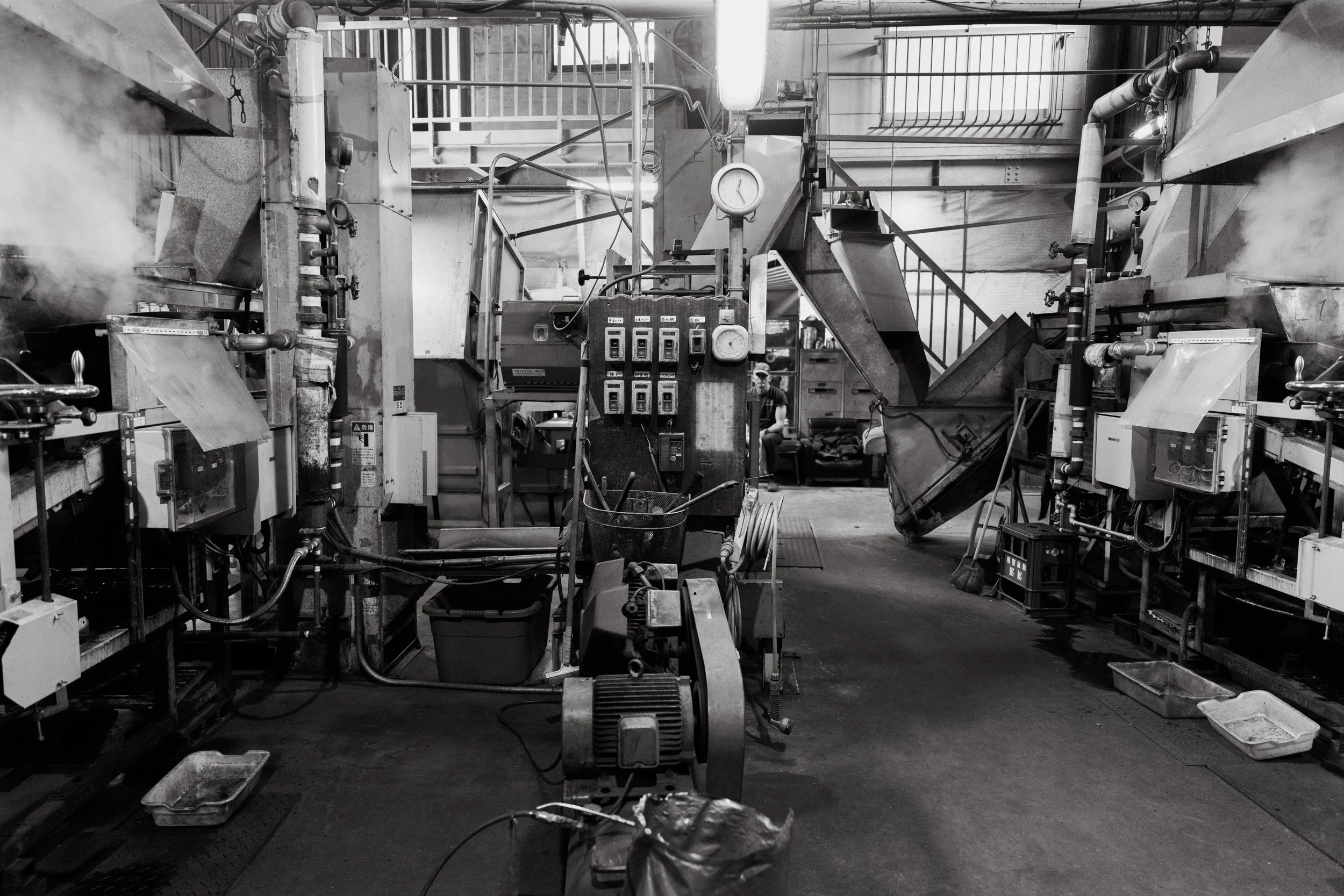
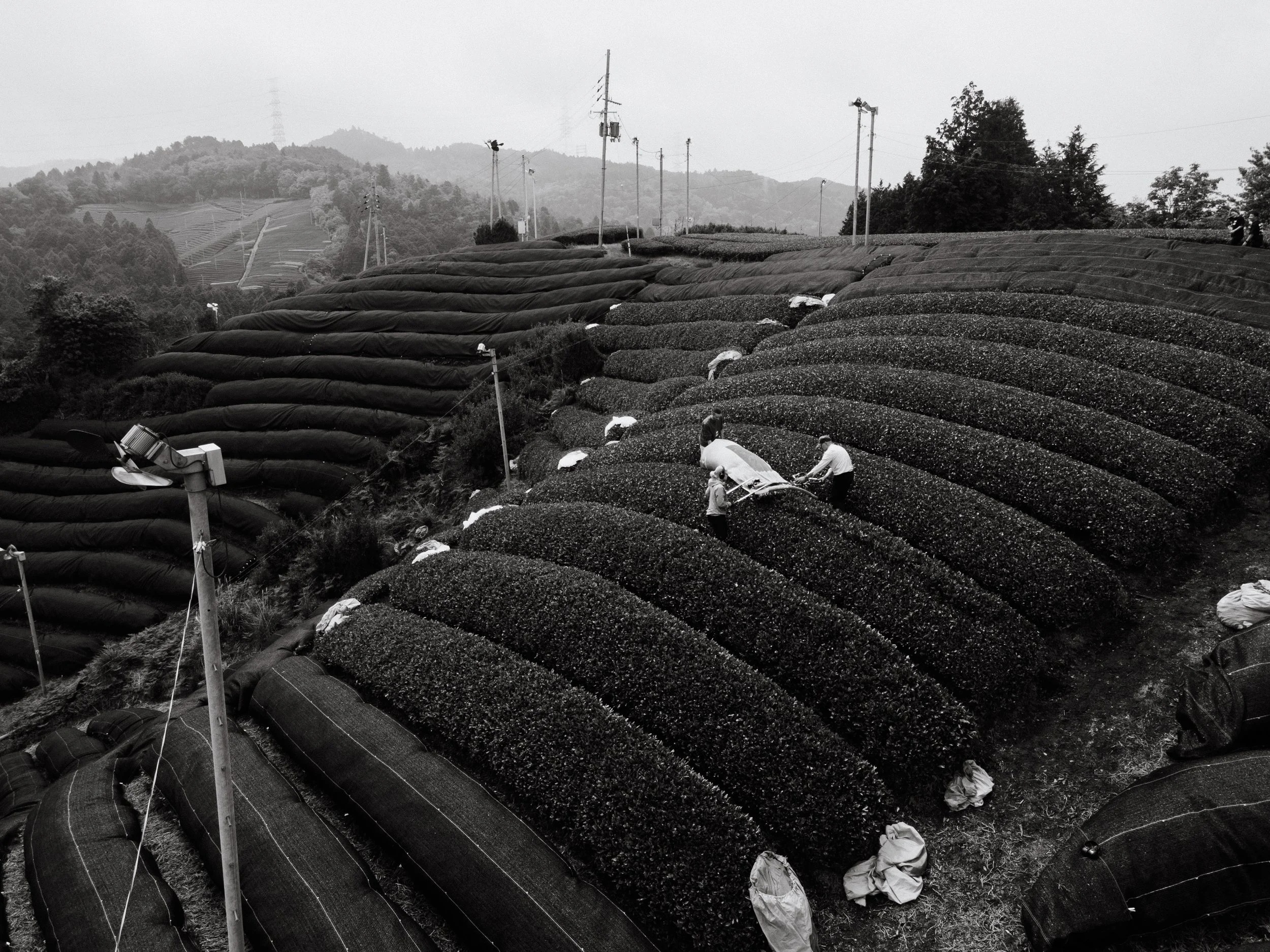
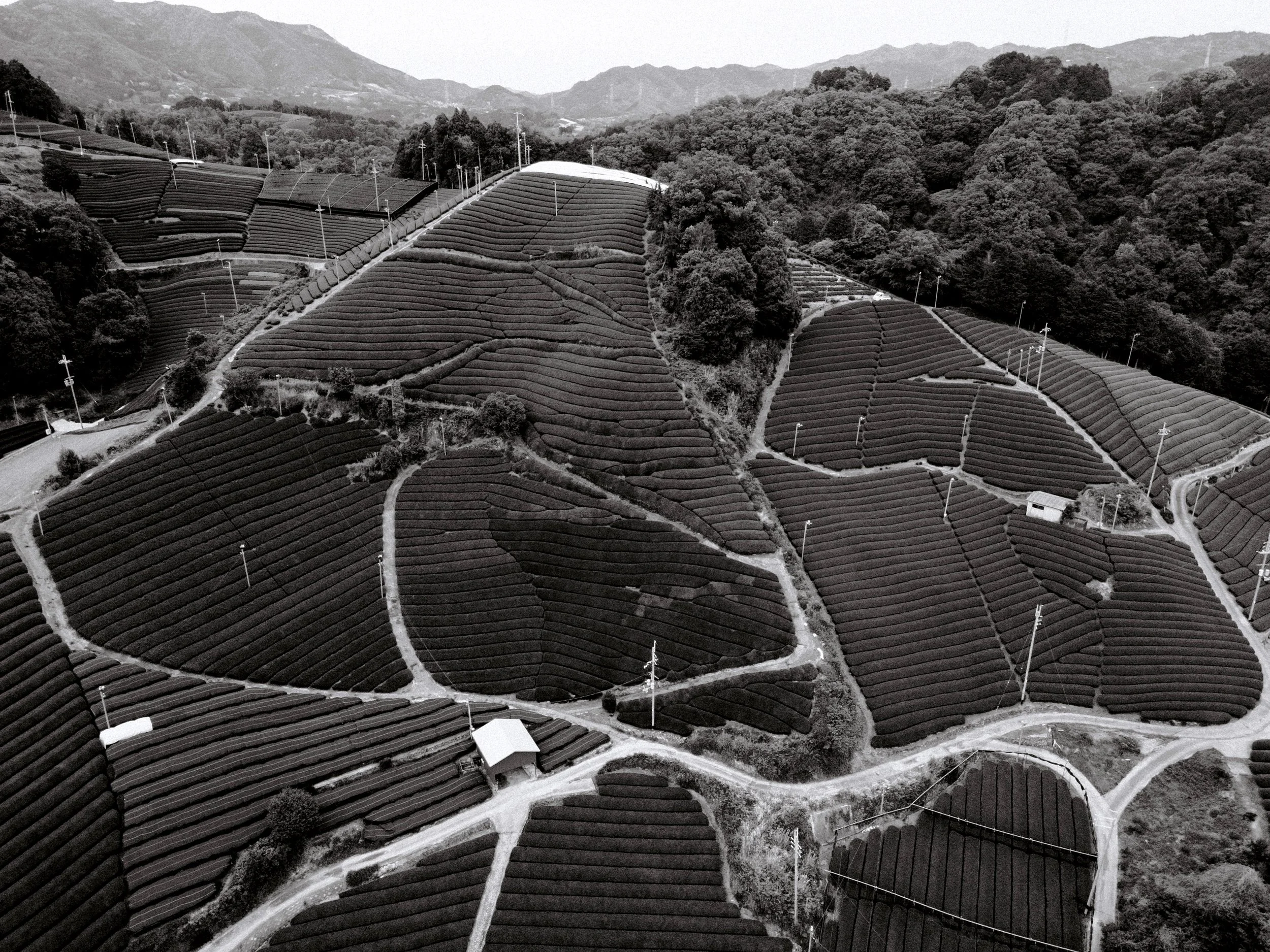
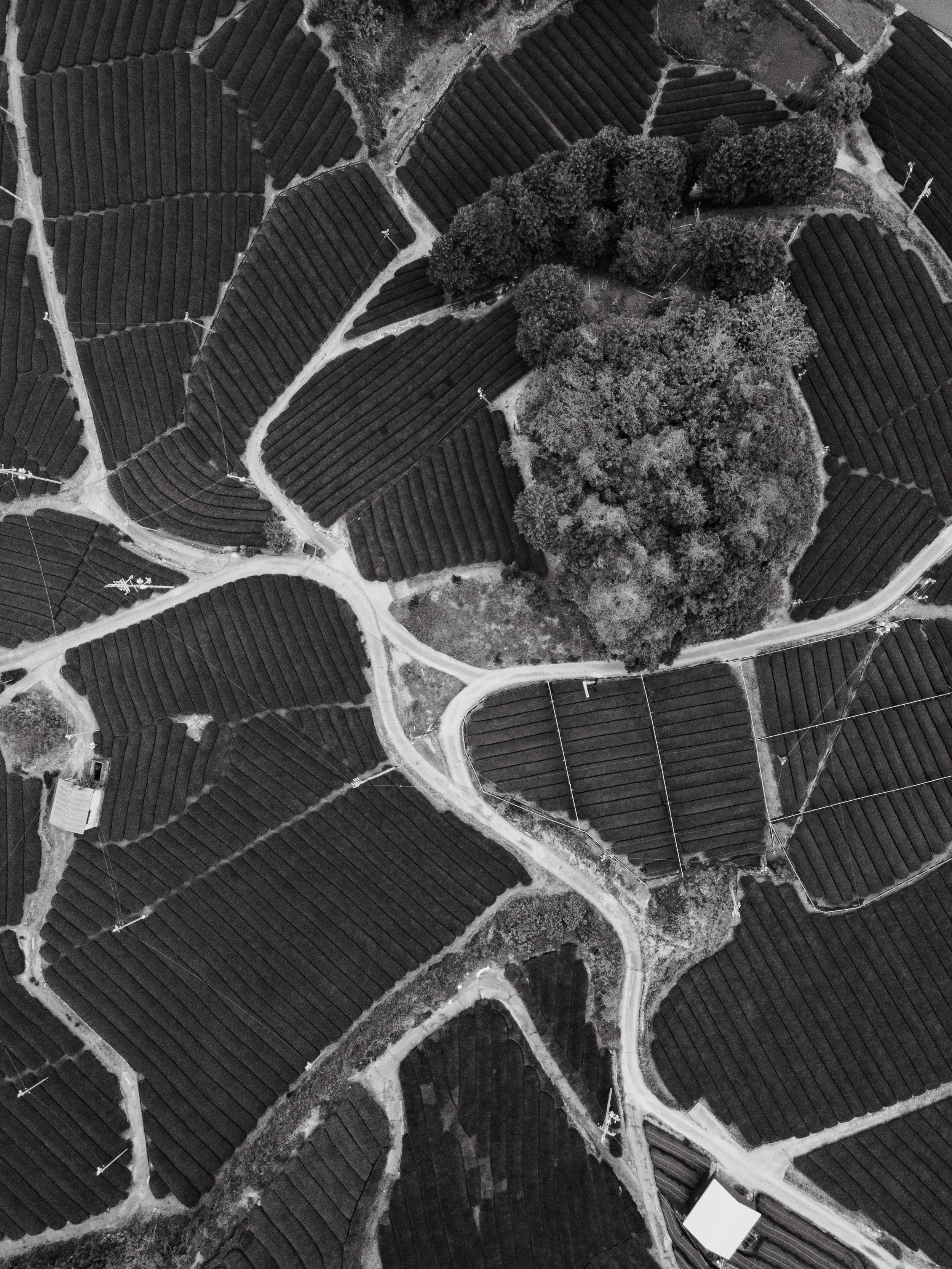
Above: A selection of photographs by Takeshi Hayakawa that exemplify his sense of capturing what’s real among the tea fields, farms, and farmers of Wazuka town in rural Japan.
VI. “The landscapes of experience that live inside of me…”
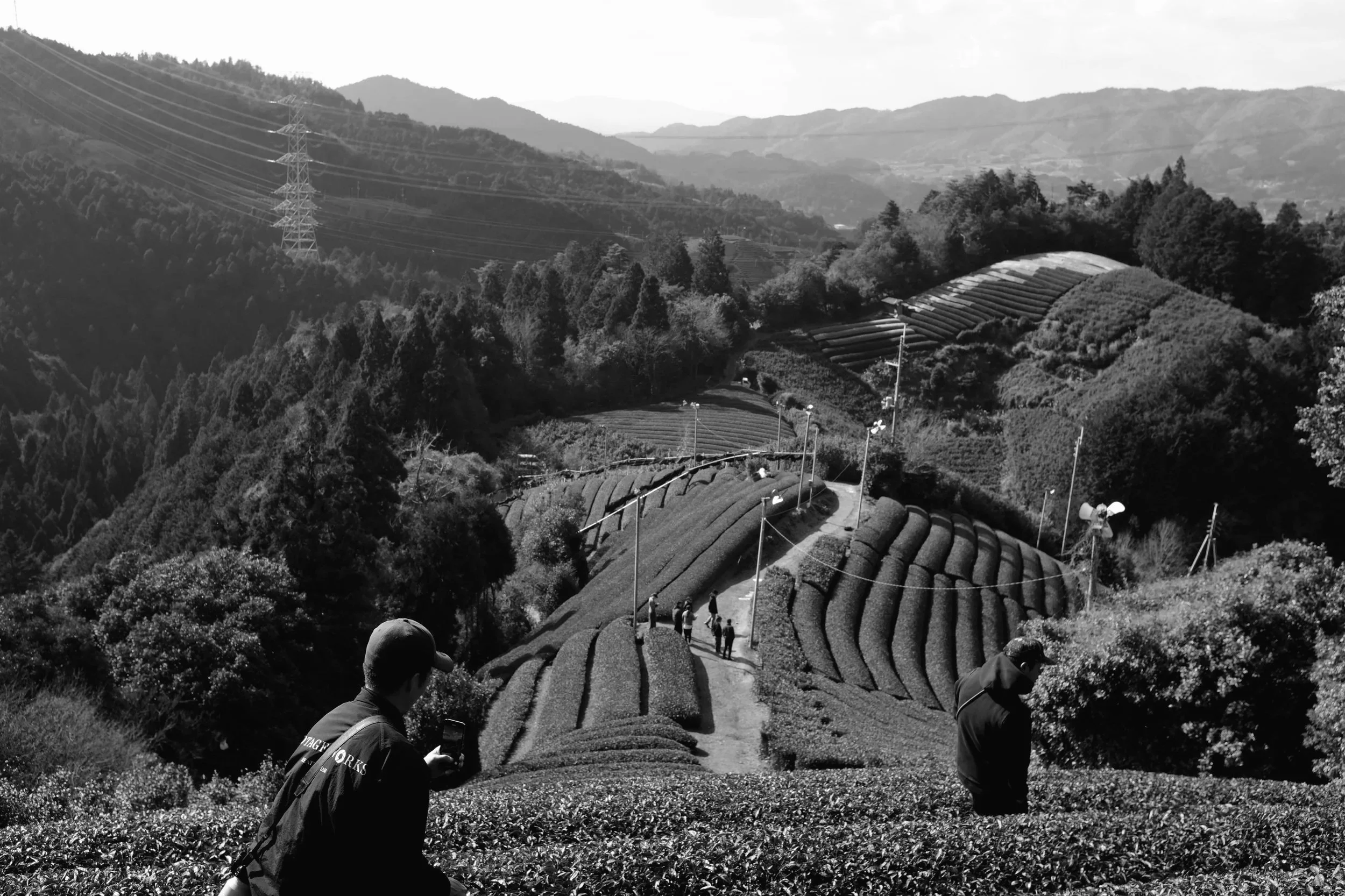
Fumiya (left) and Takeshi (right) descending a high-mountain tea field midst shooting Gentle Artefacts’s and Mr. Sabotage’s fieldwork visit to Obubu Tea Farms in Wazuka, Kyoto: January, 2025. Photograph by Gabriel Coren.
Gabriel: What matters most to you as a photographer today?
Takeshi: Commercial viability is important, as is a desire for your images to reach and to resonate with many people. But I have to balance that with capturing and conveying what’s real—so that my photographs continue to communicate what feels real to me.
Gabriel: If what’s real is a sensibility, which you give form to through a unique style that’s unmistakably your own and that discloses the influences you’ve absorbed—the activities you took part in as a kid, when and where you were (late 90’s/early aughts Shiba prefecture, Japan), whom you were with (your skate and punk rock crews); plus, the magazines and popular imagery that reflected your experiences and identity while at the same time helping to shape it—what would you say is at the root of that sensibility today?
Takeshi: At the root of what’s real is the feelings of my early adolescence: how it felt to be alive among the people I interacted with and the places I belonged to at that age. These are the landscapes of experience that live inside me—the visual landscapes of my experiences then.
Gabriel: I want to ask a bit more about what’s real but in connection with what you are calling “the landscapes of experience that live inside” of you, which originates in a particular time and place, yes, but also in an idea of a time and place in your life. I’m struck by the fact that the what’s real would index your sense of being in the world from a time that predates you ever holding a camera. And so the sensibility through which you approach photography, the way you see the world through your camera today, is anchored in a pre-photographic experience of the world. Two questions, then. Firstly, where is ‘what’s real’? Or, what does it feel like when you’re shooting from the place of ‘what’s real’?
Takeshi: It is really difficult for me to put it into words, but the main thing involves sensing how I want to portray this scene—like how I want to show it. And then to do that, I want to shoot [it] from my own real feelings. With regards to photography, ‘what feels real’ is about imbuing one’s images with an aura of reality that goes beyond the representational realism of the photographic image itself. It is difficult to put into words, but, well, you can sense the atmosphere of the place depicted—can feel, and even breathe, the actual air that’s there…
Gabriel: Secondly, a connected question: what does ‘what’s real’ look like in your photographs? When you see one of your images, how do you know you’ve tapped into ‘what’s real’?
Takeshi: Putting it into words is difficult, but…as I mentioned earlier on, there’s a boom in skater culture and streetwear culture right now in Japan. There was the spark and initial boom in the late 70s and early 80s, a revival and second boom in the 90s, and now that boom has returned once again. This resurgence of skate and street subculture and fashion is something you can sense in traditional media and feel from what circulates, often virally, in certain quarters of social media. But the resurgence of these trends today in a social media age means that an authentic awareness of what we had felt at that time needs to be communicated aesthetically now more than ever. ‘90s culture, imagery, and aesthetics are pervasive across contemporary media, and we can see a lot of it surfacing across social media as well. Whether interpreted as retro or nostalgia, it’s a recycling of trends, but the recycling of those trends today in style and as lifestyle just doesn’t capture the feelings I actually experienced in my youth or express the sense of ‘what’s real’. It isn’t the visual aesthetic that I’m going for but rather a feeling of being there—and of being here, now—as I was [there] then.
Gabriel: So, the moment you inhabit together with your subjects, the affective and cultural space you share—being alive to that, connecting to it in the instant, and managing to communicate that through an image?
Takeshi: Yes, feeling the moment. Digital photography is great, of course, but the special weight of a single shutter snapping shut in the instant belongs exclusively to film after all. A film camera’s single shutter makes me feel the moment more directly—it forces you to feel the moment. And the way that film photography can capture details! When I think, like am now, about how I can convey through a photograph a scene I had experienced so vividly in the moment when I encountered it, for capturing and conveying this moment it’s better to shoot on film. My ability to successfully capture a moment from a scene or situation on film ties the photograph that results to the feelings inside me—and especially to how I was feeling in that moment, as part of the scene. That’s what I mean, I guess, by what ‘feels real.’
Gabriel: This really sounds like a description of good ethnography. Of [one of] my definition[s] of anthropology as a practice, meaning experiential knowledge predicated on encounter, which can introduce or open up significantly new points of view for anthropologist and their subjects alike. But the work of being attuned to oneself and one’s surroundings, of putting oneself in the frame and leveraging scenes of encounter to adequately represent other’s experience through the medium of your own [experience]—that’s good anthropology. And a photography of what’s real for you.
VII. Film photography: atmosphere, empathy, and imperfection
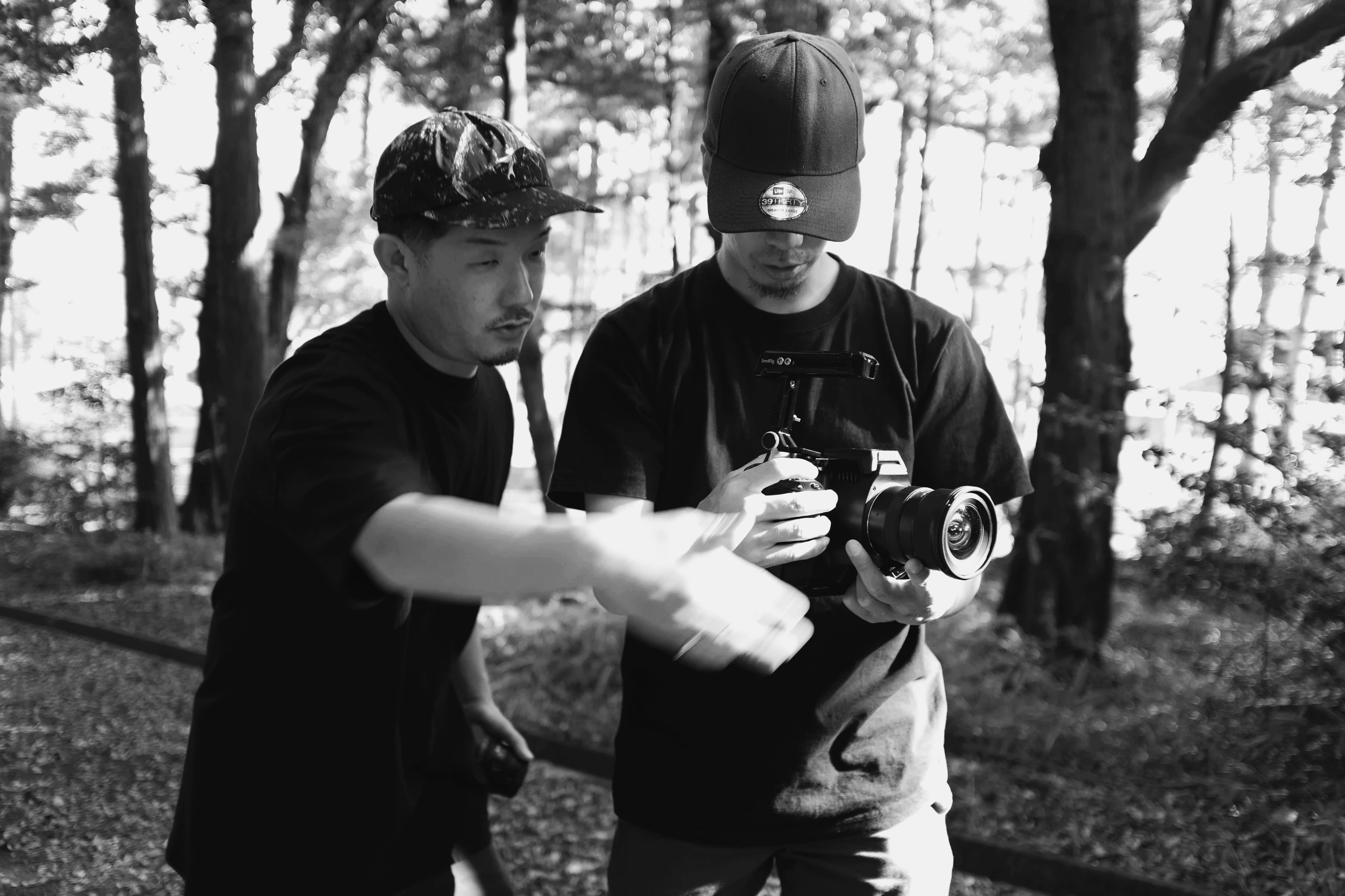
Takeshi and Fumiya block a skateboarding film sequence on location with Gentle Artefacts in Wazuka town, Kyoto prefecture: May, 2025. Photograph by Gabriel Coren.
Gabriel: You know, you said to me at some point that you don’t care so much about perfection when it comes to your photographs. And I presumed that you mean technical perfection—white point and saturation settings, the tonal balance of the print, the grain of the film remaining unaltered, or the composition of a shot without cropping or manipulation. But you said that perfection wasn’t important to you because what you always privilege is a mood that’s alive in an image—and living mood—and the feelings that an image therefore captures or else may invoke in a viewer. I was curious if you could tell me a bit more about that now?
Takeshi: If I prioritize ‘perfect’ when I’m shooting, it means that I’m looking for something that’s not the most important thing. Of course the technical side is important, but it should never be my highest priority. What’s most important is that sense of ‘what’s real,’ which, to put it simply, is about empathy…Of course I aim to produce ‘perfect’ photos when the job demands it. But there are many different kinds of assignments, and ‘perfect’ is rarely the best approach. I don’t want photos to be perfect. There could be film grain visible, blurring, or nothing quite sharply in focus—even so, I think that can be totally fine because I believe that what you can feel from a photo matters far more. But I don’t feel anything for perfect, beautiful photos; rather, I think, ‘here’s a perfect, beautiful image just like photos of perfectly beautiful people…’ Perfect images fail to inspire empathy. They fail both to invoke something deeper beneath the surface of the clean image and to elicit something deeper from inside me. But an image that’s a bit rough or raw feels personal and can reveal one’s personal style, how they see. And it can elicit empathy in viewers, inspiring them to empathize with both a photograph’s subject(s) and with the photographer as well.
Gabriel: Your approach, as you’re describing it here, sounds pretty damned punk rock—as an orientation to fashion photography—to me…
Takeshi: …Well, maybe my antipathy towards perfect (and perfectly beautiful) photography is a remnant of the older subcultures, like skating and punk rock, which I descended from—like, using really old film cameras or deliberately putting out very blurry photos is pretty punk…Character in photography comes more from technical imperfections that nevertheless invoke one’s personal style. Thinking about the way this point of view surfaces in my photography today returns me, full circle, to the spirit of the defining subcultures of my adolescence—the spiritual center of skateboarding culture was going against the grain of perfection; it wasn’t meant to be perfect, pretty, or polished. And so, the images, photography, and art that those cultures inspired were meant to be raw.
Gabriel: The last time we were in Wazuka, Kyoto together, you showed up with a medium format camera. But that isn’t one of the cameras that you ‘borrowed’ from your grandfather’s collection—not, at least, at first. You sought out, saved for, and bought that vintage, unorthodox camera. It is an instrument that really requires sustained experimentation—in addition to experience and technical knowhow—to figure out how to wield. So, what’s going on for you? What’s interesting for you about medium format film photography? And what does it do for you as a viewer and an artist?
Takeshi: That camera is 120mm, and it’s a Mamiya camera, which was released in two versions, the first from 1982 and the second from 1993. So the first reason I love to shoot on it is that it is basically a camera from my generation. The second reason is that I love the way it renders images. And the third is that it was also a camera that my grandfather liked. It is mostly simply that I like taking pictures [on it]. But since you ask, those are the three reasons it is a special camera for me and I continue to shoot medium format photography with it as often as I can, including in Wazuka for Gentle Artefacts.
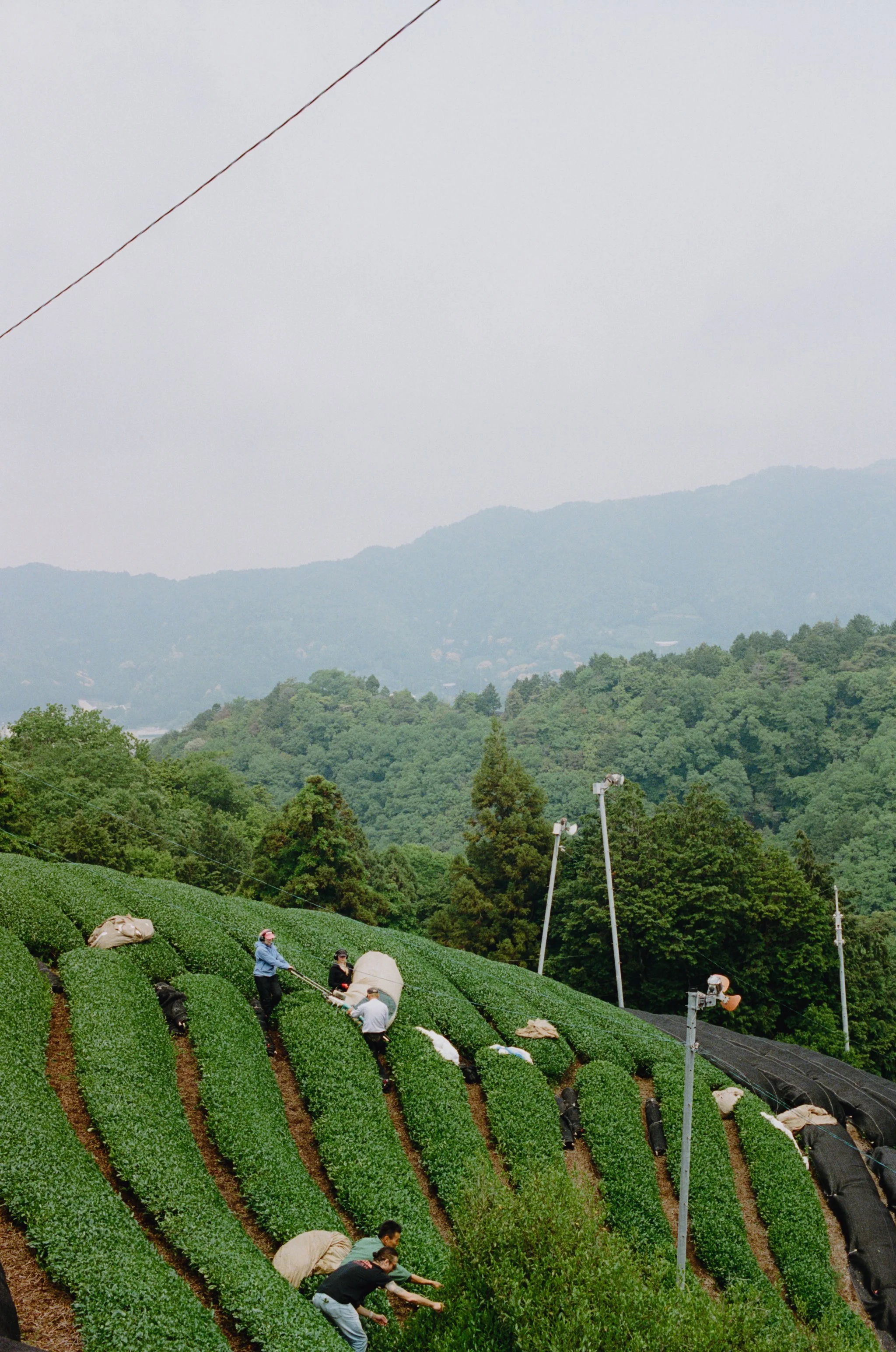
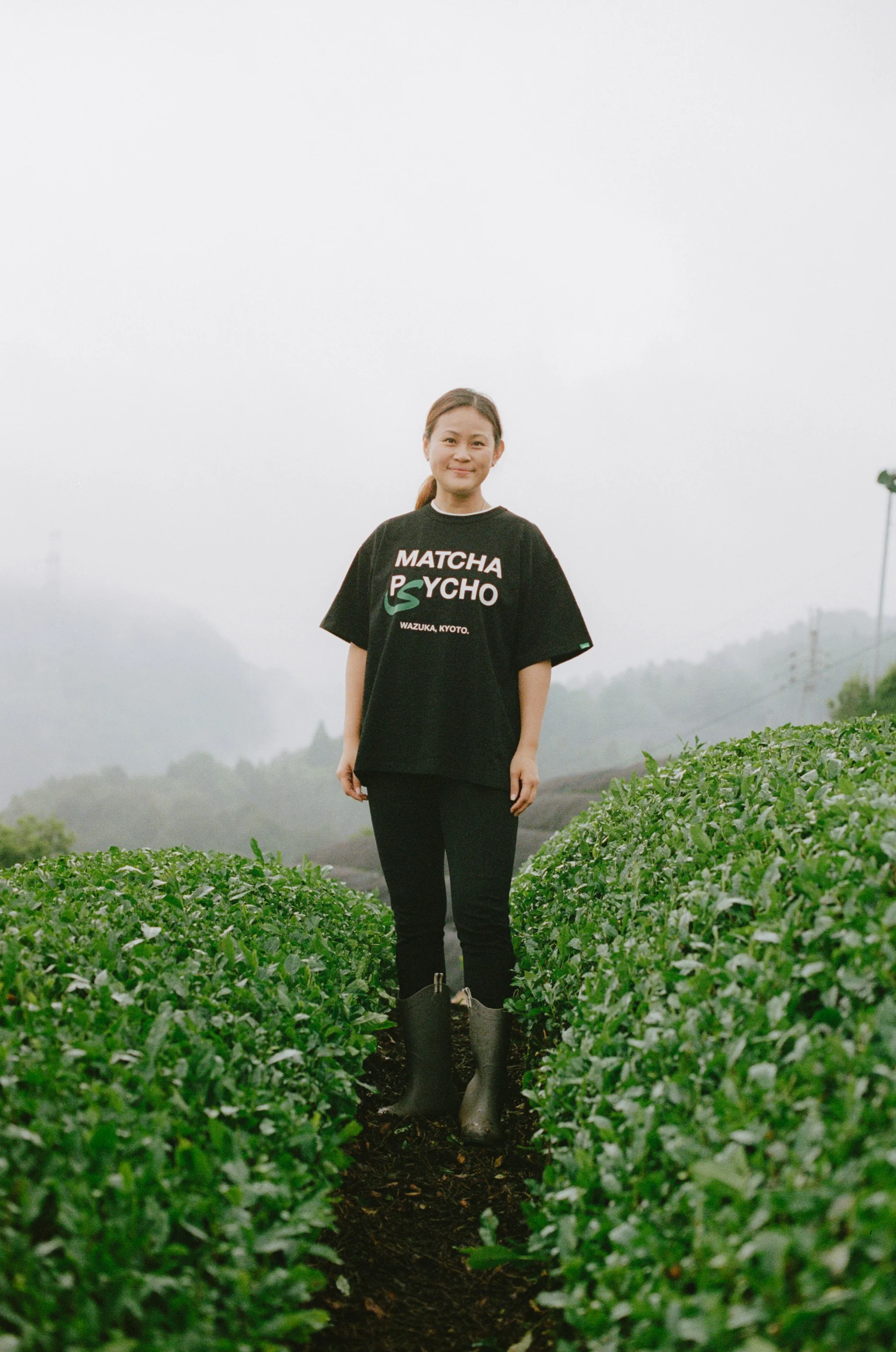
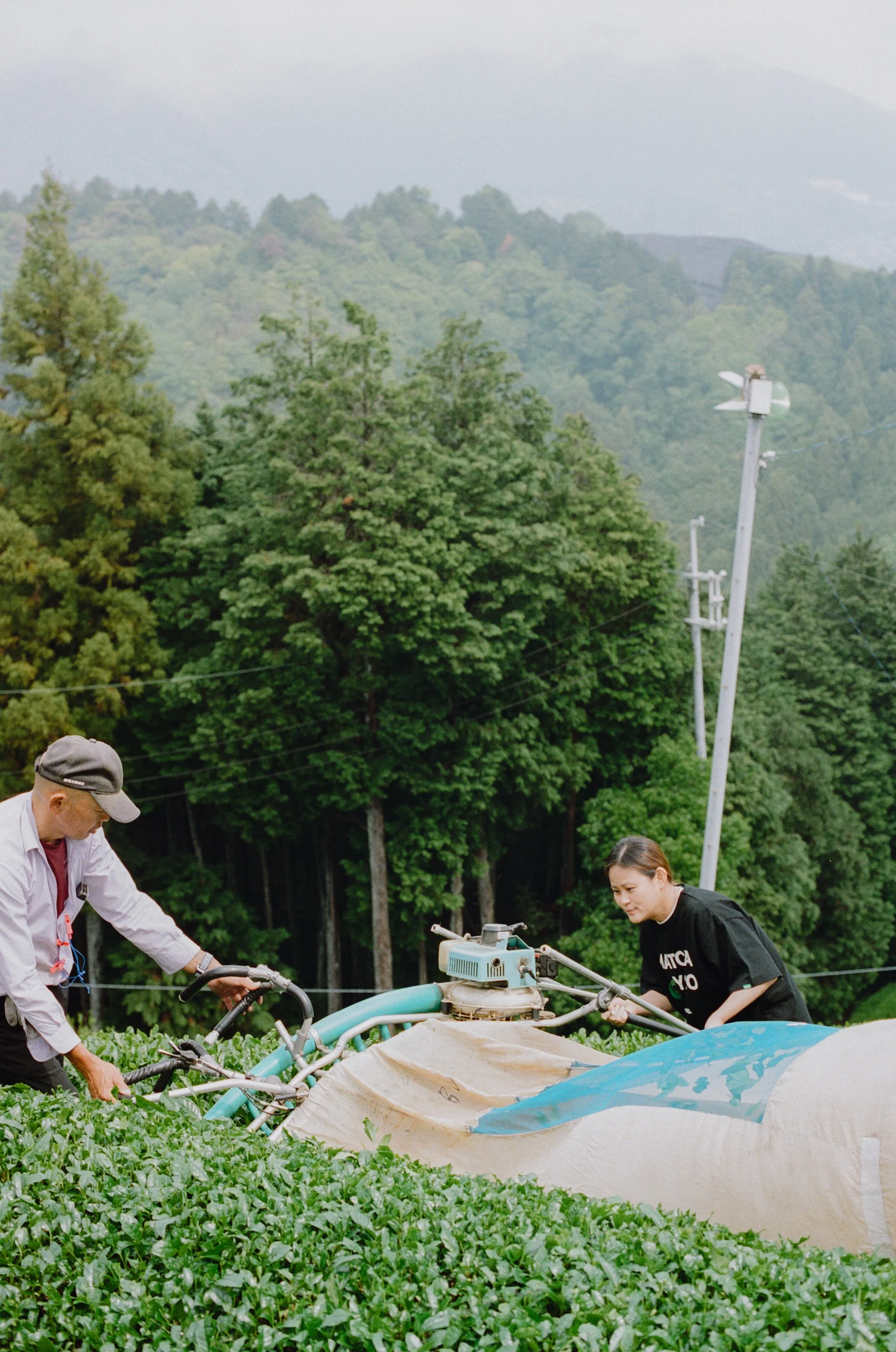
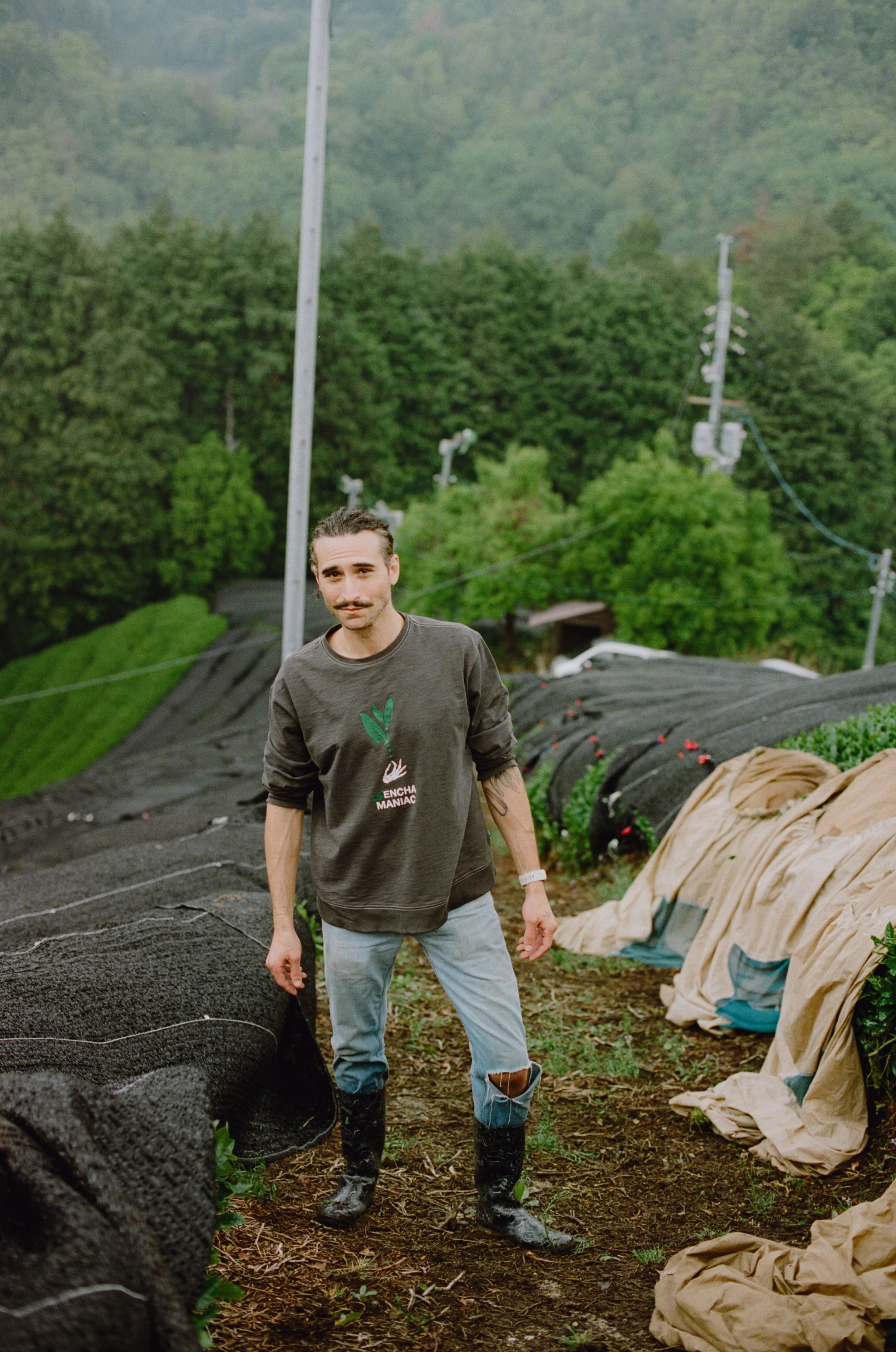
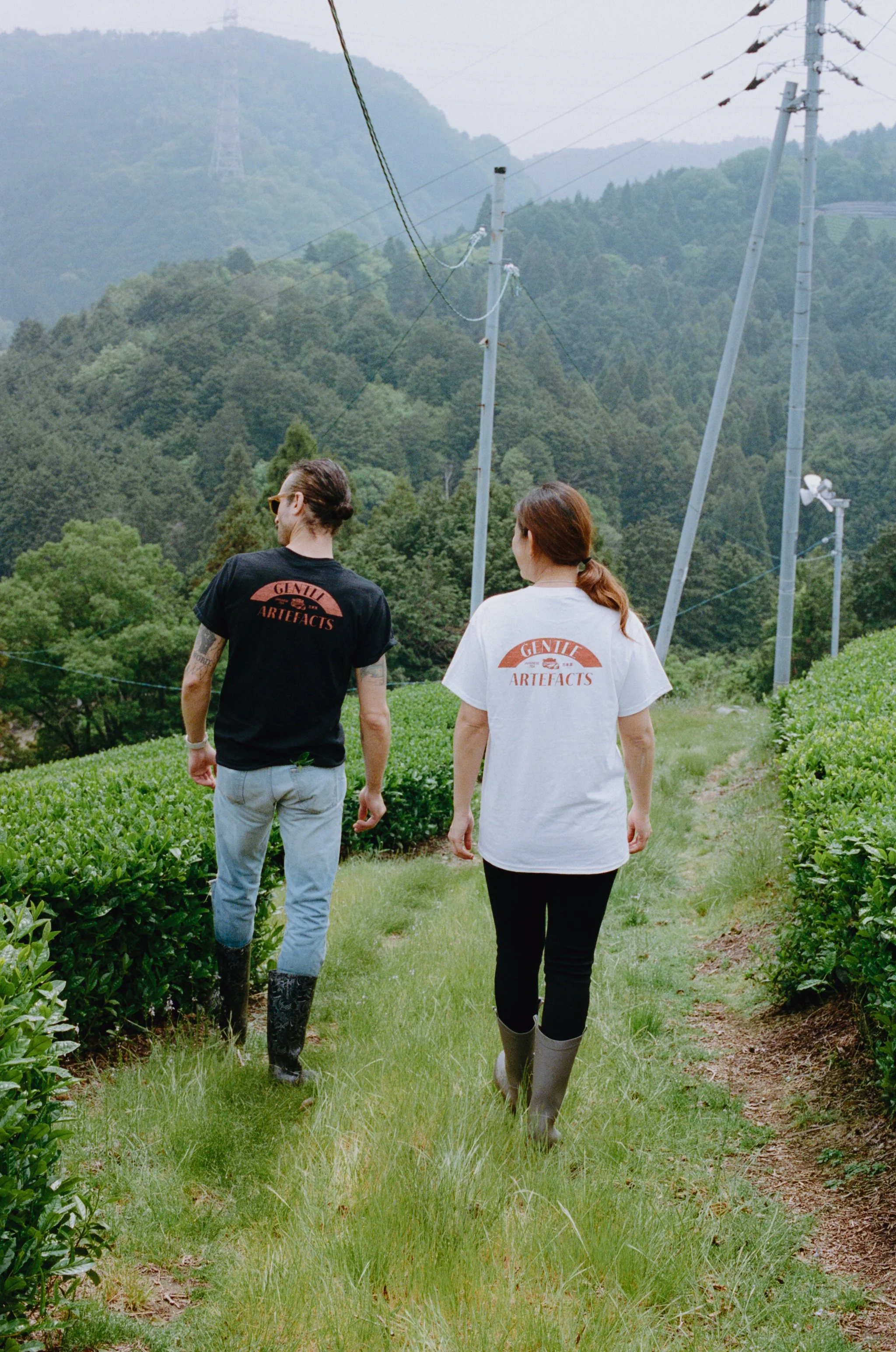
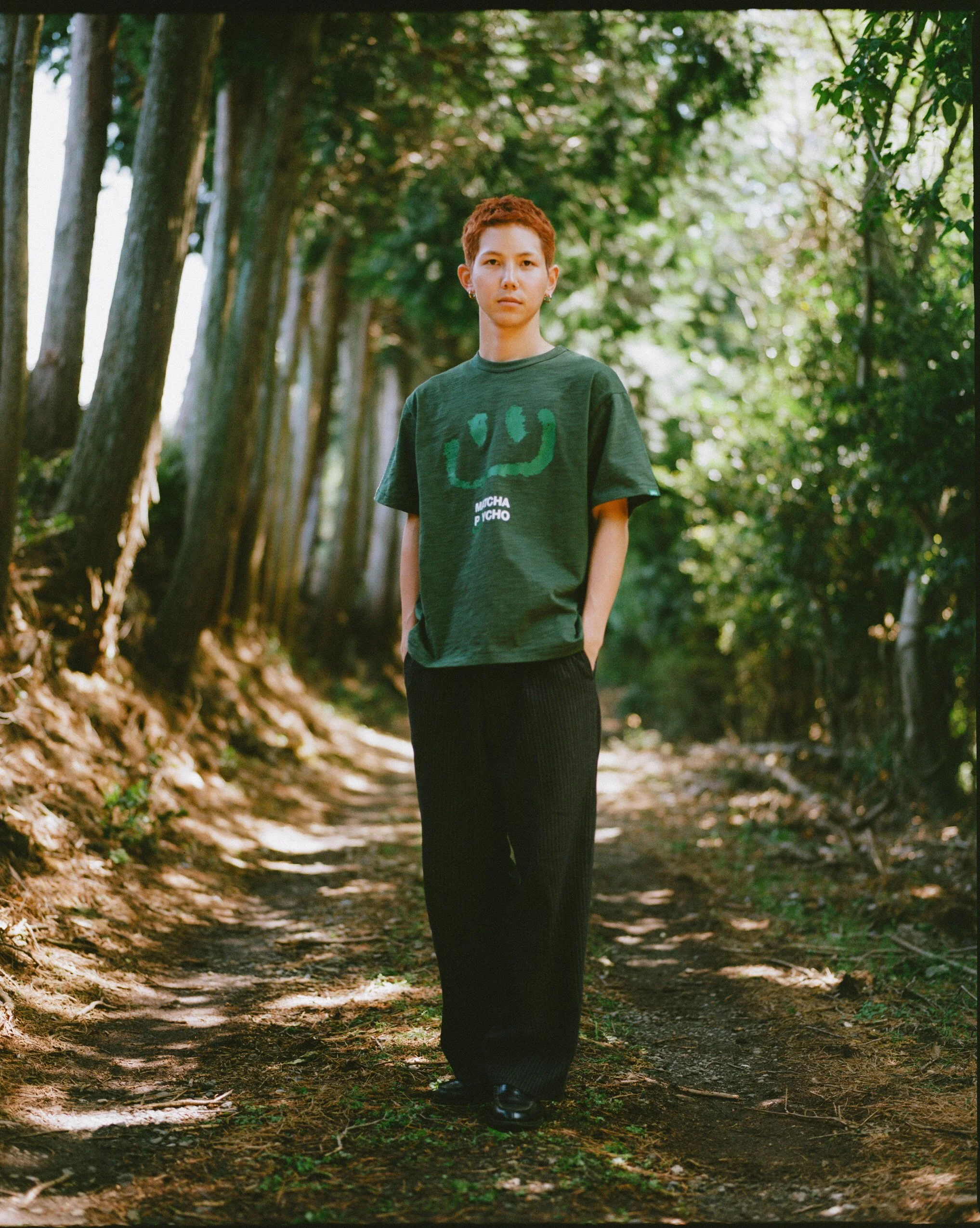
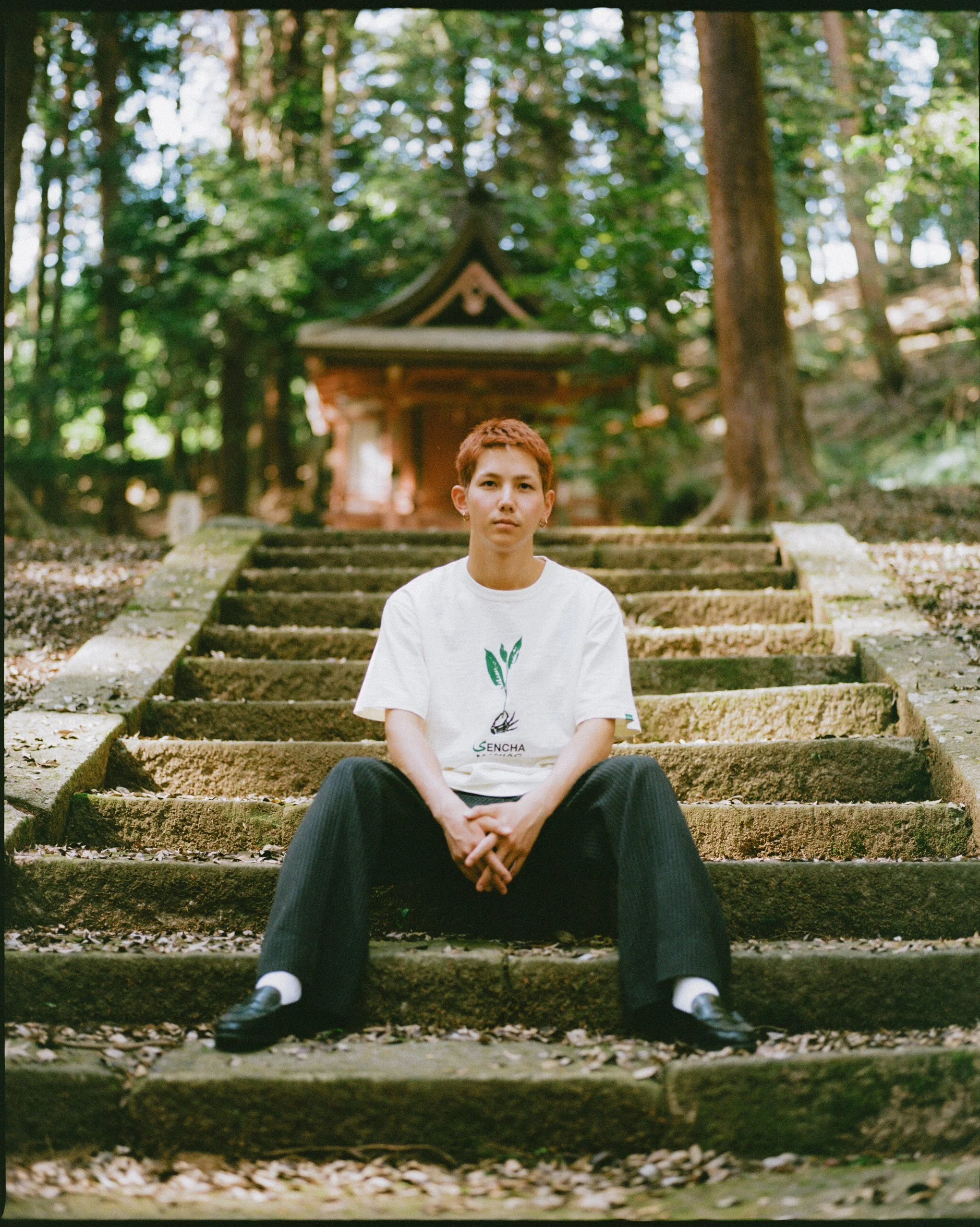
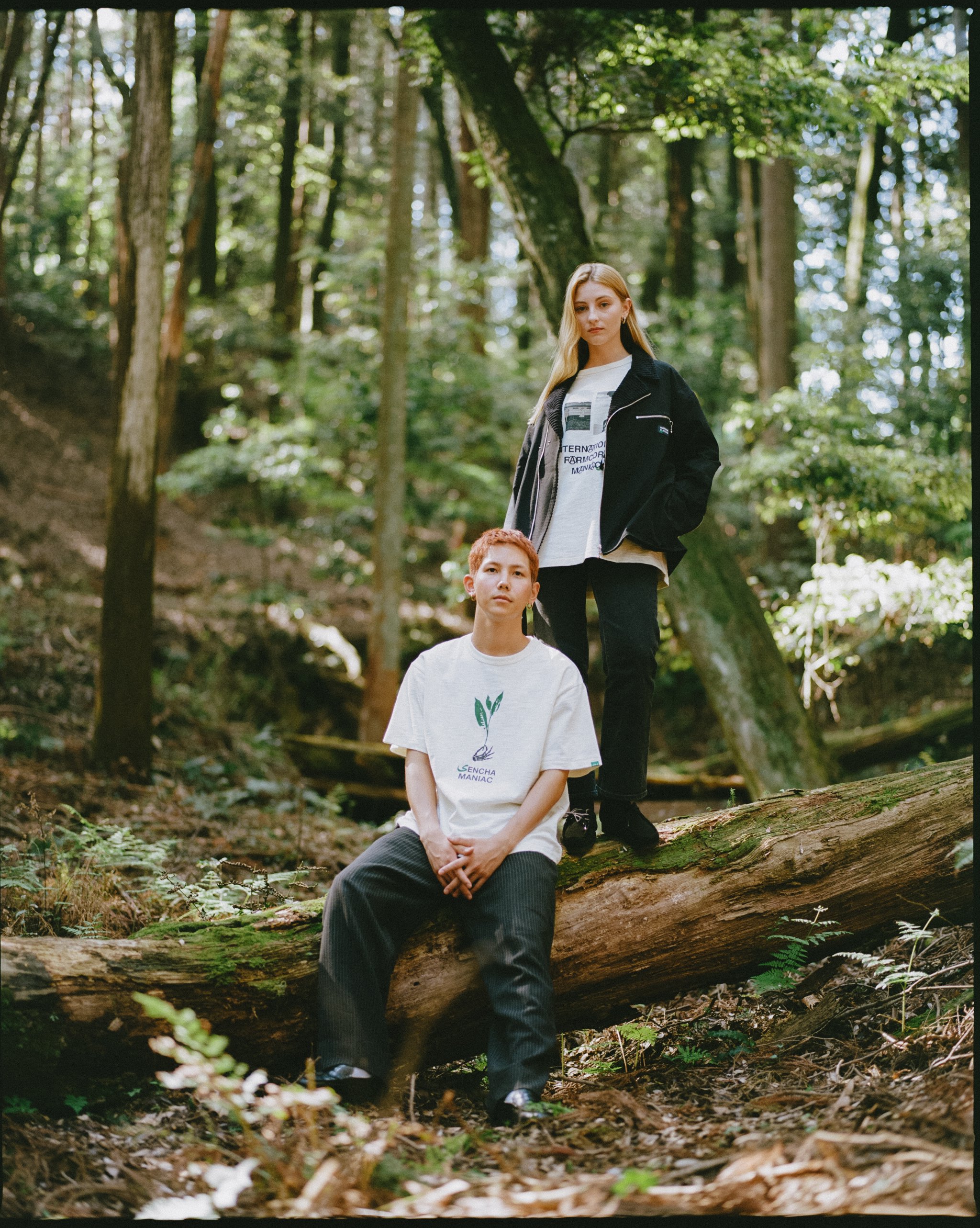
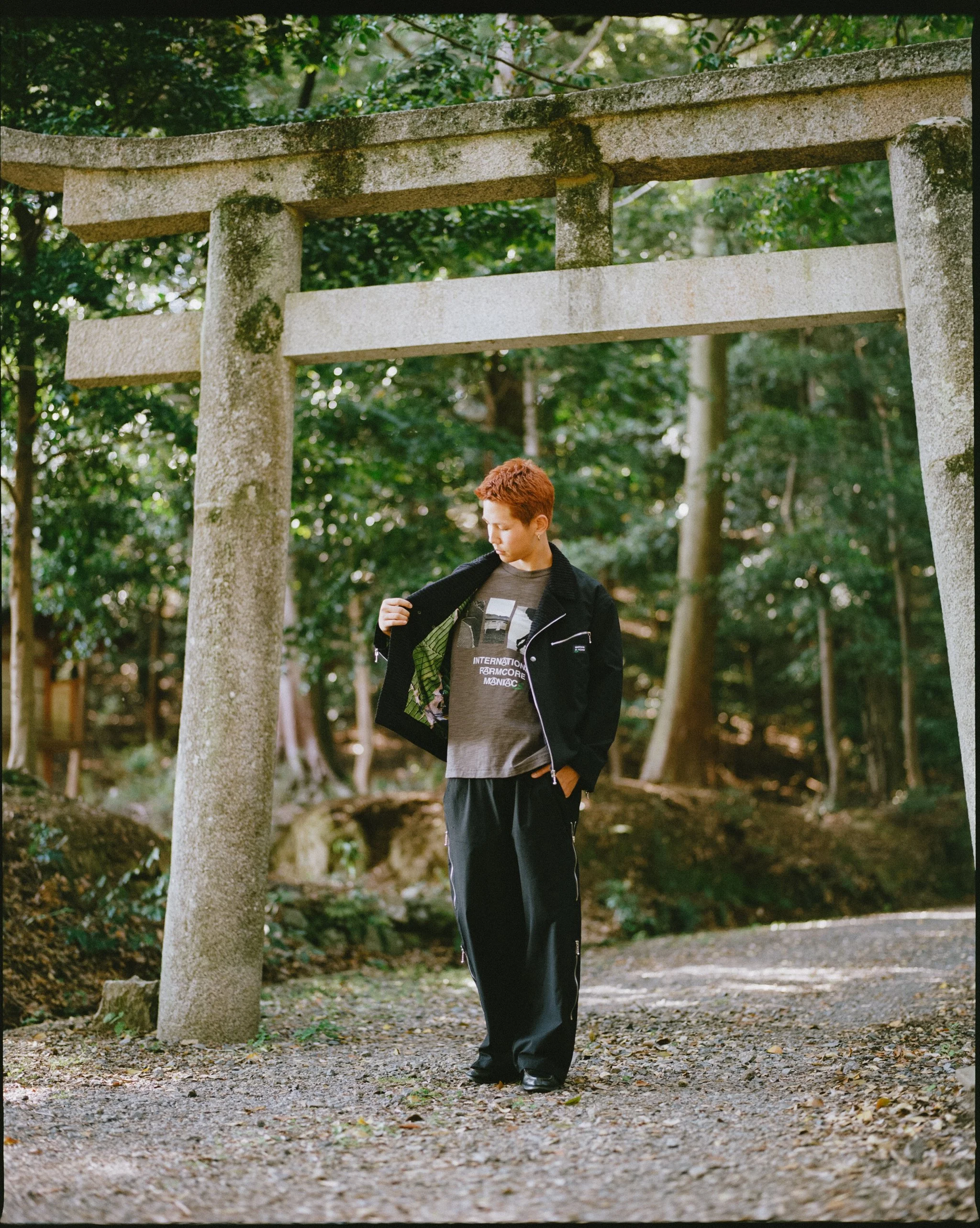
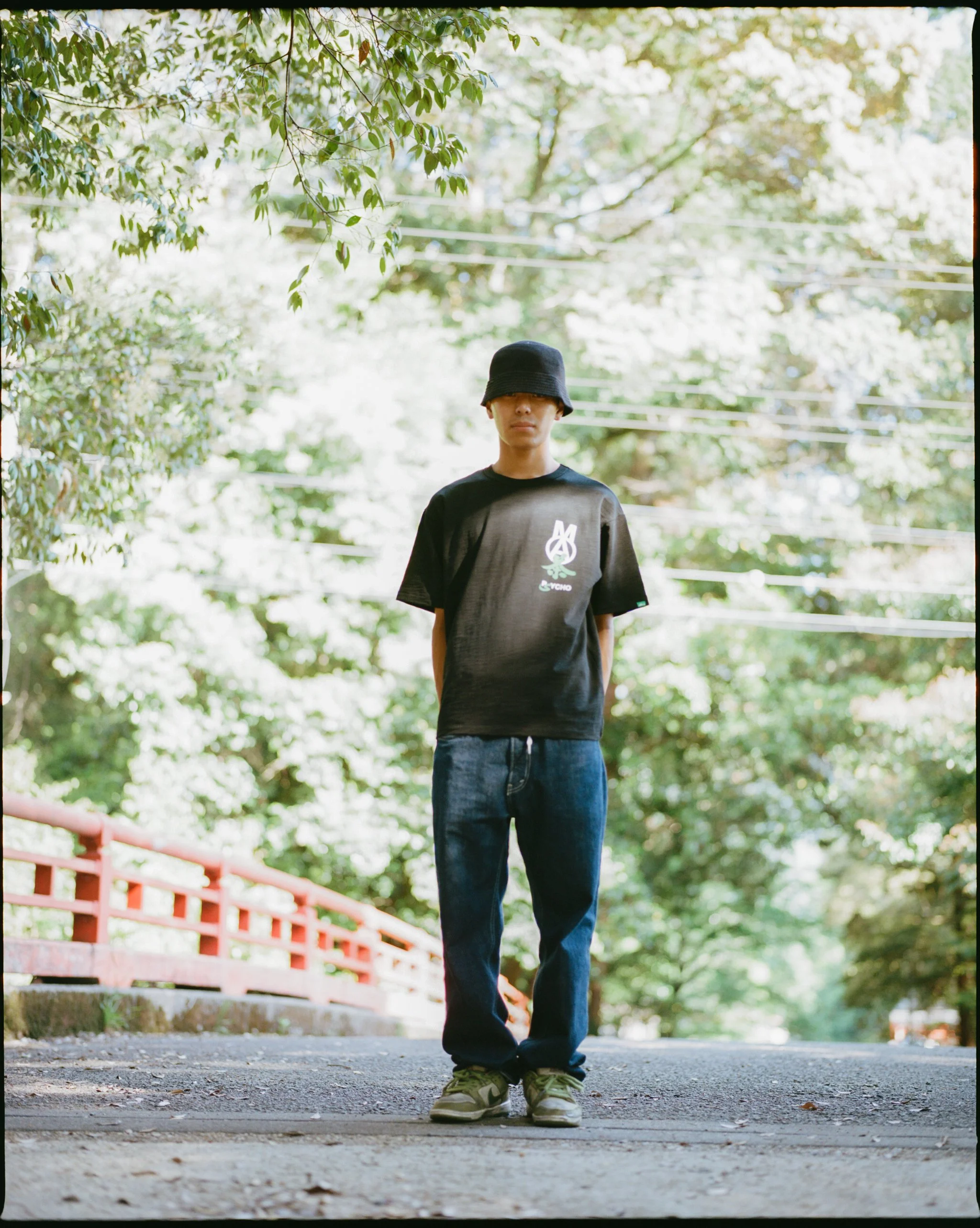
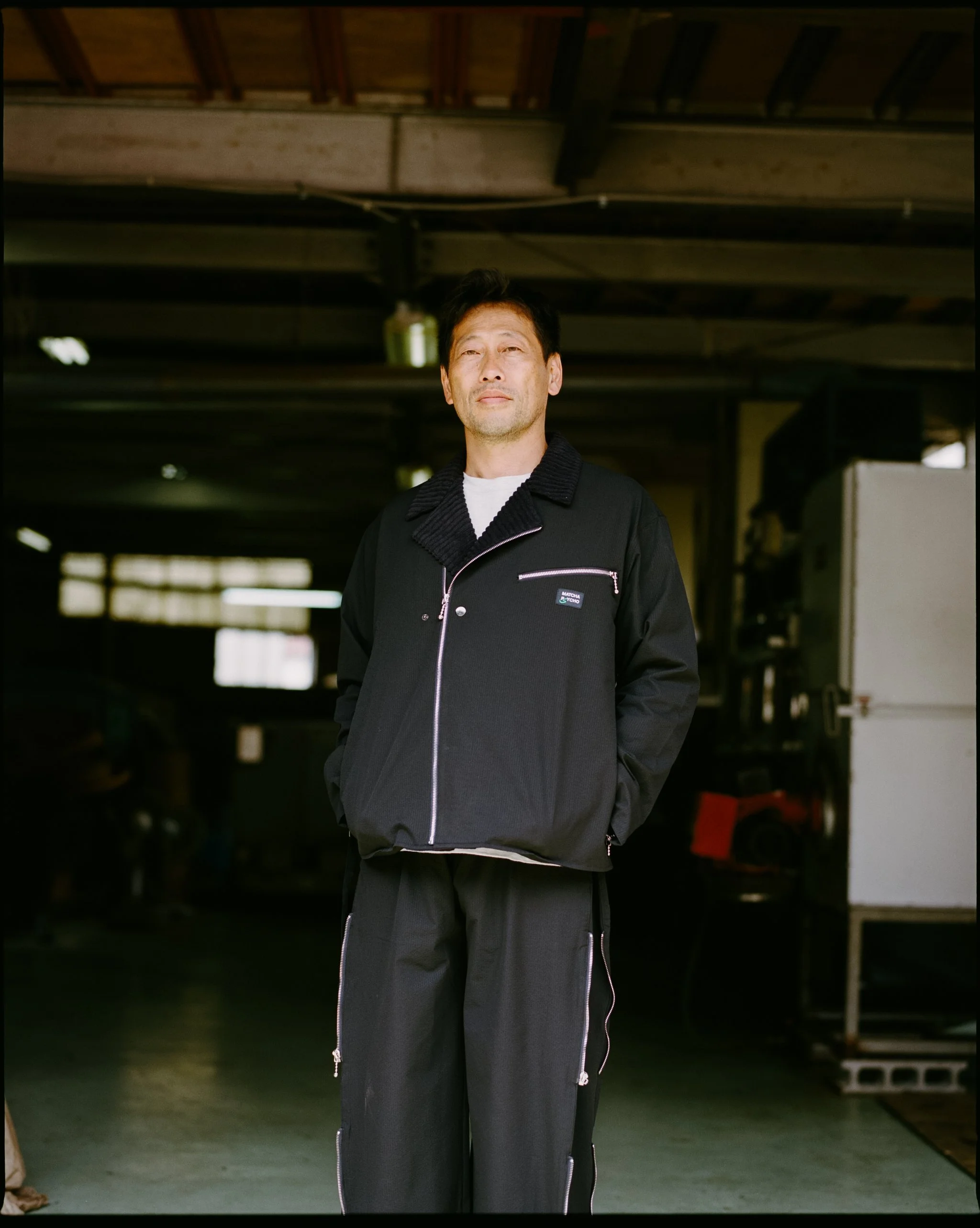
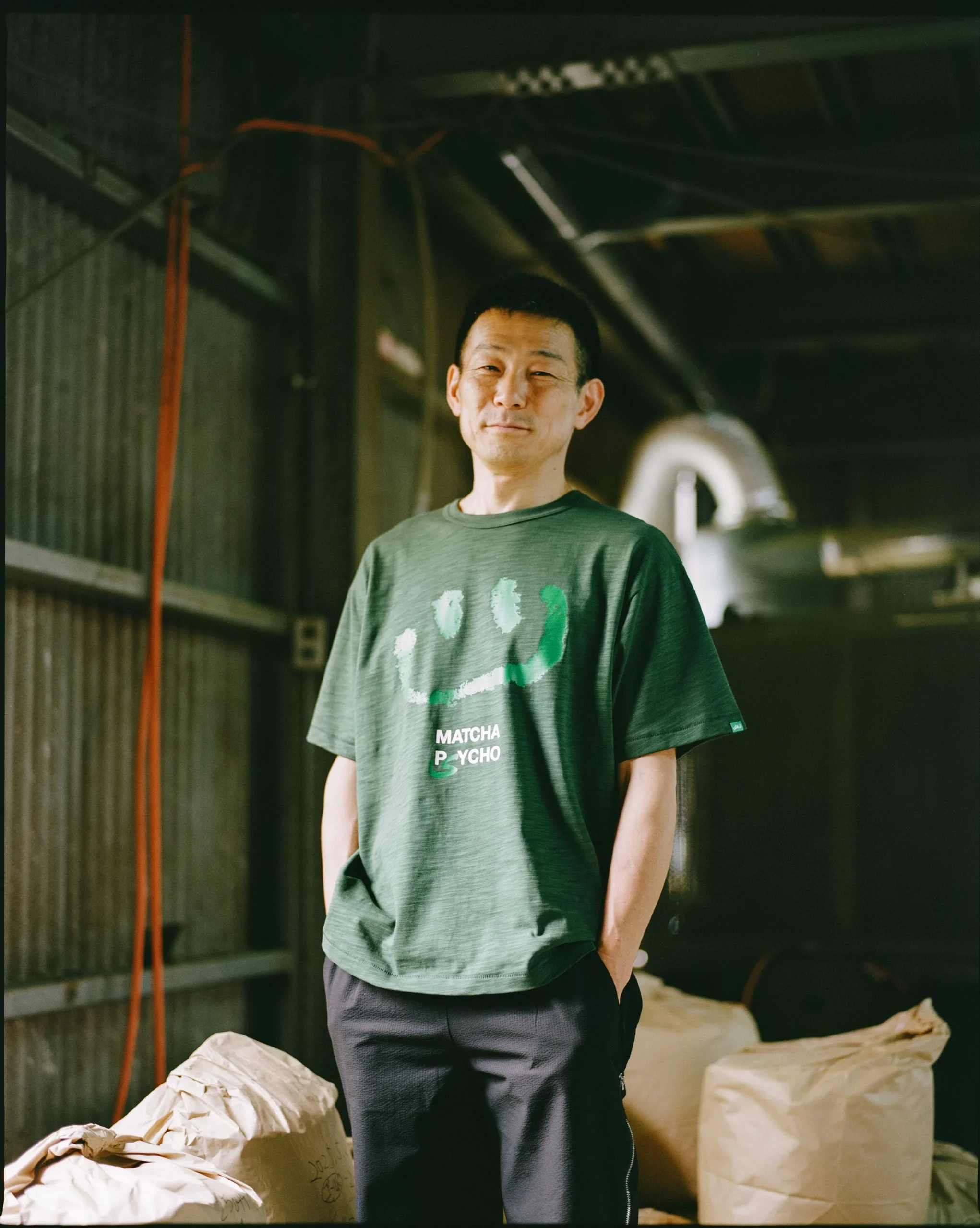
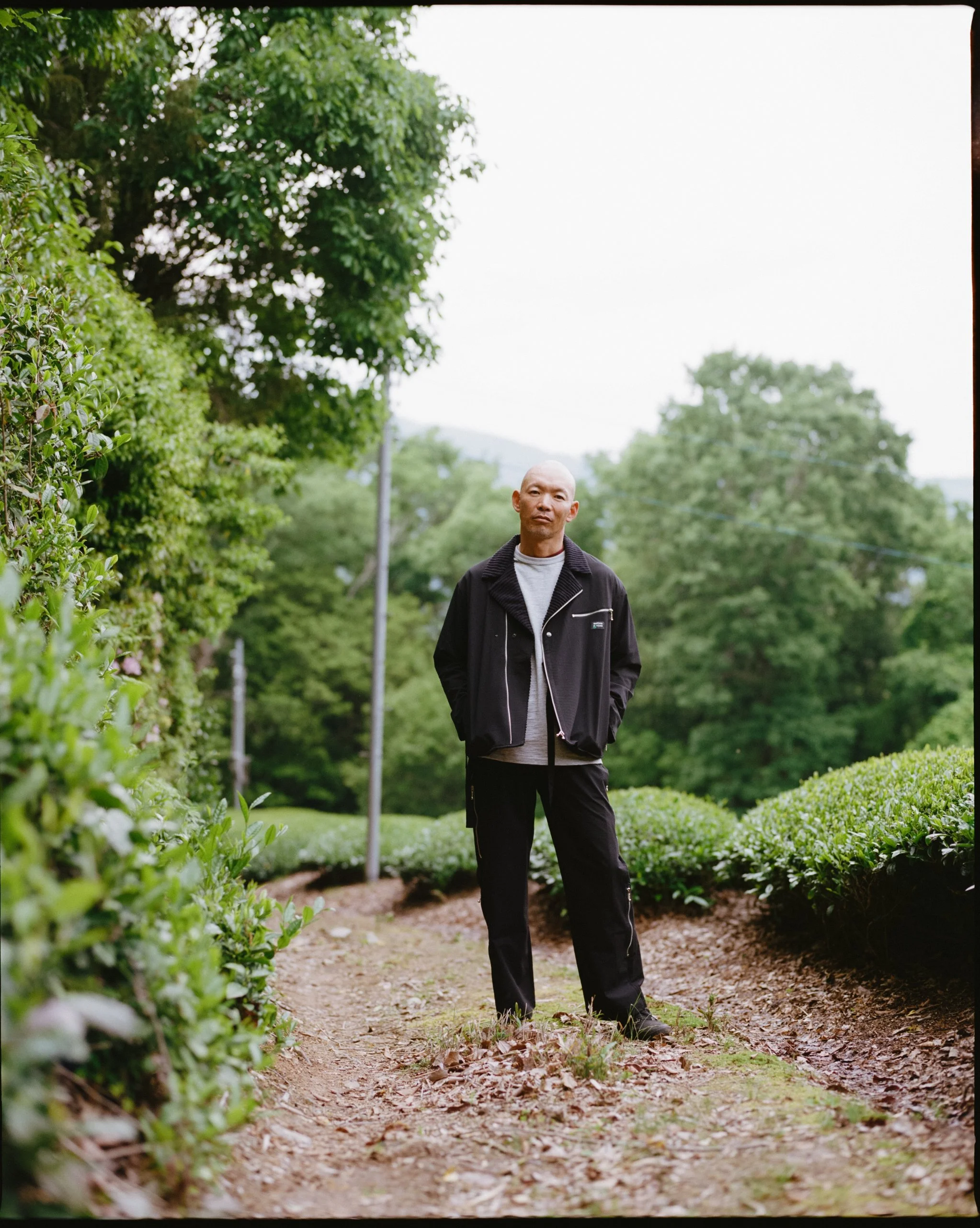
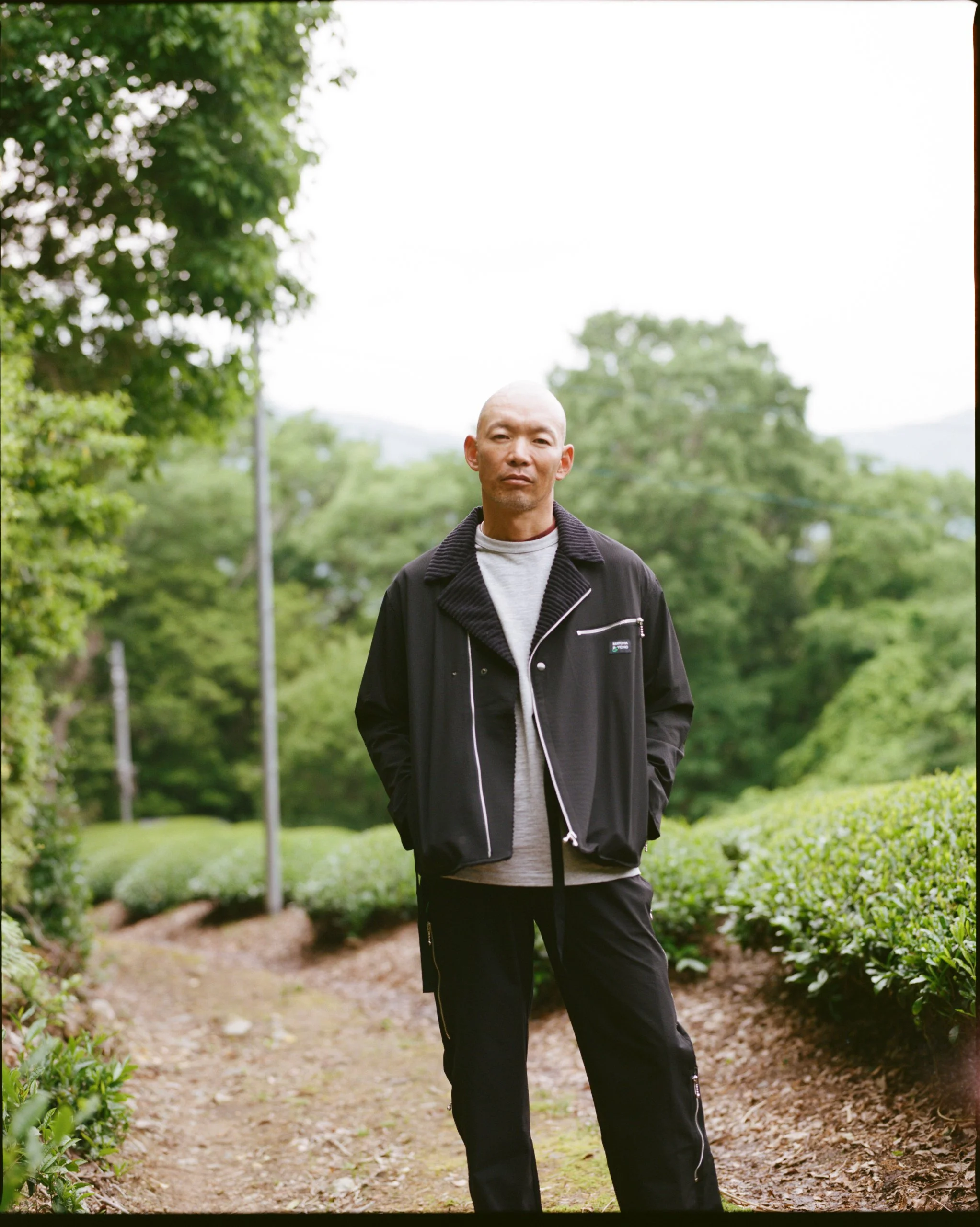
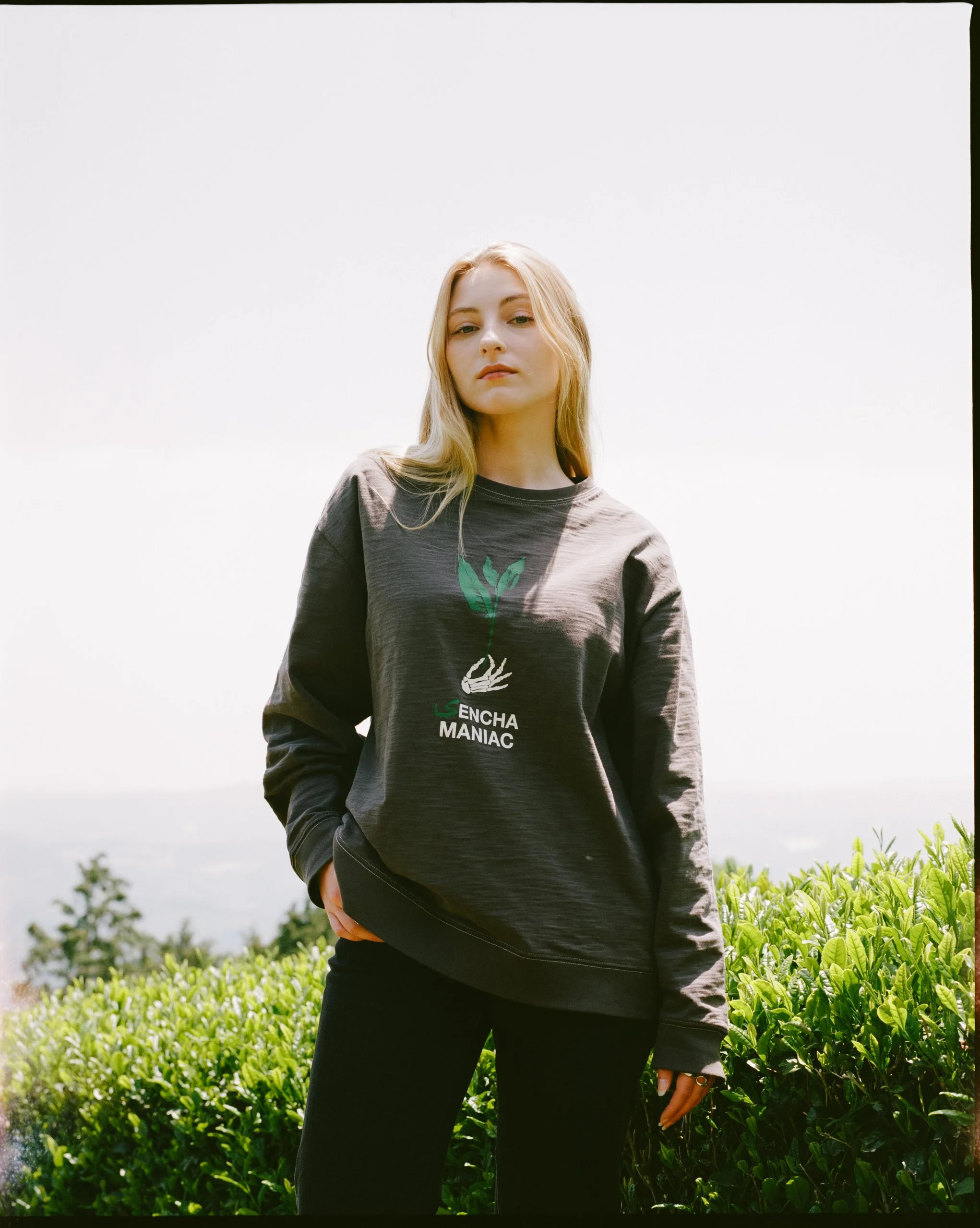
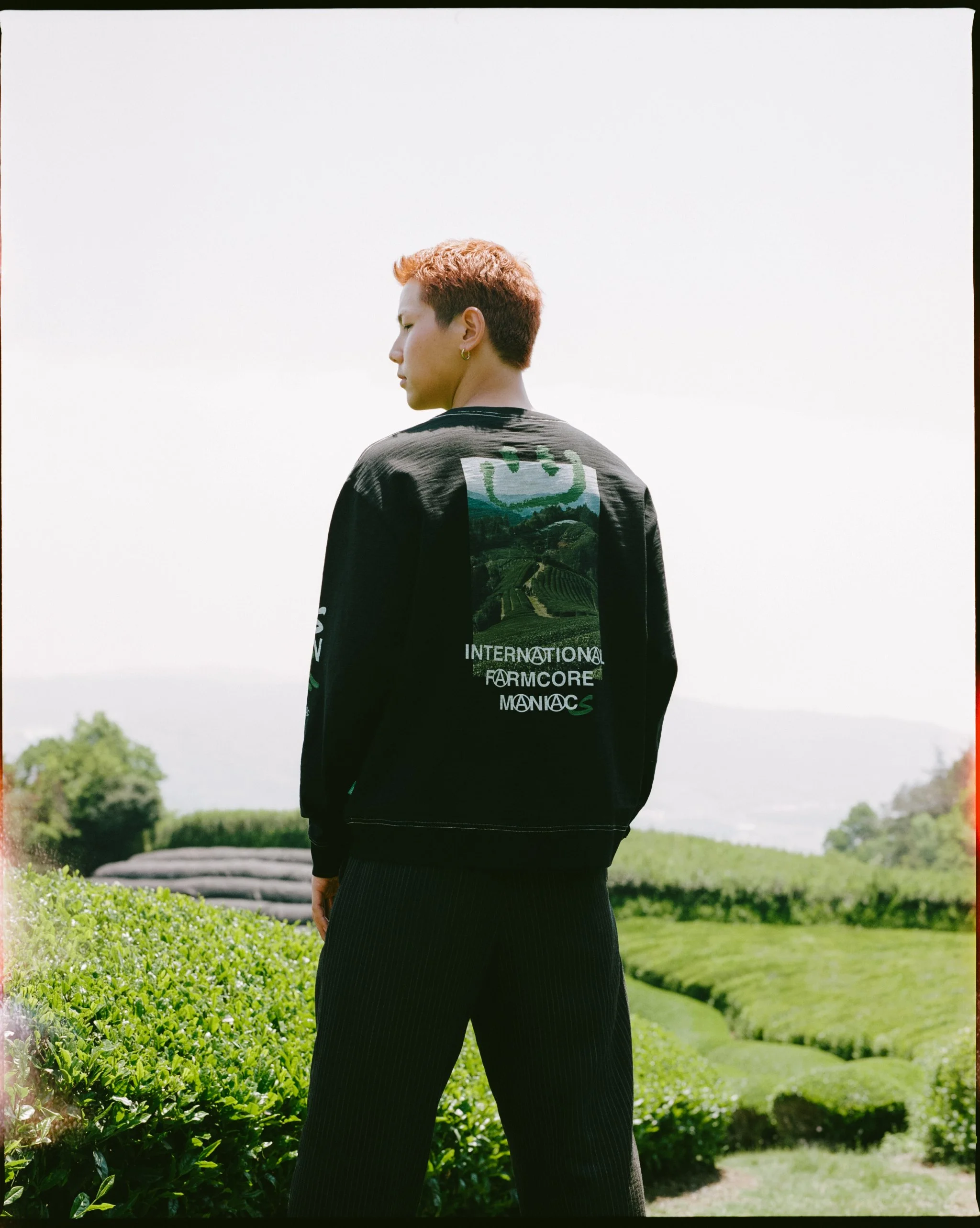
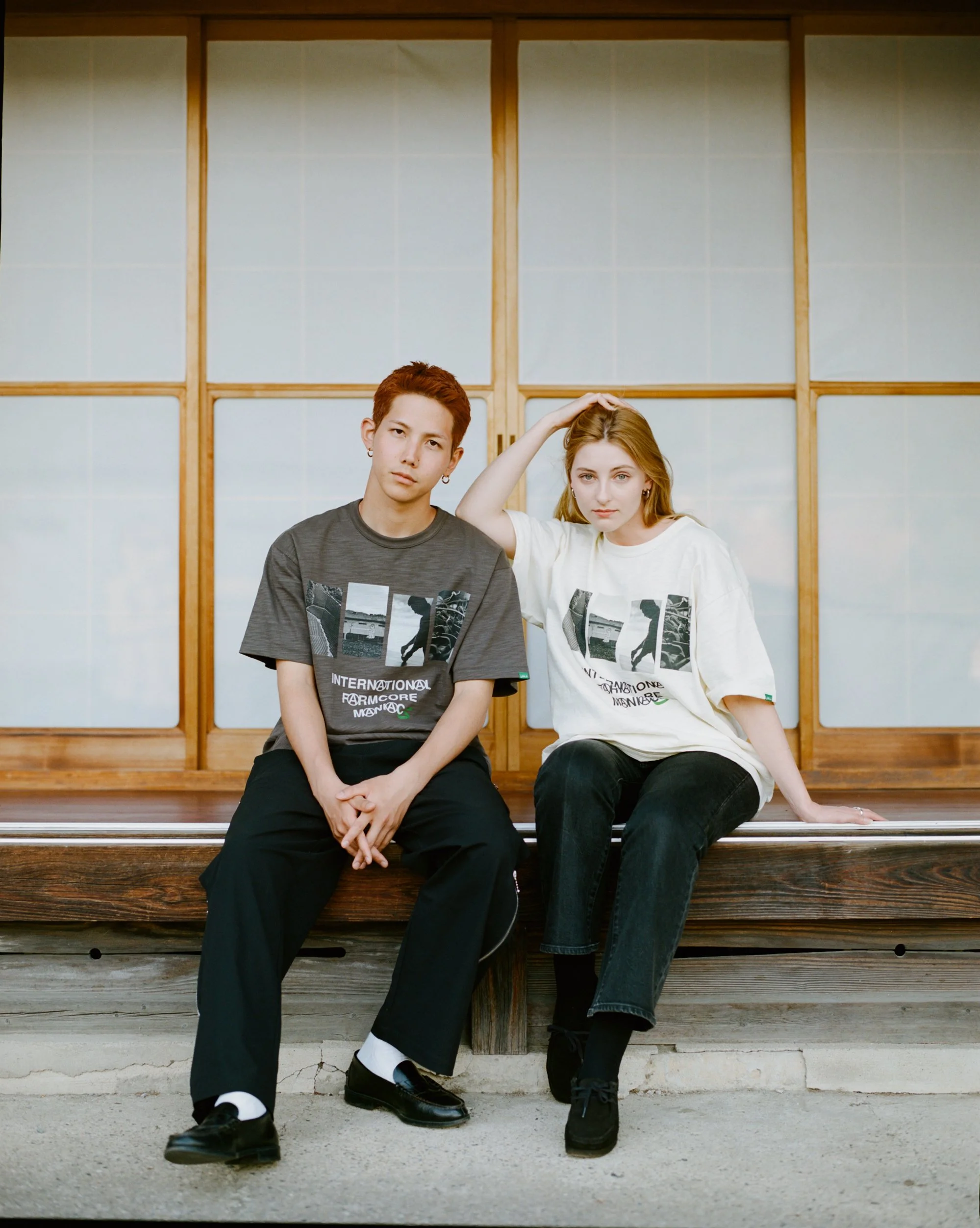
Above: A carousel of images Takeshi Hayakawa shot on his medium format Mamiya in Wazuka, Kyoto prefecture in May, 2025. Photos portray spring harvest at Obubu Tea Farms, Gentle Artefacts’ co-founders, tea farmers Hiro, Matsu, and Akky, and models donning the ‘Matcha Psycho’ capsule collection by Mr. Sabotage X Gentle Artefacts in locales around Wazuka town.
Outro. Fieldwork in fashion photography: Wazuka, 2025
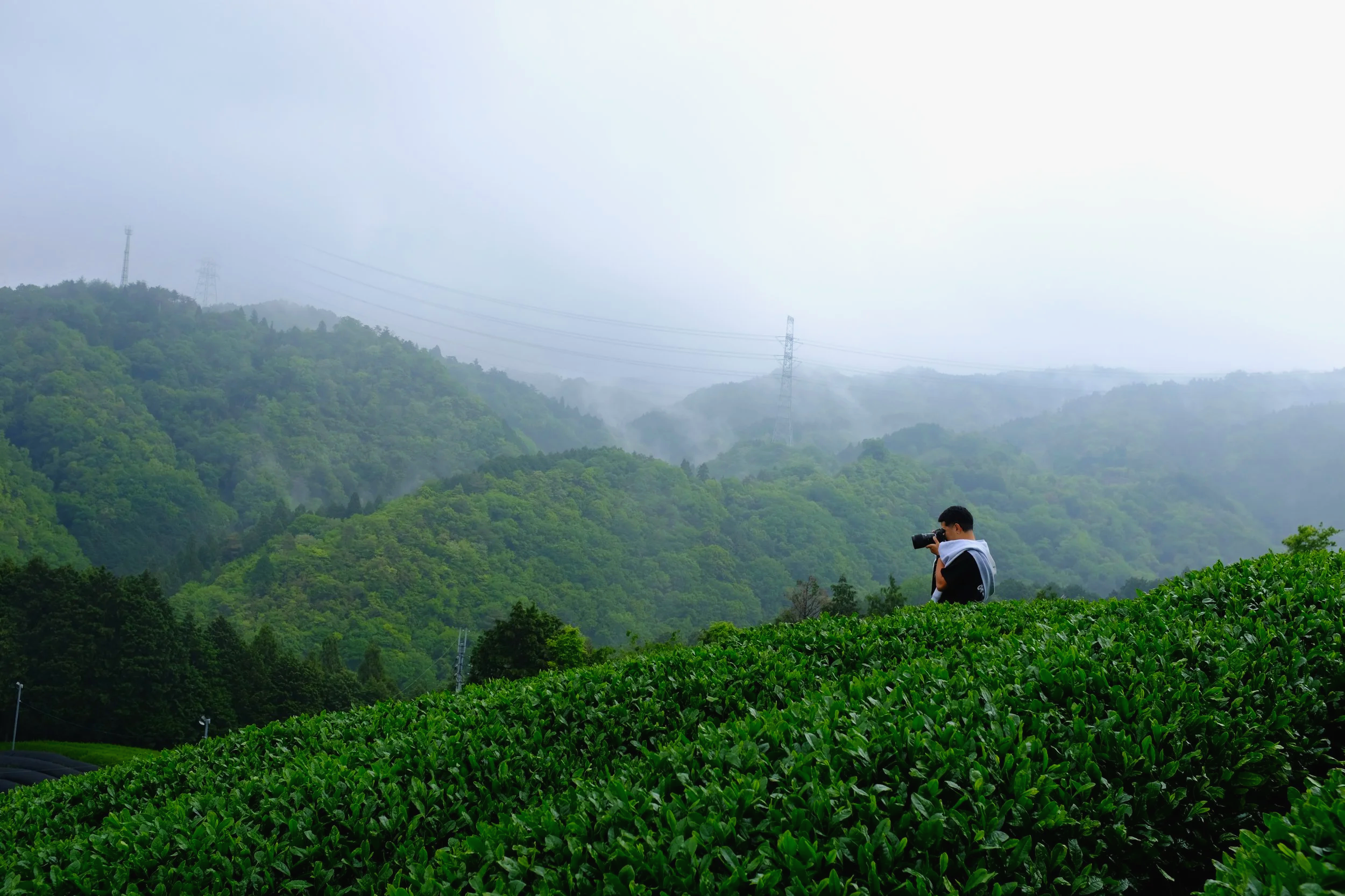
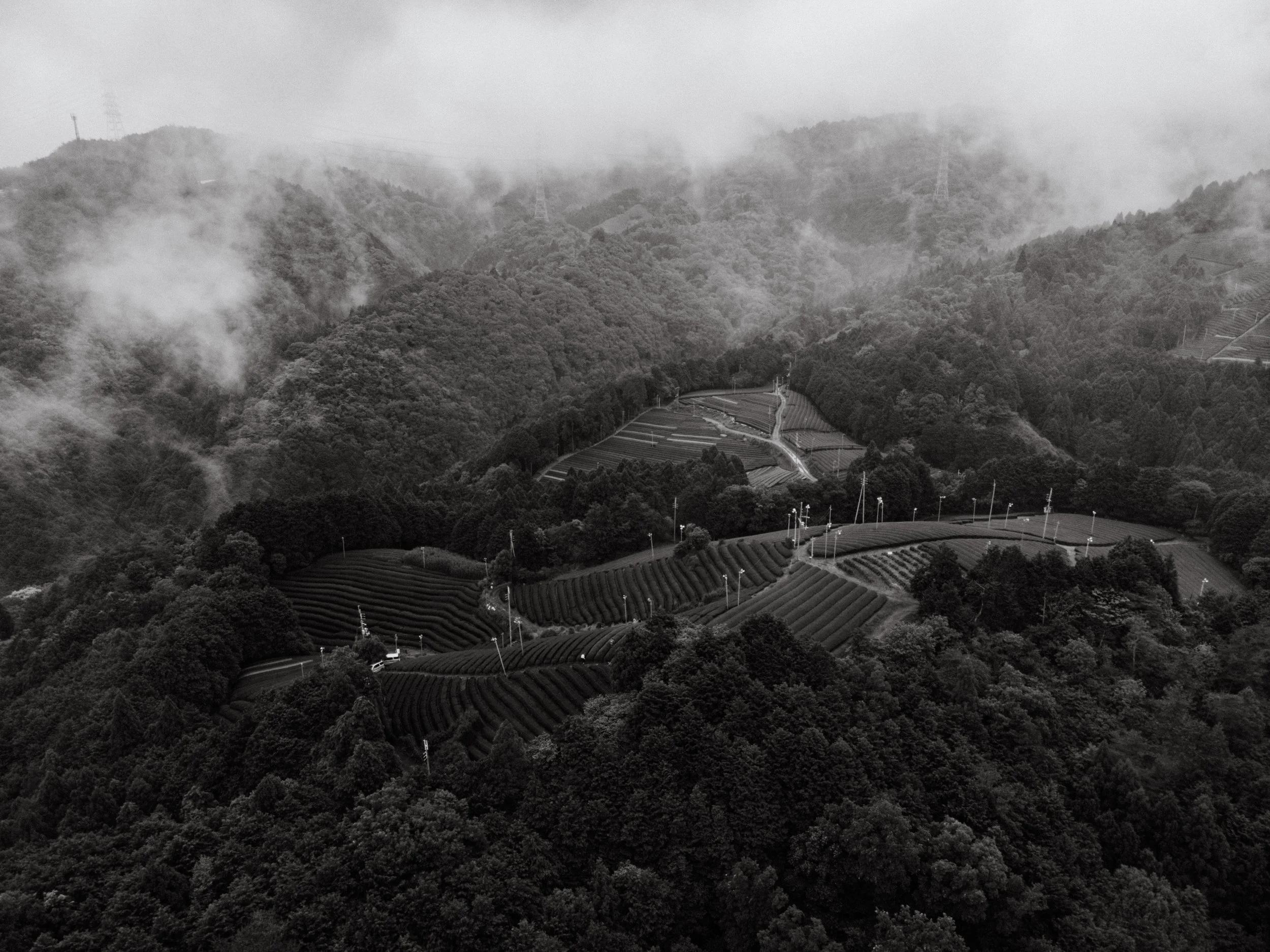
Takeshi feeling it in the field, capturing the landscape as the spring sun burns off the morning fog across the tea fields of Wazuka, Kyoto: May, 2025. Photograph by Gabriel Coren.
Gabriel: What do you want people to see in your images from Wazuka town and Obubu Tea Farms? In the images’ depths, is ‘what’s real’ for Takeshi visible, if you know how to look?
Takeshi: What we did together was, simply put, fantastic. Enjoyable, as if we were playing a game together. Working as a group with people I care about—Gabriel and Sabrina, Mark, Matsu, Fumiya—there were really only the best people there. I also really appreciate being exposed to traditional Japanese culture. Shooting farming, shooting fashion, and documenting Gentle Artefacts’ and Obubu’s process—having those three elements overlap is really interesting for me to experience. What I want people to feel is the atmosphere from my photographs of Wazuka town, of the tea farm, of the landscape. Especially the atmosphere of the images captured in the early mornings, to feel what is like to be working up on a very high mountain, of being enveloped in mist and moving clouds, of the sky transforming minute to minute—that I’m actually doing these things, and giving the sense of that atmosphere a form through the photographs…
Gabriel: Takeshi, thank you so much. What we did together is fantastic, and your photographic outputs do it—and you—such justice. You’ve captured the atmosphere, indeed. Not just of Wazuka and tea farming with Akky and Matsu and Hiro but the spirit of being there together. This has been such a pleasure. To be continued, hopefully soon.
Takeshi: Thank you so much.