
Entering the Japanese Tea Room
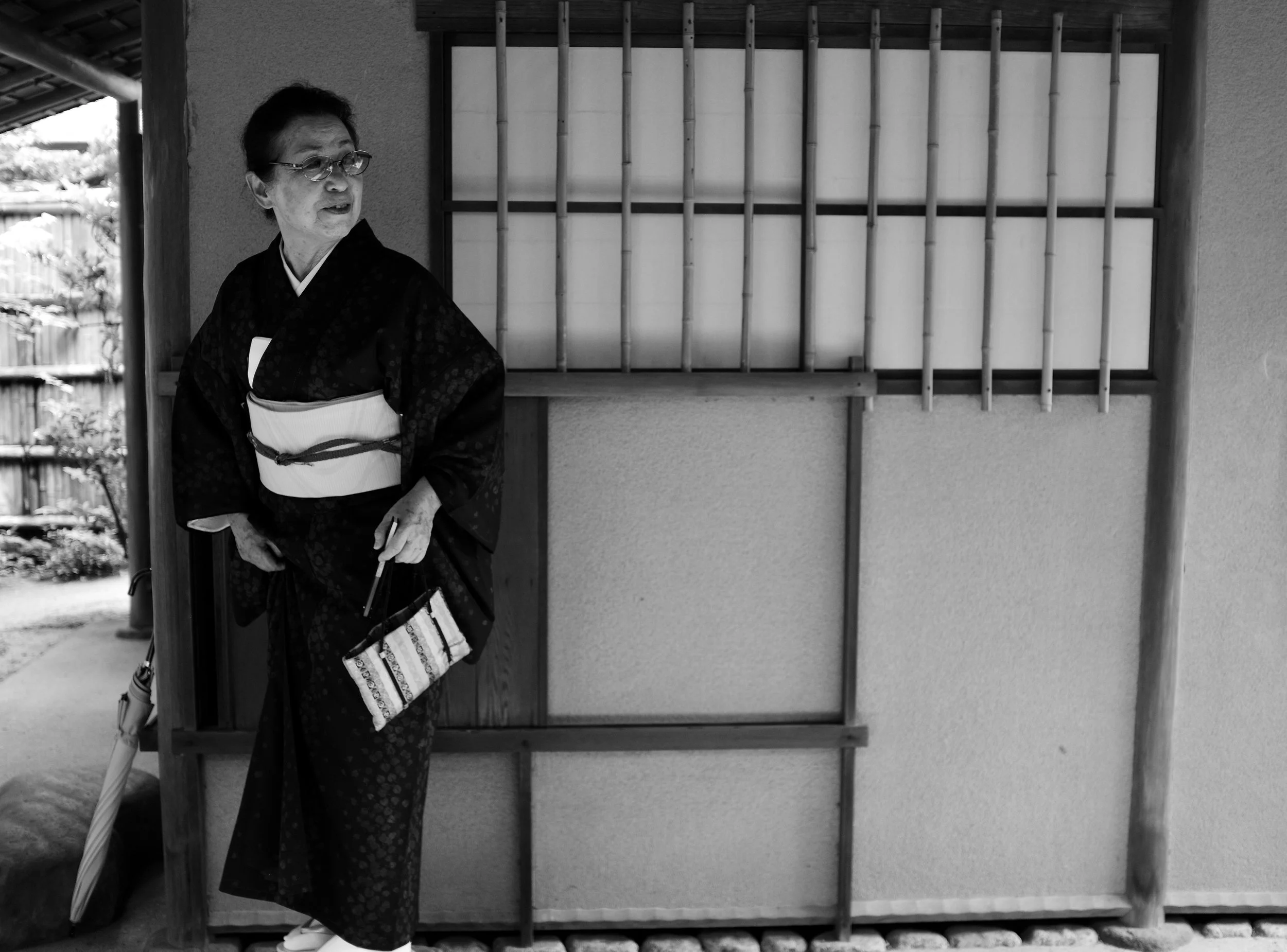
Kume Chan a certified japanese tea instructor and Sado master
My first encounters with Japanese tea began with a simple need: to escape into a quiet space where, amid the chaos of the day, I might begin to hear my own thoughts again.
There is, of course, a rich history and deeper set of meanings to the origins of the Japanese tea room. In fact, the very concept of a Japanese Tea Room — who it is for, how and when it is used, where it is housed — has changed dramatically over hundreds of years: from an exclusive religious rite and aristocratic activity into a deliberately inclusive, often domestic, and always intimate ritual. As I’ve learned about the ways that Japanese tea room have evolved over time, it’s what has remained constant about them that has resonated with me the most, which is that the tea room should be understood as a kind of liminal space. A place that is set apart from other everyday spaces, but above all from the outside world. A place designed for creating moments of peace, presence, mutual respect, and equality.
The tea room today offers a sanctuary from the hierarchies and social conflicts common to everyday life, and this contemporary identity as a zone of respite may have been conserved from days when these spaces were firmly rooted in religious and aristocratic practices. Indeed, it was amidst the profound political instabilities upending late fifteenth century Japan that a more contemplative approach to tea culture began to emerge. The eigth Muromachi shōgun, Ashikaga Yoshimasa (1436-1490), held ceremonial gatherings at his Kyoto estate, in a small four-and-a-half-tatami room, while the tea master Murata Shukō (1423-1502), working under his patronage, connected tea more closely with Zen practice, self-knowledge, and simplicity and developed what became known as “thatched-hut tea” houses. Shukō’s ideas were developed further by Takeno Jōō, who emphasized wabi: honesty, restraint, modesty, and beauty without excess. And in the sixteenth century, Sen no Rikyū further refined these ideas, elaborating them into the intimate forms of tea practice and tea-room design that remain most influential across Japan today.
As we consider what direction Gentle Artefacts shall take — while always remaining grounded in our love and respect for tea and tea agriculture — we have been devoting time during our travels and fieldwork with farmers to foster relationships that deepen our understanding of local cultures, crafts, and histories of tea. And so, during our most recent trip to Japan in June and July, we visited Ninomaru Tea House in Kakegawa, Shizuoka, which is situated just beside Kakegawa Castle. The experience reminded us that the tea room does not begin at its doorway. It begins with the journey through the tea garden.
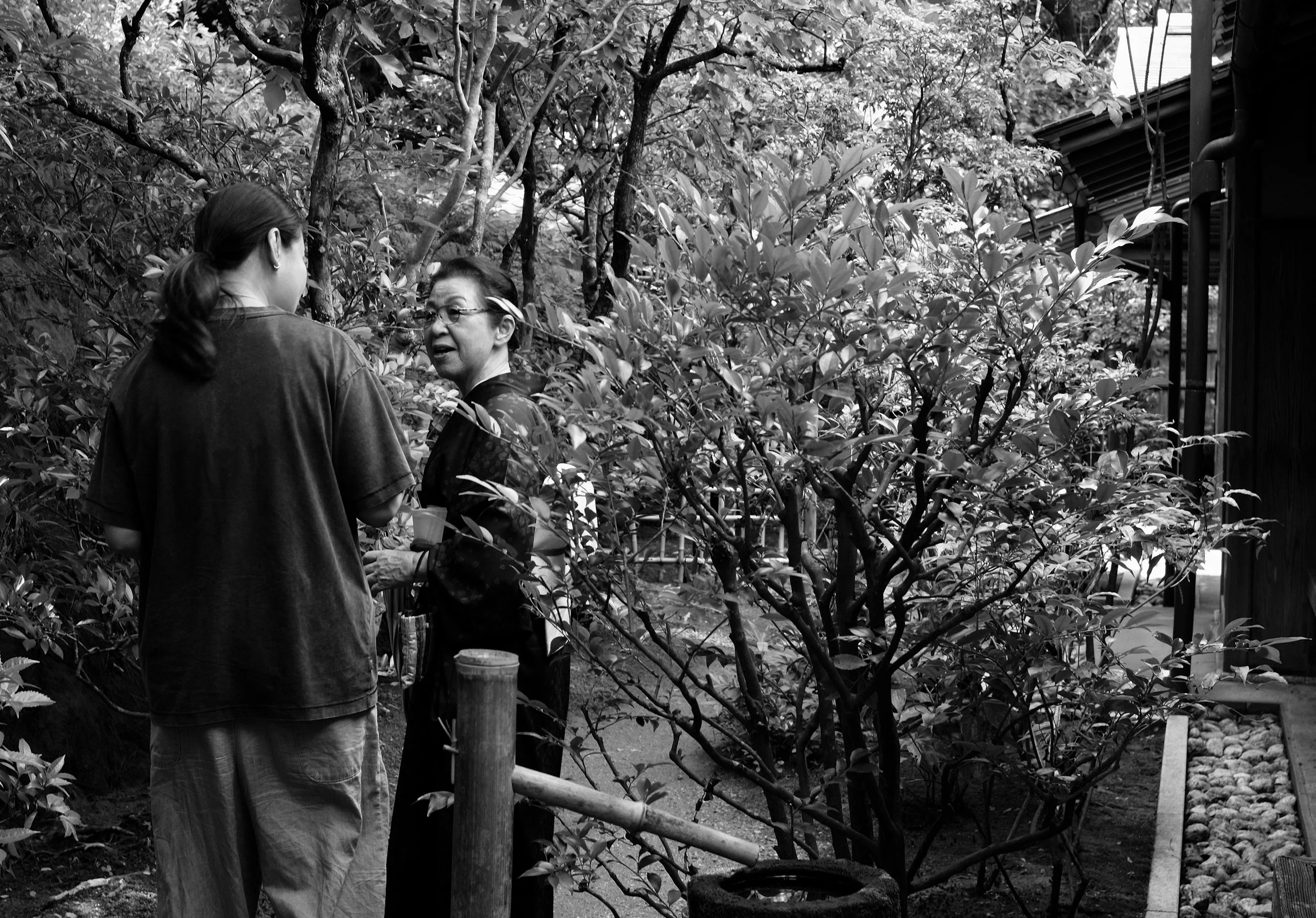
Taking a little walk through the tea garden before arriving at the Japanese Tea house with Kume Chan.
Traditionally known as the roji, or “dewy ground,” the garden creates a gradual transition away from the pace and distractions of the outside world. As guests follow the path toward the tea room, they are invited to slow down, quiet the mind, and become more attentive to their surroundings. The stones beneath their feet, the changing light, the sound of water, and the act of purification before entering all form part of this preparation.
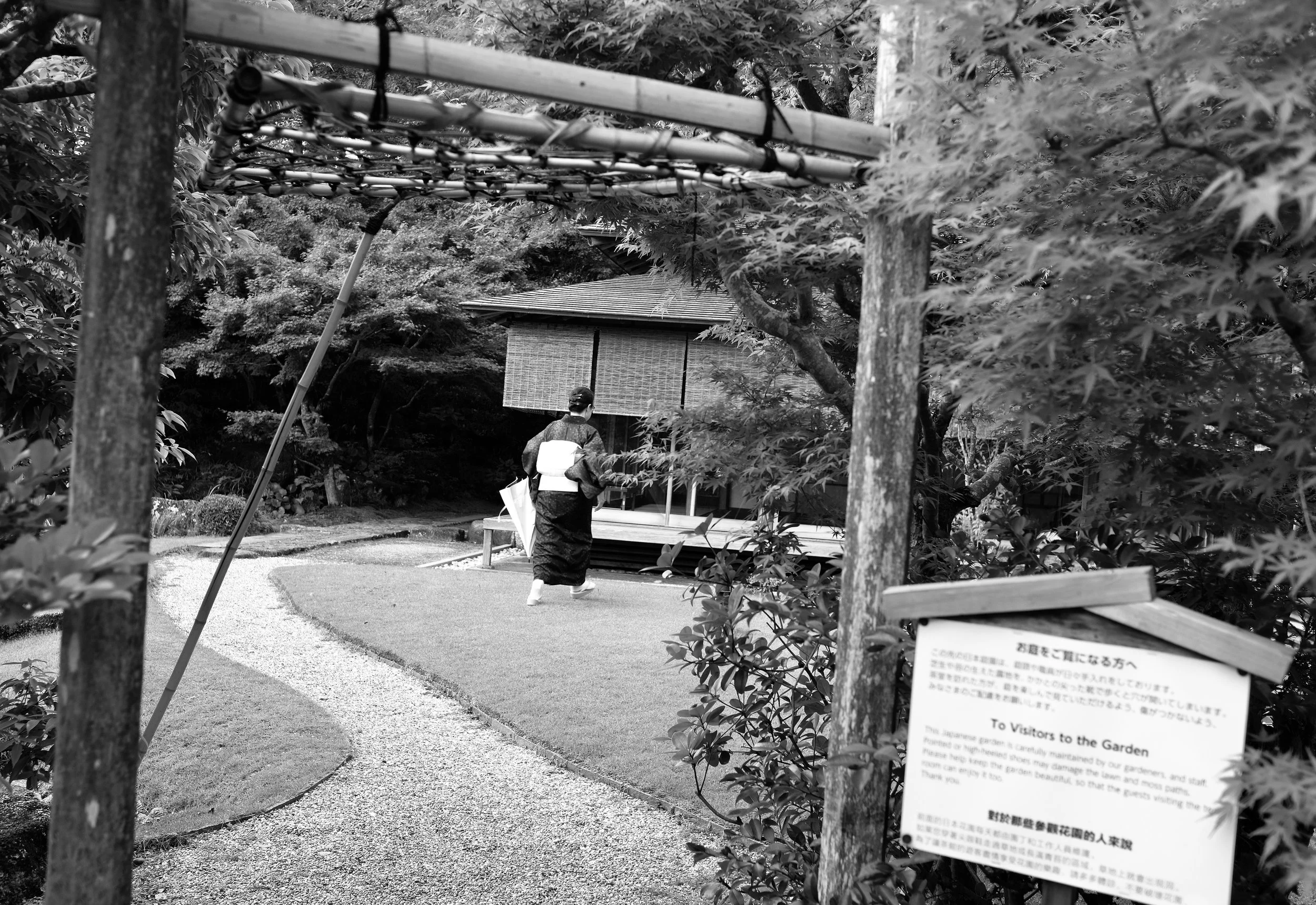
Kume Chan is a certified Japanese Tea Sado instructor at the Ninomaru Tea house.
As we enter the Japanese Tea room, the entrance is a small and low entrance called nijiriguchi and every one has to crouch to enter. Rikyū’s use of this entrance was understood as eliminating visible distinctions of rank among those entering: regardless of status, every guest had to lower their body and pass through in the same manner.
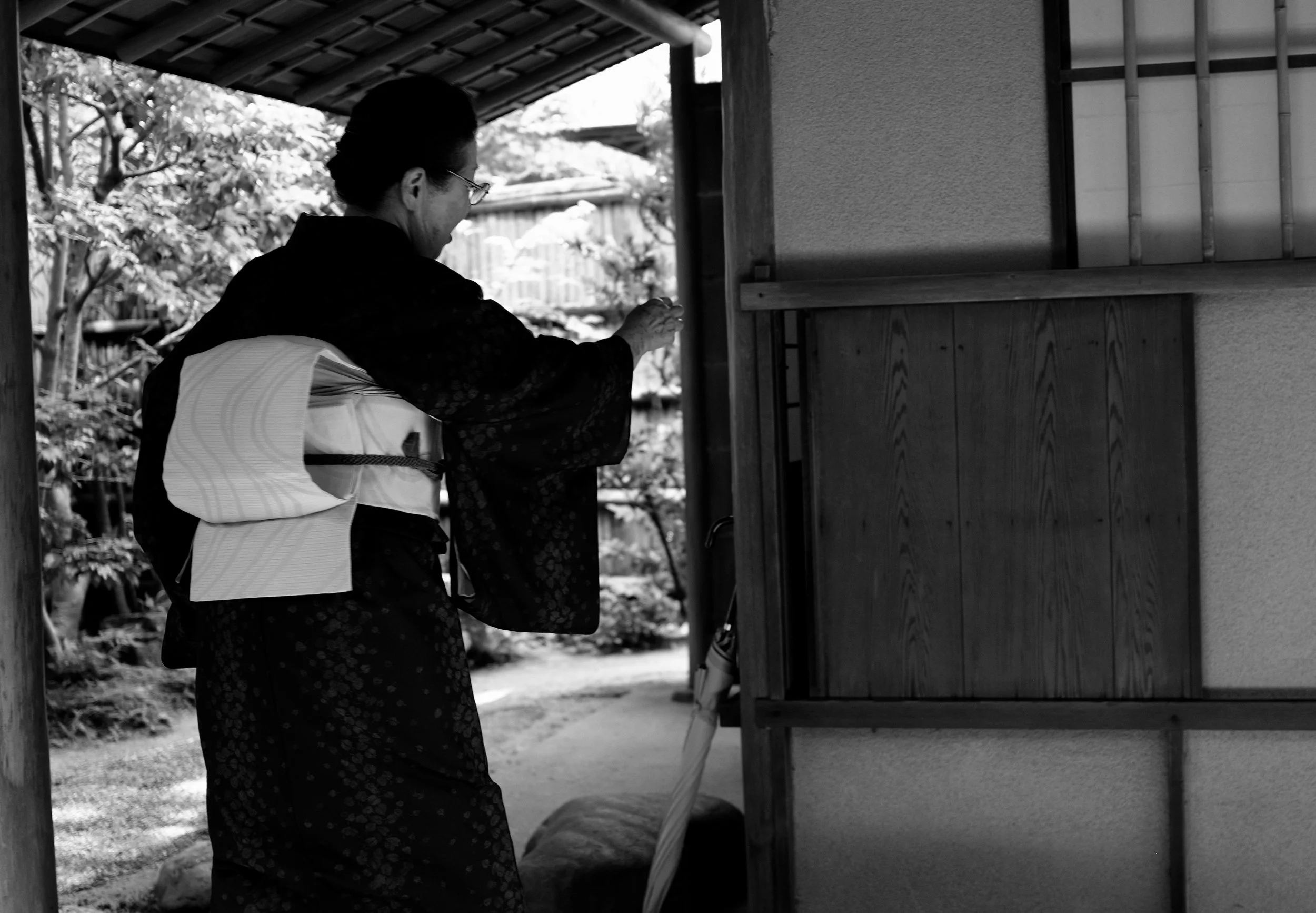
The act of entering gently into the Japanese Tea house was indeed a skill.
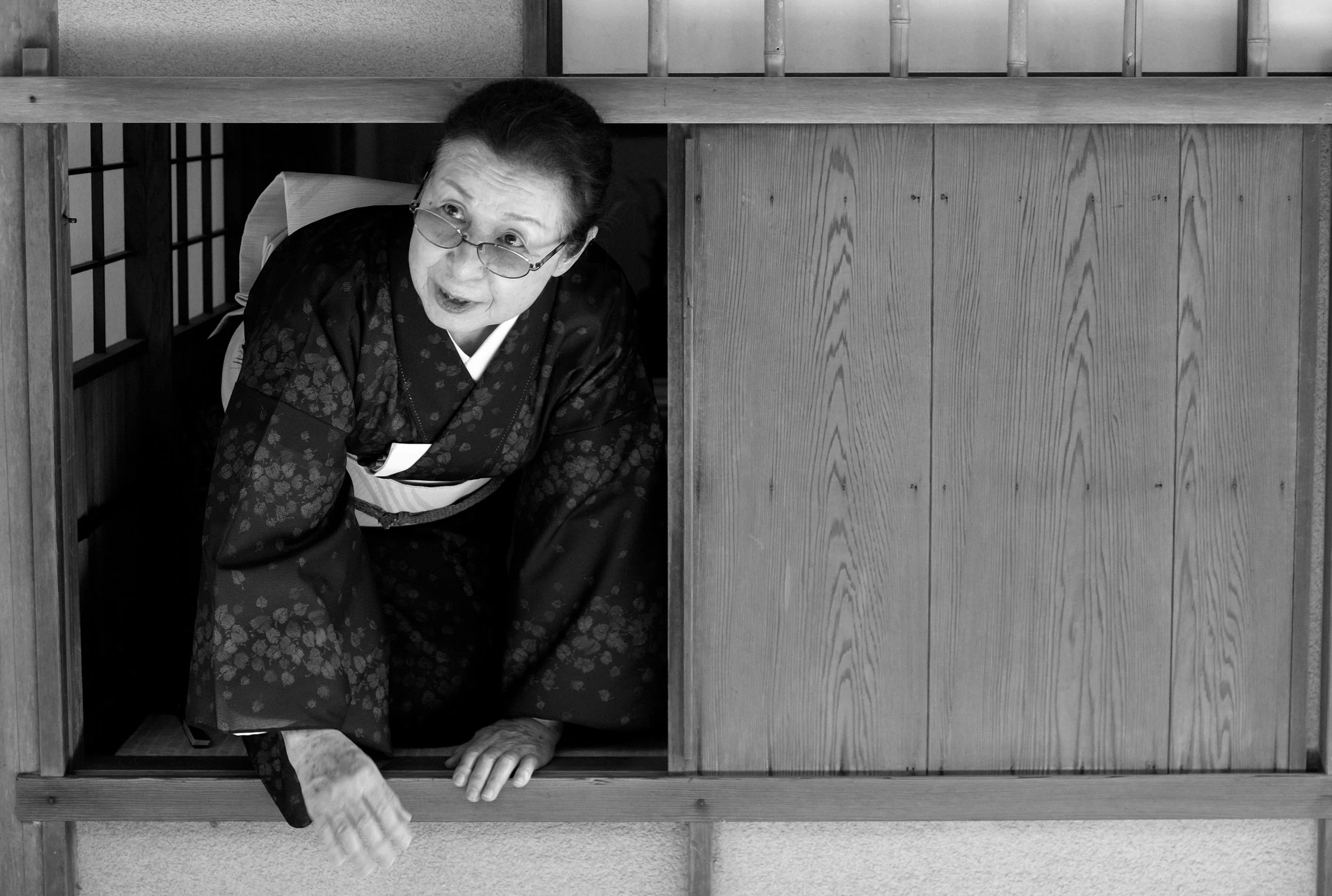
Kume Chan leads the way as we enter the Japanese Tea house.
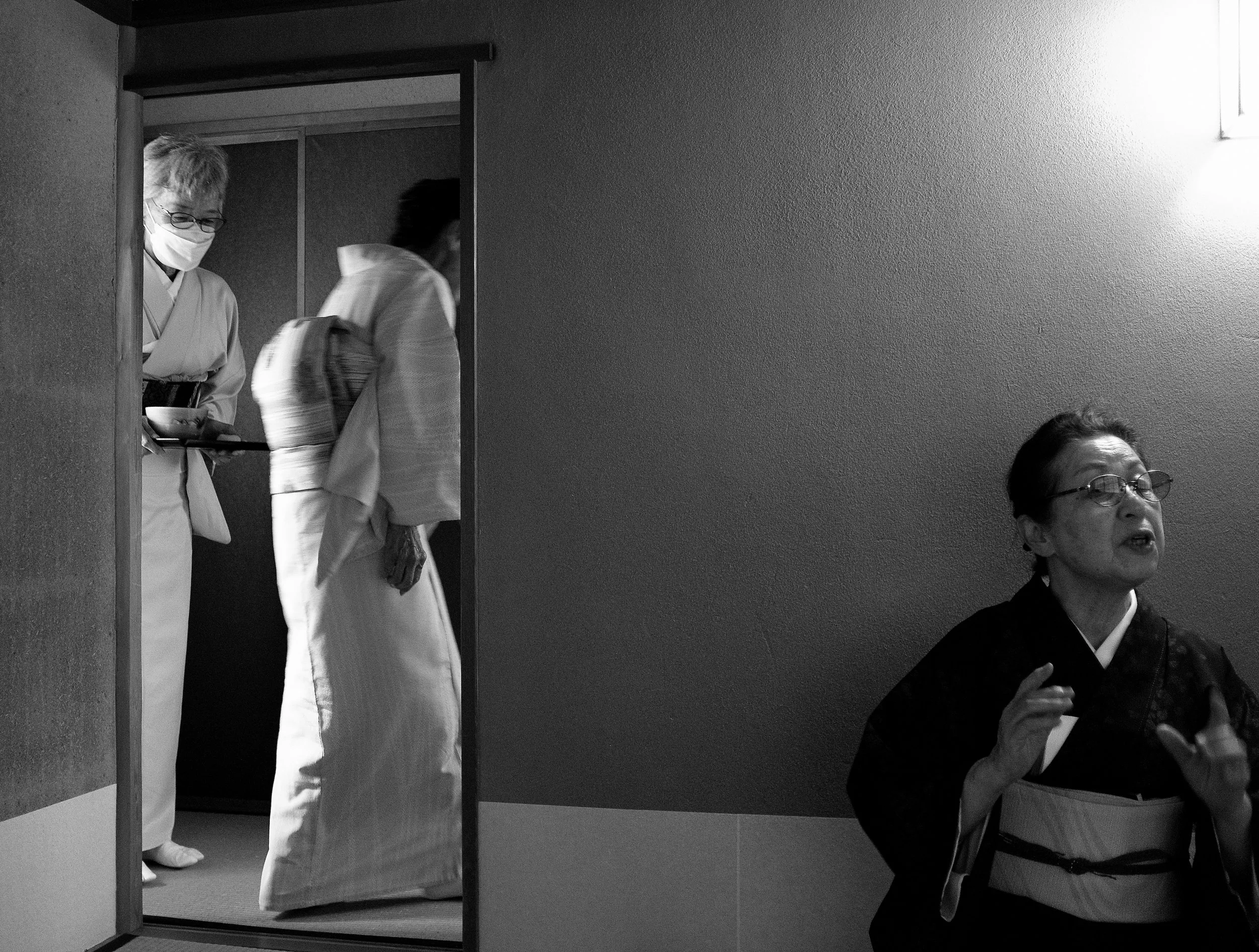
Kume Chan sits at where the host sit and the guest will follow in that order before we are served a ceremonial matcha and wagashi
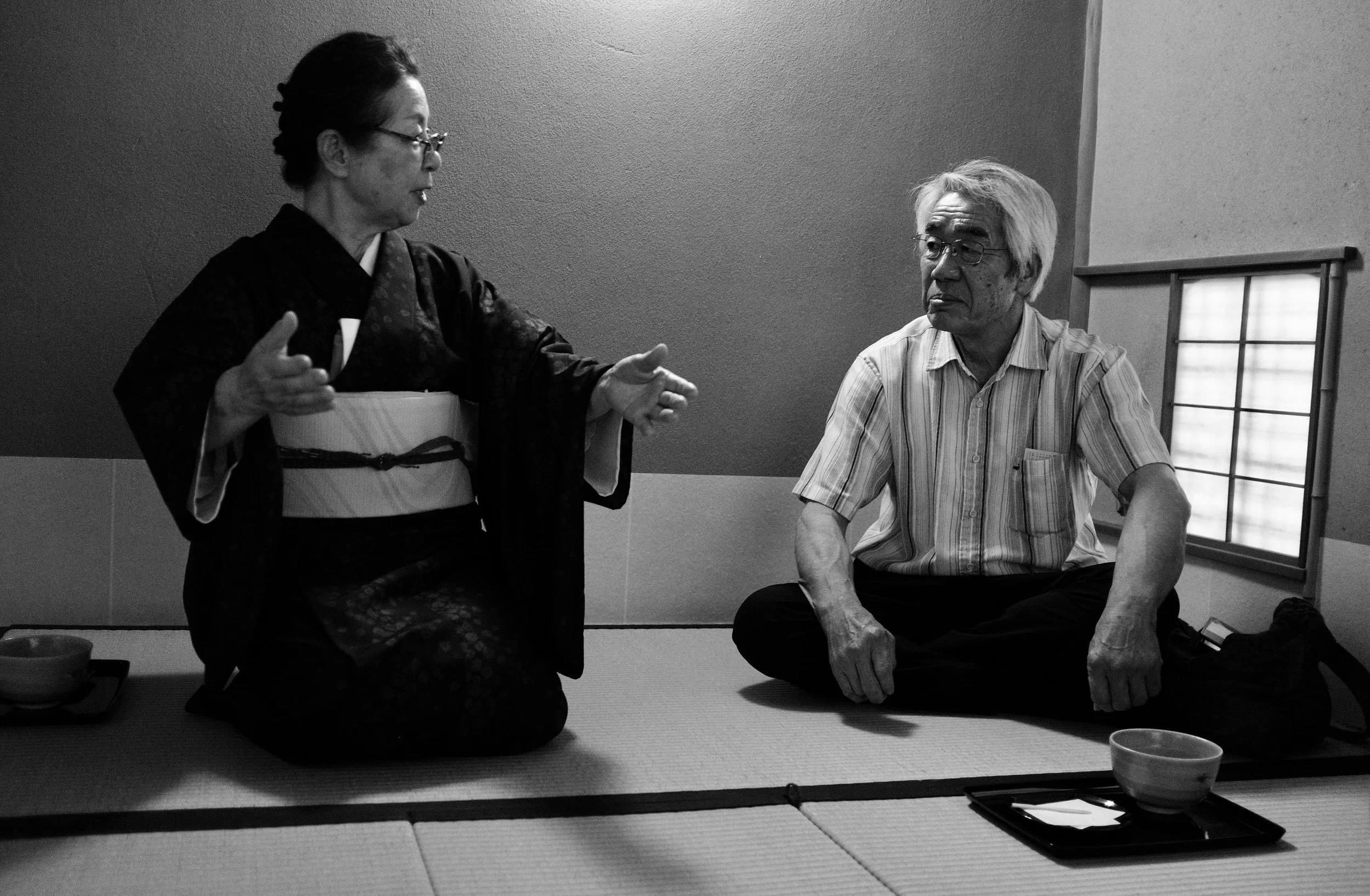
Kume Chan explains the different rituals and practices in the Japanese Tea room.
Kume-chan began by explaining the rituals of the tea room and how every element has its own time, place, and purpose before guests are served matcha and wagashi, traditional Japanese sweets.
The details of a Japanese tea room are remarkably intricate. In the next post, I will share more about how the experience changes with the seasons—from the arrangement and orientation of the tatami mats to the selection of the hanging scroll, flowers, utensils, and other elements within the room. In addition to learning more about Japanese tea tools , i am also intrigued by the evolution of beliefs and values around objects which i found to be an interesting tension.
I find Japanese tea rooms to be exceptional spaces, imbued with a profound understanding of what it means to connect as human beings, free from the distractions of the outside world. It is a recurring daydream of mine to encounter spaces like these again — and perhaps, one day, to create a space of our own: one that gently welcomes those seeking refuge, restoration, and a moment to truly reconnect with themselves and with others.
Sabrina Li